Rejuran Pain Scale: Where It Stings Most, What to Ask About Numbing, and Who Should Wait

Written by Dr. Hyun Kyung-bae, Chief Director · Plastic surgeon (Korea) · Reviewed by Dr. Kang Eun-joo, DirectorUpdated 7 min read
In short With numbing cream on, Rejuran feels like a series of quick pricks and a short burning sting, milder on the cheeks than under the eyes. If you take blood thinners, bruising matters more than pain.

Worried about where you'd land on the Rejuran pain scale now that your skin is thinner than it used to be and bruises at the slightest knock?
With numbing cream on, most people feel Rejuran Healer as a series of quick pricks with a short burning sting: around the middle of a 0 to 10 scale on the cheeks, a point or two higher under the eyes. The sting fades within minutes of the last injection. For skin in its fifties, the small bumps and the chance of bruising matter more than the pain.
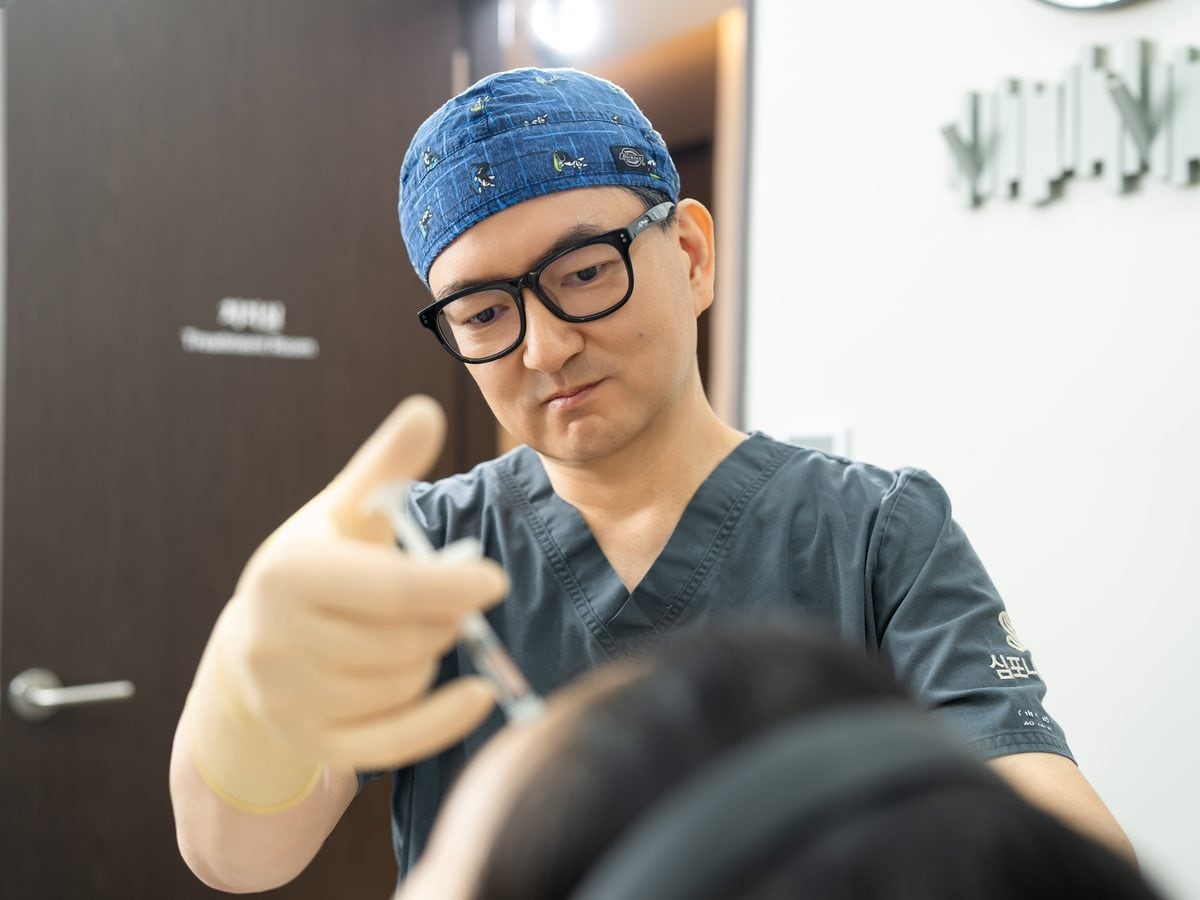
Hello, I'm Dr. Hyun Kyung-bae, Chief Director at Symphony in Sinsa, Seoul. I'm a plastic surgeon and I have been at Symphony for 17 years.
Three things here bear on how much this hurts. We choose the level of anesthesia to match your pain sensitivity and the area being treated. The doctor who plans your session is the one who injects, one patient at a time in a private room. And a medical interpreter stays with you from reception to the treatment room, at no extra charge, so a request to pause is understood the moment you make it.
If an injection at home once left you badly bruised, a short list of the medicines and supplements you take every day is a useful first message on WhatsApp.
The Rejuran pain scale, area by area
In short, these are the ranges I'd expect for most faces with numbing cream applied properly. Your own number moves with the factors in the next two sections.
| Area | How it usually feels | Why |
|---|---|---|
| Cheeks | Quick pricks, mild sting | Thicker skin with more padding underneath |
| Forehead and temples | Sharper but brief | Skin sits close to bone |
| Under the eyes | Sharpest, eyes may water | Thinnest skin on the face |
| Around the mouth | Sharp and short | Mobile skin near the sensitive lip border |
Why does Rejuran sting more than a typical injection?
Rejuran is a polynucleotide gel, thicker than the water-like boosters many people have tried, and it goes into the shallow dermis through many small injection points. Each point lifts a tiny bleb of gel under the surface. That stretch, repeated across the face, is the burning part, and it's also why you leave with small bumps that usually flatten within about a day.
The needle itself is the easy part. What people remember is the pressure of gel going in, which is why the pace of injecting matters as much as the cream. What Rejuran is meant to change in the skin is covered in our overview of Rejuran in Korea.
What moves your number up or down
Numbing time comes first. Cream that sits too briefly barely reaches the dermis, so the first few points feel close to unnumbed. Thin, crepey skin under the eyes and at the temples feels more at any age, and so does arriving after a poor night's sleep, on an empty stomach, or on your third coffee.
The method matters too. We have Mirajet, a jet device that delivers actives into the skin without needles. Whether your plan can use it is worth asking, because it suits some goals better than others. And if what bothers you is hollowness rather than texture, the pain question changes along with the product; the comparison of Rejuran and Juvelook explains which complaint each one answers.
If you already know you feel injections more than most people, send a daylight photo of the exact area on WhatsApp and ask how strong the numbing would be for that spot.
What should you ask before anyone numbs your face?
Start with the numbing. Ask how long the cream stays on and whether the under-eye area gets anything extra. Because the level of anesthesia here is matched to your sensitivity and the area, saying that you nearly fainted at your last blood test is useful information. It changes the plan.
Then ask who injects. At Symphony the person who talks through your plan is the person who carries it out; the treatment is not handed to someone else after the consultation. For pain, that means the doctor who heard you say your under-eyes are the worry is the one controlling the pace there.
Ask for the whole plan and the total before the first injection. You hear the areas, the number of sessions and the total before anything starts, and that is the moment to drop an area that frightens you. What goes into that total is set out in our note on what Rejuran costs in Korea. If a doctor suggests Juvelook instead, how vial count shapes Juvelook's cost covers that side.
Risks and side effects to know
Ask what to do about everything you take. Prescribed blood thinners, a daily aspirin, fish oil, vitamin E and ginkgo can all make bruising more likely. The answer about whether to change any of them belongs to the doctor who knows why you take them.
Last, ask whether you can pause between areas. You can, and a short break before the under-eyes often makes the rest of the session feel shorter. These same questions work at any clinic, and four questions that separate injection clinics in Seoul goes further on choosing one.
Who should wait, and what can go wrong?
The common reactions are short-lived: redness for a few hours, the small bumps from the injection points, mild tenderness, and pinpoint bruises that can take up to a week or so to fade on thin under-eye skin. The U.S. Food and Drug Administration lists bruising, redness and swelling among the common effects of skin injections such as fillers, and a 2025 systematic review of polynucleotide studies in the Journal of Cosmetic Dermatology found the reported side effects were mostly mild and passed on their own. How long the bumps and bruises last differs from one face to the next.
Some people should wait or skip it. That includes an active breakout or infection in the area to be treated, a laser or peel in the past few weeks, current or recent isotretinoin, pregnancy or breastfeeding, and a tendency to form keloid scars. Rejuran's polynucleotides are derived from salmon, as a review comparing polynucleotides and PDRN describes, so a fish allergy is something to raise before booking. If acne scars are your main goal, they are planned differently; what a doctor reads before treating acne scars explains how.
Say you're 58, take the low-dose aspirin your cardiologist prescribed, want your under-eyes treated, and fly home four days later. I would keep the aspirin, put the cheeks first, and either leave the under-eyes for another trip or treat them on your first full day so any bruise shows up while you're still in Seoul. Thin skin, a blood thinner and the eye area together are where bruises are likeliest. And if sagging along the jaw is really the issue, no booster will lift it; how Ultherapy works on the deeper layer is the better read.
Once you're home, see a doctor without waiting if a bump is still hard after a week, a bruise spreads instead of fading, or an area turns hot, red and painful. Before you leave Seoul, write down the product name (Rejuran Healer), the date and the areas treated, so whoever sees you knows exactly what went in.
Which day of your trip should it go on?
Not your last one. Book the consultation and treatment within your first two or three days. The injecting takes 10-20 minutes once the numbing has worked, and the downtime is short, but give the bumps a night to settle and any bruise a few days to start yellowing before you fly.
Keep that first evening quiet. Skip the sauna, the hard workout and the soju, all of which can make bruising worse. By the next morning most people have only faint marks left, and by the day you fly, a few days later, the bumps have usually gone.
Symphony is open weekdays 10:00 to 19:00 and Saturdays 10:00 to 17:00, and closed on Sundays and Korean public holidays, so a Sunday arrival means Monday at the earliest. Sinsa Station (Line 3) Exit 8 is about a 10-minute walk; the address and map are on Symphony's English homepage. If you're adding wrinkle-relaxing injections to the same visit, how those injections are planned in Korea is worth a look before you book.
Send your travel dates and the one area you're most nervous about on WhatsApp, and ask whether that area is worth the sting for what you want to change. A photo gives a direction, not a final plan, and you can ask about the deposit and payment method in the same chat, since both are settled after the consultation. In person, how thin the skin under your eyes is and how easily it marks will decide both the numbing and the pace of your session.
Questions patients ask us
Does Rejuran hurt more than filler?
Many people find it stings more at the moment of injection, because Rejuran goes in at many shallow points while filler goes in at fewer, deeper ones. Many filler products also have a numbing agent mixed in. The ache afterwards is usually milder with Rejuran.
Can I take a painkiller before my session?
Acetaminophen (paracetamol) is generally the choice that doesn't add to bruising. Aspirin and ibuprofen taken on your own beforehand can make bruising more likely. If you take any of them on prescription, keep taking them and mention them at the consultation.
Is the second session less painful than the first?
The sensation is much the same, but people often rate it lower because they know what's coming and when it ends. Telling the doctor which area felt worst last time lets the numbing and pace be adjusted there.
Can the numbing cream itself irritate my skin?
It can leave the skin briefly pale or pink, and some people feel a mild itch while it's on. This usually clears within an hour of wiping it off. A past reaction to numbing cream is worth mentioning before it goes on.
Can I fly home the day after Rejuran?
Flying doesn't affect the gel, but leaving at least a day or two lets the bumps settle and lets you see whether a bruise is forming while you're still in Seoul. If you bruise easily, give it more room.
What if I panic halfway through?
Say so and the session stops. The interpreter is in the treatment room with you, so a request to pause doesn't wait for translation. Areas that weren't treated can be left for another day.
Sources
- The Effectiveness of Polynucleotides in Esthetic Medicine: A Systematic Review
- Comparison of Polynucleotide and Polydeoxyribonucleotide in Dermatology: Molecular Mechanisms and Clinical Perspectives
- Dermal Fillers (Soft Tissue Fillers)
Treatment details: Symphony Skin Clinic treatment information, checked Nov 6, 2026.
This page is general information from Symphony Skin Clinic, not a diagnosis. Results, risks and recovery differ by person. Treatment is decided after an in-person consultation with a licensed doctor. Clinic and treatment photos on this page were taken at Symphony Skin Clinic.
Keep reading
- Skin BoosterRejuran in Korea: a skin treatment that is not a fillerRejuran korea explained by a Seoul clinic: what polynucleotide does, why it is not a filler, and how Rejuran, Rejuran i and Rejuran HB differ from each other.8 min read
- Skin BoosterRejuran vs Juvelook: they are not competing, they answer different complaintsRejuran vs Juvelook compared by a Seoul clinic that offers both: polynucleotide against PDLLA, what each one changes, and when the change appears.8 min read
- Skin BoosterWhat Rejuran costs in Korea, and which part of it you are choosingRejuran korea cost in three parts: medication, delivery route and optional comfort. In-house range 300,000 to 700,000 KRW a session, VAT 10% charged separately.7 min read