What a Korean dermal filler is, who it suits, and where I won't inject it

Written by Dr. Hyun Kyung-bae, Chief Director · Plastic surgeon (Korea) · Reviewed by Dr. Ko Dong-il, DirectorUpdated 7 min read
In short A Korean dermal filler is usually a hyaluronic acid gel placed under the skin to restore volume in one spot. It suits lost volume, not sagging, and it should never go into the breasts or buttocks.

A Korean dermal filler is, in most cases, a hyaluronic acid gel injected under the skin to put volume back in one place, and it works on the same principle as the fillers you'd be offered at home. What changes from clinic to clinic is less the gel than who decides where it goes, and what happens if something shifts after your flight home.
If you've had filler before that moved or never looked right, and you keep asking yourself who would deal with a problem once you're back in London or Los Angeles, that is the question to settle first.
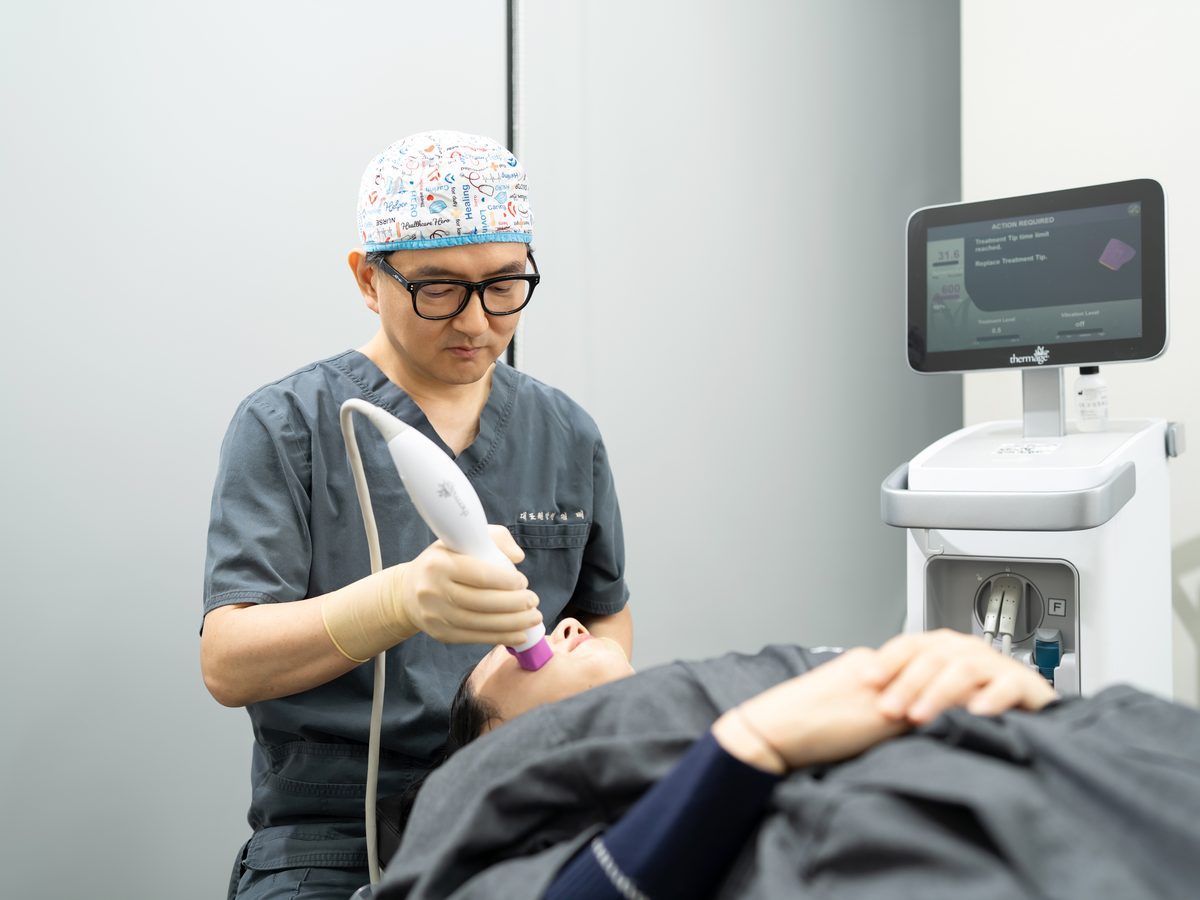
Here, the doctor who plans your Collagen Injection & Filler treatment is the doctor who injects it, in a private room with one patient booked at a time, and an interpreter stays with you from reception to the treatment room in English, Japanese or Chinese. I'm Dr. Ko Dong-il, a member of the Korean society of fillers.
What is in a Korean dermal filler, in plain terms?
Most filler used in Korean clinics is hyaluronic acid (HA), a sugar molecule your skin already makes, bonded into a gel so it holds its shape for months rather than days. Whether the dermal filler Korean clinics use is made locally or imported, the two things worth knowing are the product name and whether it is approved for that area, so ask for both and keep the name.
| Term | What it means | Why it matters to you |
|---|---|---|
| Hyaluronic acid (HA) | The gel most fillers are made of | It can be broken down with an enzyme if needed |
| Cross-linking | How tightly the gel is bonded | Firmer gels usually go to the nose or chin, softer ones to the lips |
| Collagen stimulator | Calcium hydroxylapatite or PDLLA that prompts your own collagen | Hyaluronidase does not dissolve it |
| Cannula | A blunt-tipped tube used instead of a sharp needle | Some injectors prefer it near larger vessels |
The American Society of Plastic Surgeons groups fillers the same way, by material. I'd treat choosing one of them as a separate decision from HA, because they can't be reversed the same way.
The areas filler suits, and the ones I won't inject
HA filler does its job where a specific spot has lost volume or never had much: lips, a hollow temple, a flat nose bridge, a short chin, the backs of the hands or creases on the neck. If you're searching for Korean lip filler, it helps to know that HA in the lip can be dissolved if the shape isn't what you wanted.
The nose and the area between the brows call for more caution. Vessels there connect to the ones that supply the eye, which is why vascular complications in those spots, though rare, are taken so seriously. Temples need care for a similar reason.
Breasts and buttocks are a firm no. The US Food and Drug Administration has not approved dermal filler for enlarging the breasts or buttocks and advises against injecting it there, so if you've seen Korean breast filler or body filler advertised, that is not something I would do. If what bothers you on the body is the surface of the skin, such as stretch marks, that's a different problem, and stretch mark treatment in Korea depends on the phase the marks are in.
Is it volume you've lost, or is the skin sagging?
Filler adds volume. It doesn't lift skin that has descended, and it doesn't relax a muscle that folds a line every time you smile. Filling a cheek to chase sagging along the jaw is one common way a face ends up looking heavy, so before I talk about syringes I want to know which of these you have.
If the deeper layer has dropped, focused ultrasound such as Ultherapy PRIME at the SMAS layer is the tool I'd discuss. If the skin is lax across the dermis, how Thermage FLX works is the more relevant read, and it helps to know what Thermage changes over the following months because the change is gradual. Lines that appear only with movement point to botulinum toxin in Korea.
Skin that is thin and tired rather than hollow is a job for boosters such as Rejuran, which is not a filler at all, or exosome treatment. If filler would not change what you came in for, I'll say so.
Sagging and lost volume are two of the things a photo can show, while pigment depth and skin thickness need you in the room. A front photo and two 45° photos in daylight, with make-up off and the beauty filter switched off, usually answer this question faster than a written description.
What can go wrong, and who handles it once you're home?
Risks and side effects to know
Swelling, bruising, redness and tenderness where the needle went in are common and usually fade over days; the FDA lists them among the expected short-term effects. Lips tend to swell more than other areas in the first days. Less often, filler can feel lumpy, sit unevenly or move from where it was placed, and some people notice swelling or small nodules weeks later.
The rare complication that matters most is vascular occlusion: filler entering or pressing on a blood vessel and cutting off the supply to the skin. The FDA warns that this can lead to skin damage, vision problems including blindness, and stroke. Warning signs are skin that turns pale or dusky, pain far stronger than the injection itself, or any change in your vision, and they need immediate attention, not a wait until morning.
With HA the first response is hyaluronidase, which is one reason I prefer HA in the higher-risk areas.
This is also why I'd ask you to leave a few days in Seoul after the injection rather than flying out the same evening. Problems that need attention usually show in the first days, and they are far easier to deal with while you can still walk back in.
Once you're home, the problem becomes distance. The CDC's advice for anyone treated abroad is to get copies of your records and plan follow-up care before you travel. For filler, that means leaving with the product name, the areas and the amount written down, so a doctor at home knows what they are looking at. If you're weighing filler against an energy device partly because of these risks, the Ultherapy side-effect questions are answered separately.
How filler settles and how long it lasts differs from person to person, and whether you're a candidate at all is decided at the in-person exam.
Fitting a filler appointment into a Seoul trip
The injection itself is short. A Collagen Injection & Filler session takes about 10-20 minutes with a numbing cream, and the downtime is short, though a bruise doesn't check your schedule first. If the trip includes a wedding, a photo shoot or a meeting where you can't look swollen, mention it when you first get in touch, because it changes the order of everything.
For the first day or two, many doctors suggest skipping saunas, hard exercise and facial massage, and sleeping with your head slightly raised.
We're on the 2nd floor of 165 Dosan-daero in Gangnam, about a 10-minute walk from Exit 8 of Sinsa Station on Line 3. Hours are 10:00 to 19:00 on weekdays and 10:00 to 17:00 on Saturdays. We're closed on Sundays and Korean public holidays, so an injection late on a Saturday leaves you a closed day before you could come back in.
Who will I actually see on the day?
You'll see the doctor who will inject you. The consultation isn't run by a sales counsellor, and the treatment isn't handed to an aesthetician afterwards. There are four doctors on the team, appointments run one patient at a time, and you'll hear the whole plan before the first session starts.
Symphony is registered with Korea's Ministry of Health and Welfare as a medical institution permitted to treat international patients, and you can check that registration on Medical Korea yourself. Hours, the team and the photo consultation are all on Symphony's English site.
When you're ready, send the three photos above plus one profile on WhatsApp, along with a short list of any filler, threads or toxin you've had and roughly when. Add the one question you'd want answered before booking flights, such as whether anything old should be dissolved first.
Questions patients ask us
Korea dermal filler brands like Maxfill or Elasty: what are they?
They are hyaluronic acid fillers made in Korea and sold under their own names. The brand on the box matters less than whether the product is approved for the area being treated. Ask for the product name at your appointment and keep it with your records.
Can filler be dissolved if I don't like the result?
Hyaluronic acid filler can usually be broken down with an enzyme called hyaluronidase, though it can take more than one session and the area swells for a while afterwards. Collagen stimulators such as calcium hydroxylapatite or PDLLA are not dissolved this way, which is why choosing one is a separate decision.
Can I fly home the day after a dermal filler Korea appointment?
Flying itself is not usually the problem; you may just be a little more swollen. The reason to stay a few days is to be near the doctor who injected you while early problems, if any, are most likely to show.
Is nose filler riskier than Korean lip filler?
In general, yes. Vessels around the nose and between the brows connect to the ones that supply the eye, so a vascular complication there carries more serious consequences. That is why these areas call for more caution than the lips.
How long does dermal filler last?
The American Academy of Dermatology notes that results can last from months to years depending on the product. Hyaluronic acid is gradually absorbed, and the area treated and your own metabolism also change how long it stays. The effect does not stay forever, so plan with that in mind.
Sources
Treatment details: Symphony Skin Clinic treatment information, checked Oct 21, 2026.
This page is general information from Symphony Skin Clinic, not a diagnosis. Results, risks and recovery differ by person. Treatment is decided after an in-person consultation with a licensed doctor. Clinic and treatment photos on this page were taken at Symphony Skin Clinic.
Keep reading
- Scar / Stretch MarkStretch mark treatment in Korea: the phase decides the planStretch mark treatment in Korea starts by separating the red phase from the white: they are different events in the skin. Symphony: 300,000-500,000 KRW.8 min read
- Lifting / FirmnessUltherapy in Korea: what it actually does, how we plan it, and who it fitsWhat Ultherapy treats, how Symphony checks depth with live imaging first, and who it suits. Doctor-reviewed guide. Get a quote on WhatsApp.8 min read
- Lifting / FirmnessThermage in Korea: how FLX works, honest side effects, and choosing a Seoul clinicHow Thermage FLX works, who it suits, what side effects to expect and what to ask a Thermage Seoul clinic. Doctor-reviewed guide with a WhatsApp quote.8 min read