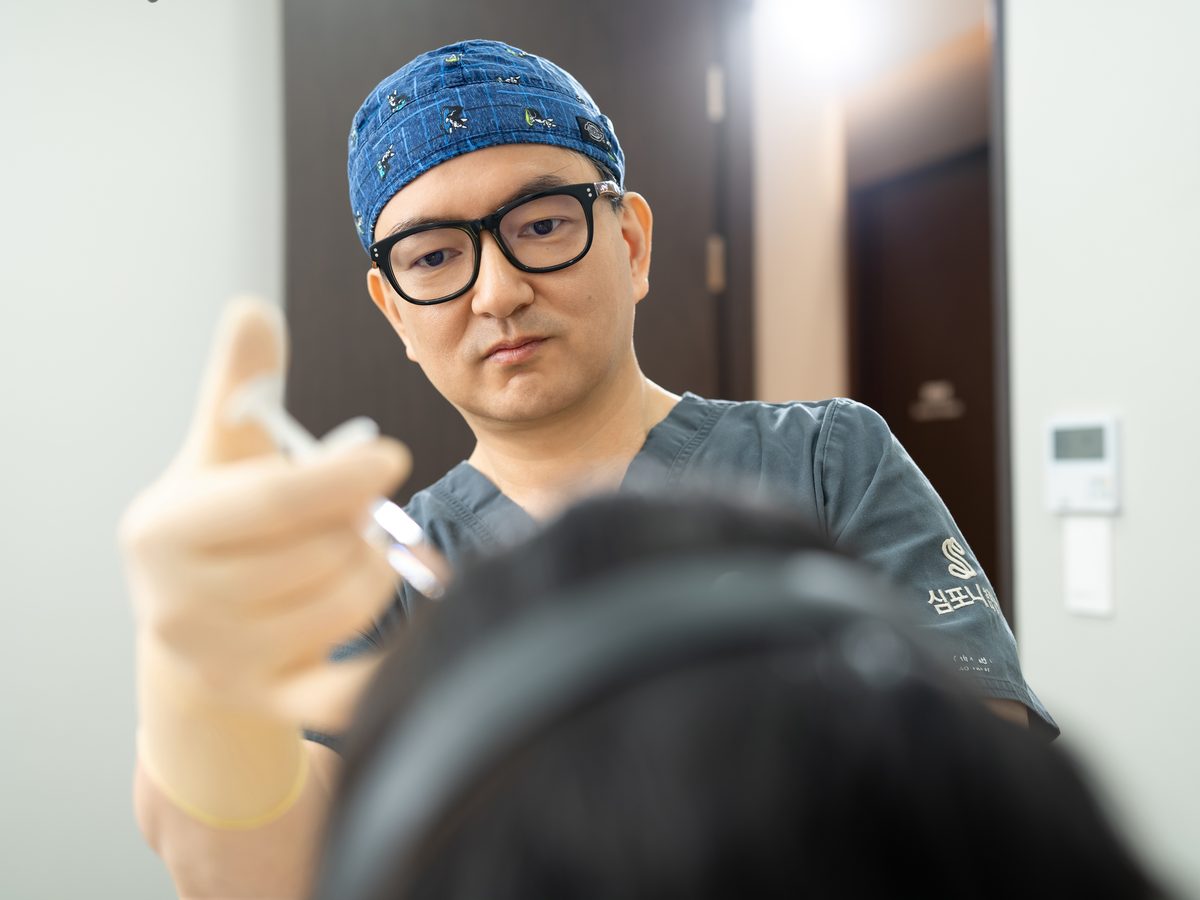
Four kinds of sagging, and how far a korean lift can take each one
Reviewed by Dr. Ko Dong-il, DirectorUpdated 6 min read
In short A korean lift usually means a tightening device such as Thermage FLX, a thread lift, or surgery. The right one follows the layer that has dropped, and devices do not replace surgery for a heavy jowl.

A korean lift in a Seoul skin clinic usually means a tightening device such as Thermage FLX or Ultherapy PRIME, sometimes a thread lift, and it suits early to moderate sagging; a heavy jowl or loose neck skin is usually a job for surgery. On a long weekend, the fear is flying home swollen, or learning on day one that your sagging was never a device case. At Symphony, the doctor who assesses your face also treats it, and an interpreter stays with you from the front desk to the treatment room.
Find the row that looks like your mirror first.
| What you see | Layer involved | What usually fits |
|---|---|---|
| Crepey skin, soft jaw edge | Dermis | Thermage FLX, Sofwave |
| Blurred jawline, early jowl | Fascial layer (SMAS) | Ultherapy PRIME, sometimes threads |
| Jowl hanging below the jaw | Ligaments, fat pads | Threads at the margin, often surgery |
| Thin, dull skin that only looks loose | Skin quality | Skin boosters first |
Which layer has dropped, and why does it decide the tool?
Each device heats a set depth, so it tightens only the layer it reaches. Thermage FLX uses monopolar radiofrequency to heat the dermis; Ultherapy PRIME places focused ultrasound points deeper, toward the fascial layer. A thread holds tissue up mechanically. Heat can firm the skin over a descended cheek pad, but it cannot carry the pad back up.
How long does a lift in korea take, and can it fit a long weekend?
For devices, usually yes. The clinic lists 30-40 minutes for Thermage FLX and Ultherapy PRIME, about 30 for Sofwave and about 20 for EMFACE, with same-day return to normal life. A thread lift takes about 30 minutes under local anaesthesia, with short downtime. Plan around the hours: weekdays 10:00-19:00, Saturdays 10:00-17:00, closed Sundays and Korean public holidays.
Where devices stop
Devices stop at excess skin. Once there is more skin than the face needs, tightening it is no longer enough, and a facelift, which repositions tissue and removes the surplus, is the procedure built for that. Device changes are also slow: collagen remodelling takes weeks to months, which is why the month-by-month Thermage timeline is a fairer guide than a day-one photo.
A photo finds your row faster than a description.
Is a korean thread lift a middle option?
For a narrow group, yes: early jowling, reasonably thick skin, and a wish to see a change sooner than collagen remodelling allows. A thread lift places absorbable threads with small barbs or cones under the skin to hold tissue higher, and the threads prompt some collagen around them as they dissolve.
The American Society of Plastic Surgeons describes thread lifts as less invasive than a facelift, with more modest and shorter-lived results. That trade-off is the whole decision. If you'd be content with a change that fades and may need repeating, threads can fit a trip. If you want the jowl gone, threads will disappoint you, and it's better to hear that before you book.
Three things usually rule threads out. Very thin skin lets threads show or be felt. Heavy tissue outlasts what the anchors can hold. A close-up photo shoot in the following days clashes with the early swelling and small dimples that are common after placement.
An invited discussion published in Aesthetic Plastic Surgery in 2021, on a meta-analysis of thread-lift complications, sorts them the way a traveller should. Infection, thread exposure and visible threads are less frequent, but they are harder to deal with from another country. Keep that split in mind when you read posts about thread lifts gone wrong.
Risks of a korea lift with devices, and who should wait
Short downtime is different from no risk. After radiofrequency, redness, mild swelling and tenderness are common and usually settle within days. A 2006 retrospective analysis of more than 600 monopolar radiofrequency facial treatments, published in the Journal of Drugs in Dermatology, found side effects uncommon and mostly temporary, with rare superficial burns.
Focused ultrasound brings its own short list: tenderness along the treated lines, swelling, occasional bruising, and rarely a temporary patch of numbness or nerve irritation near the jaw. These tend to appear in the first days, so a three-day trip leaves little margin if something needs a second look before you fly.
Who should wait or skip it:
- Pregnancy, or trying to conceive soon.
- An implanted electronic device such as a pacemaker, which matters for radiofrequency.
- Active acne flares, cold sores or broken skin in the area.
- Filler or threads placed recently in the same zone; tell the doctor roughly what and when.
- A wedding or close-up shoot within a few days of the session.
How much tightening you see, and for how long, differs from face to face, and whether a device suits you is decided at the in-person exam, with your skin in front of the doctor.
What if your problem isn't sagging at all?
Then a lift won't fix it, and that's worth knowing before the flight. Skin that has thinned and dulled can look loose in photos while sitting exactly where it always did. A polynucleotide treatment such as Rejuran, a skin-quality injection, or exosome treatment for texture and barrier targets that problem directly.
Lines that deepen when you frown or squint come from muscle, which is the territory of botulinum toxin, planned area by area. And if part of the trip is about the body, stretch marks follow their own logic, set out in the guide to stretch mark phases.
Filler in the cheeks or temples as a lift
Filler can make a face look lifted without moving anything. Volume placed along the upper cheek or at the temple can support the tissue below it, so a mild jowl or a hooded outer brow looks softer.
The limit is load. Adding volume to hold up a heavy lower face makes the face larger before it makes it look lifted, and that is the point where threads or surgery are the better-matched tools. Filler and devices can share one plan, though heat-based treatments and fresh filler in the same zone are usually spaced apart, so the order matters. Tell the doctor about any filler you already have, even from years ago.
What should you ask before booking a korean lift?
Ask questions that force a layer-by-layer answer:
- Which layer has dropped on my face, and which device reaches it?
- Why this combination, and why in this order?
- What should I expect at four weeks and at three months?
- What would make you advise against treating me now?
A clinic should answer each in plain words. The questions worth asking before booking Ultherapy carry over to any device, and a realistic Ultherapy results timeline is useful calibration before you look at anyone's photos. Bring your own answers as well: what bothers you most, what comes second, and how visible you can afford to be during the trip.
If you're still weighing a device against threads, or against leaving it another year, send a five-second clip of you slowly turning your head and one line on what bothers you most on WhatsApp.
Questions patients ask us
Can I fly home the day after a lift in korea?
After a device session, usually yes: the clinic lists same-day return to normal life for Thermage FLX, Ultherapy PRIME and Sofwave, and EMFACE has no downtime. Some redness or tenderness may travel with you. After a thread lift the downtime is short, but early swelling and small dimples are common, so leave a few days if the trip allows.
Is a korean face lift the same thing as a korea lift in a skin clinic?
No. A face lift is surgery that repositions deeper tissue and removes excess skin, and the American Society of Plastic Surgeons lists surgical risks such as bleeding, nerve injury and scarring. In a skin clinic, a lift usually means devices or threads, which suit earlier sagging.
When does a Thermage FLX change show?
Some firmness can be felt soon after, but the collagen response builds over weeks to months. A session done before a flight home is judged later, from home, against photos taken in the same light.
Does a device lift hurt?
Thermage FLX, Ultherapy PRIME and Sofwave are done with topical numbing cream; EMFACE needs no anaesthesia. Pulses are felt as hot or sharp moments along the treatment lines. A thread lift uses local anaesthesia.
Do I need to speak Korean for the consultation?
No. An interpreter in English, Japanese or Chinese stays with you from reception to the treatment room, so the consultation and the session happen in your language.
How does a chin or neck thread lift differ from a face thread lift?
The mechanism is the same: absorbable threads hold tissue higher.
Sources
- Thread lift
- Facelift safety: risks
- Invited Discussion on: A Meta-Analysis and Systematic Review of the Incidences of Complications Following Facial Threadlifting (Aesthetic Plastic Surgery, 2021)
- Monopolar Radiofrequency Facial Tightening: A Retrospective Analysis of Efficacy and Safety in Over 600 Treatments (2006)
Treatment details: Symphony Skin Clinic treatment information, checked Oct 15, 2026.
This page is general information from Symphony Skin Clinic, not a diagnosis. Results, risks and recovery differ by person. Treatment is decided after an in-person consultation with a licensed doctor. Clinic and treatment photos on this page were taken at Symphony Skin Clinic.
Keep reading
- Lifting / FirmnessThermage before and after in Korea: what changes, when, and what we will not promiseThermage before and after, explained as a timeline: what changes on the day, at 2 to 3 months and at 6 months, and why we do not post reviews or photos.6 min read
- Skin BoosterRejuran in Korea: a skin treatment that is not a fillerRejuran korea explained by a Seoul clinic: what polynucleotide does, why it is not a filler, and how Rejuran, Rejuran i and Rejuran HB differ from each other.8 min read
- Skin BoosterExosome treatment in Korea: what it is, how we deliver it, and who it suitsWhat exosome treatment in Korea is, how a doctor sets the units and delivery route, who it suits and what recovery looks like. Doctor-reviewed guide from Seoul.7 min read