
Is There an Ultherapy At-Home Device? What the Clinic Machine Shows on Screen That a Handheld Can't

Written by Dr. Ko Dong-il, DirectorUpdated 7 min read
In short There is no at-home version of Ultherapy. The Ultherapy machine is a clinic device that images the tissue layers before it fires focused ultrasound at the SMAS; home "HIFU" handhelds are separate consumer products that cannot show you what depth they are reaching.
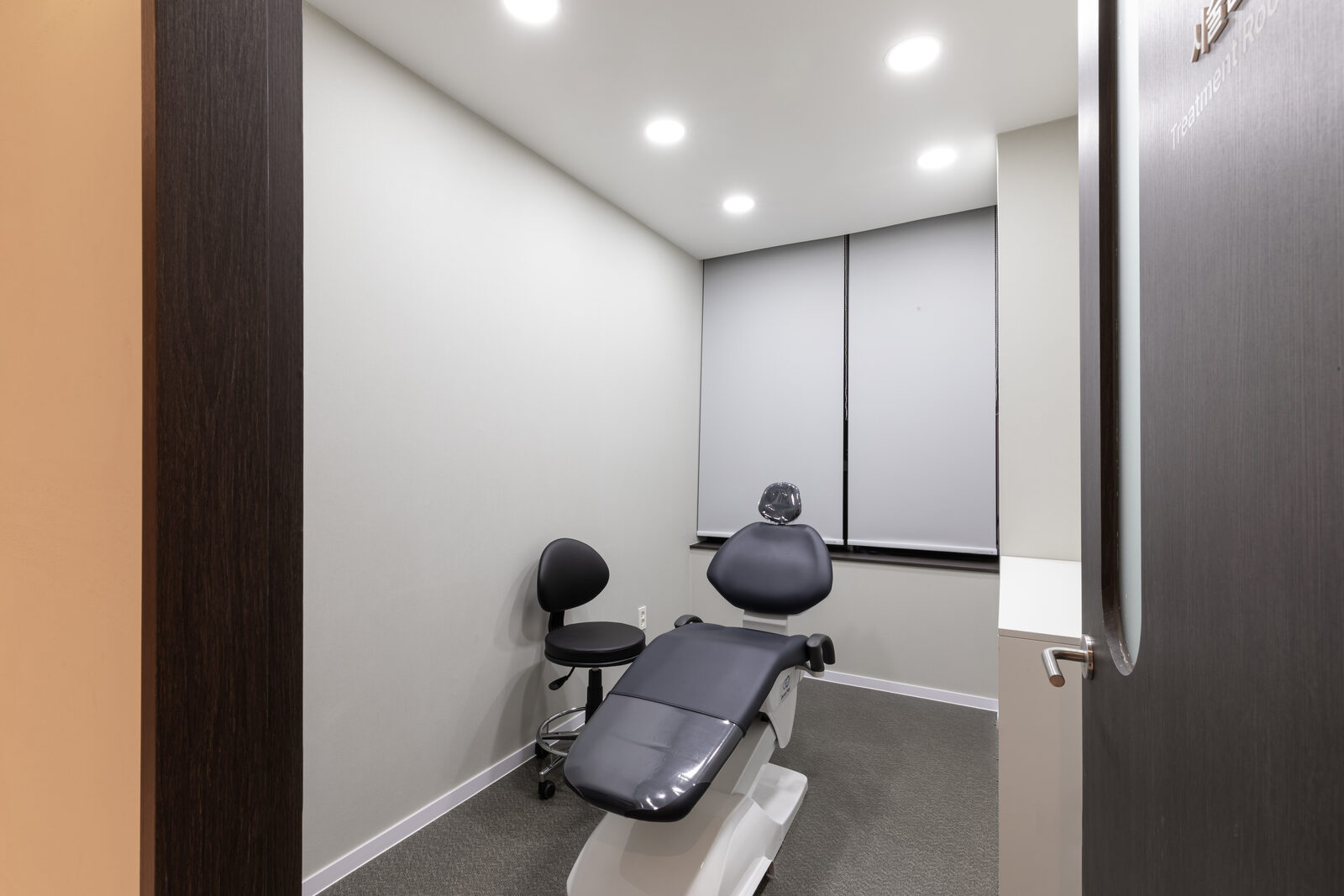
Ultherapy is the name of one clinic system, and there is no home version of it. The handheld "HIFU" or "ultrasound lifting" gadgets sold online are separate consumer products made by other companies. Some borrow the vocabulary, but none of them is the Ultherapy machine scaled down.
That matters because what makes Ultherapy PRIME work is less the ultrasound itself than knowing where it lands. The clinic system puts your tissue layers on a screen before it delivers energy. A handheld can't show you that, so you can't know what depth it is reaching on your face.
What does the Ultherapy machine actually do?
It focuses ultrasound into small points at the SMAS, the fibrous layer under the fat that a surgeon works on in a facelift, at 3.0 and 4.5 mm, plus a 1.5 mm tip for thin skin around the eyes. Each point is heated so the tissue coagulates and contracts, and collagen rebuilds around it over the following months.
A 2023 systematic review in the International Journal of Environmental Research and Public Health describes these as thermal injury zones of about 1 mm³ at roughly 60 to 70 °C, with remodelling starting around day 28. According to its manufacturer, the system is US FDA-cleared to lift the eyebrow, the skin on the neck and under the chin, and to improve lines and wrinkles on the décolleté.
The part people miss: the screen
The PRIME system shows the layers under the skin in real time before any energy goes in. Fat thickness and the position of the fascia differ between people, and between areas of the same face. On a cheek with thick fat the target sits deeper than on a thin temple; seeing that first is the point.
Why depth is the whole safety question
Energy that lands too shallow is where burns come from. A 2021 expert consensus on microfocused ultrasound with visualization, published in The Journal of Clinical and Aesthetic Dermatology, puts it plainly: "Burns can also result from ultrasound energy delivered at too-shallow depths. Poor coupling of the transducer to skin or stacking of energy pulses can also cause burns."
Each of those three is something a trained operator watches for: the depth on screen, whether the transducer sits flush on the skin, and not firing twice in the same spot. The same review of clinic studies found redness and swelling in almost all patients, with bruising, temporary altered sensation, burns and striations together at about 2%. Those are figures from supervised treatments with imaging.
The eye area shows why depth matters more than strength. Using the standard 3.0 or 4.5 mm tip on thin eye-area skin can leave hollowing under the eye, which is why at Symphony the tip is changed to 1.5 mm rather than the setting turned down.
| Question | Clinic Ultherapy PRIME | Home handheld |
|---|---|---|
| Can you see the target layer? | Yes, real-time imaging | No |
| Is the depth stated and fixed? | 1.5, 3.0, 4.5 mm tips | Check the manual |
| Who decides where to fire? | The treating doctor | You |
Clinic Ultherapy PRIME compared with what you can know about a home handheld
Then what can a home device do?
That depends entirely on the device, and the honest answer is that most have little published human evidence behind them as standalone lifting tools. Low-energy home devices may be pleasant to use as part of a skincare routine. Whether one can tighten the SMAS the way a clinic system does is a claim to check, not to assume.
If you already own one, or are thinking of buying one, check four things before it touches your face:
- What the regulator cleared it for. A clearance for one use is not a clearance for facial lifting.
- The stated depth and energy. No stated depth means you can't know which layer you are heating.
- The instructions on passes. Repeated passes over one spot is the "stacking" the consensus warns about.
- Where not to use it. The thin skin around the eyes and over the neck is the riskiest place to guess.
Stop and see a doctor if you get a blister, a red line or grid pattern, a patch that stays numb, or pain that lingers after use.
Wondering whether your concern needs a clinic device at all? Send two daylight photos (front and side) on WhatsApp and say what bothers you most. The doctor tells you which layer it points to, and whether a lifting device is even the right tool; the plan is confirmed in person.
Not every face needs the deepest device
Fine, crepey skin sits in the dermis, not the SMAS. For that, a device built for 1.5 mm can be a better match than deep lifting; Sofwave vs Ultherapy and how the layer decides lays out the split. Radiofrequency is another route, explained in how Thermage FLX works and its side effects.
And heavy, loose skin is beyond any energy device. The 2023 review found improvement declined as baseline laxity rose and was smaller in people with a BMI over 30.
What happens in a clinic session at Symphony
Line length, energy level and shot count are planned for your face, recorded on your chart, and shown to you before and after: what was planned and what was used. Symphony works to a genuine-cartridge rule; you can check the Amplify II authentication mark on the machine, and a genuine-product certificate is issued after the session. A non-genuine tip may not deliver the intended energy to the intended layer, which means a weaker result and a burn risk.
For comfort there is numbing cream, inhaled sedation (you stay awake) or IV sedation with monitoring where appropriate. There is no wound and normal activity resumes the same day, with possible tenderness or mild swelling. The step-by-step version is in what Ultherapy actually does and how it is planned, and the realistic Ultherapy timeline covers when changes show.
The doctor who assesses you performs the session; you can read about the physicians on the medical team page. Symphony is about a 10-minute walk from Exit 8 of Sinsa Station on Line 3, open 10 am to 7 pm on weekdays and 10 am to 5 pm on Saturdays; directions are on the location and hours page.
If you have been using a home device, send a photo of its box or manual page that lists depth and energy along with your face photos. It tells the doctor what your skin has already been exposed to.
Questions patients ask us
Is a home HIFU device the same as Ultherapy?
No. Ultherapy is a specific clinic system with interchangeable depth tips and real-time imaging of the tissue layers. Home HIFU handhelds are separate consumer products, and their depth and energy vary by maker.
Can I use a home ultrasound device between Ultherapy sessions?
Tell the doctor before your session what device you use, how often and on which areas, ideally with a photo of the manual. Whether to pause it around treatment is decided for your skin at the consultation.
What does the Ultherapy machine look like?
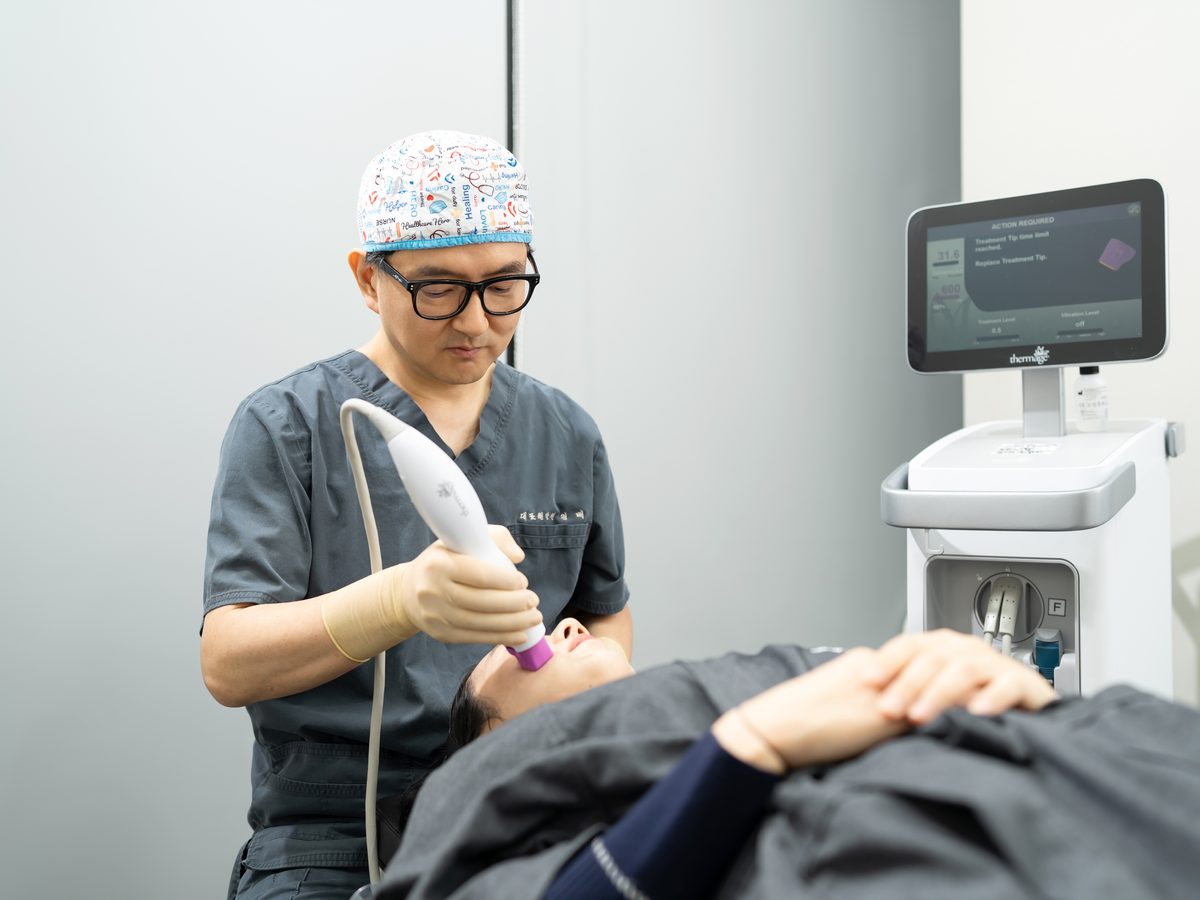
It is a console with a screen and a handpiece that holds a transducer tip. The screen shows the layers under the skin so the operator can confirm depth before delivering energy.
How often can Ultherapy be repeated?
Our treatment page gives an interval of 6 to 12 months. Because collagen keeps forming after a session, repeating earlier does not usually add to the result.
Is there an Ultherapy machine for the eyes?
The same system uses a 1.5 mm tip for the eye area, which works in the dermis. Using the deeper face tips on thin eye-area skin can cause hollowing, so the tip is changed rather than the energy lowered.
Sources
- A Systematic Review of the Efficacy of Microfocused Ultrasound for Facial Skin Tightening (Int J Environ Res Public Health, 2023)
- Customized Treatment Using Microfocused Ultrasound with Visualization: A Pan-Asian Adaptation of the Expert Panel's Gold Standard Consensus (J Clin Aesthet Dermatol, 2021)
- What is Ultherapy (Merz Aesthetics)
Treatment details: Symphony Skin Clinic treatment information, checked Nov 12, 2026.
This page is general information from Symphony Skin Clinic, not a diagnosis. Results, risks and recovery differ by person. Treatment is decided after an in-person consultation with a licensed doctor. Clinic and treatment photos on this page were taken at Symphony Skin Clinic.
Keep reading
- Lifting / FirmnessUltherapy in Korea: what it actually does, how we plan it, and who it fitsWhat Ultherapy treats, how Symphony checks depth with live imaging first, and who it suits. Doctor-reviewed guide. Get a quote on WhatsApp.8 min read
- Lifting / FirmnessUltherapy before and after in Korea: a realistic timeline, and why we do not post reviewsA realistic timeline for Ultherapy results in Korea: what happens on the day, how change builds over months, and why we do not publish patient reviews.6 min read
- Lifting / FirmnessUltherapy FAQ: side effects, safety and what to expect in KoreaCommon questions about Ultherapy in Korea: side effects, safety, and how to prepare. Doctor-reviewed answers from Symphony Skin Clinic.7 min read