Ulthera vs Thermage: One Works at the Fascia, One in the Skin Itself, and Which Layer Has Loosened on Your Face

Written by Dr. Hyun Kyung-bae, Chief Director · Plastic surgeon (Korea) · Reviewed by Dr. Ko Dong-il, DirectorUpdated 8 min read
In short Ulthera (Ultherapy) sends focused ultrasound down to the SMAS fascia layer for lift; Thermage FLX heats the dermis with radiofrequency for tightening and texture. Which one fits depends on which layer has loosened, and many faces need both.
Ulthera vs Thermage comes down to depth. Ultherapy PRIME, often shortened to Ulthera, sends focused ultrasound down to the SMAS, the fascia layer a surgeon works on in a facelift. Thermage FLX heats the dermis with radiofrequency while the surface is cooled. One aims at support that has slipped underneath; the other at skin that has thinned and loosened on its own.
So the useful question is which layer has given way on your face. That gets read in the room: by looking at you upright, by feeling how thick the skin is, and for Ultherapy, on a live ultrasound image before any energy goes in.
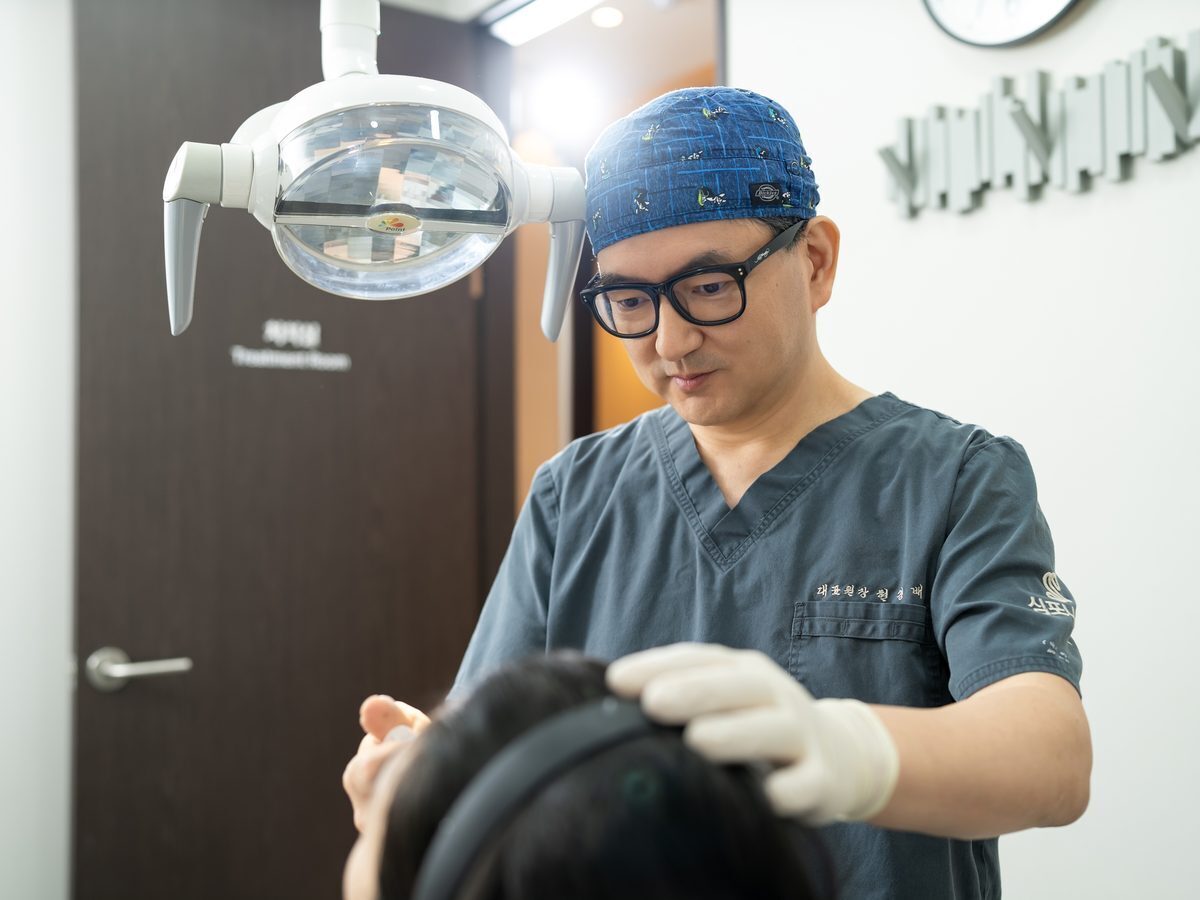
I'm Dr. Hyun Kyung-bae, Chief Director at Symphony in Sinsa, Seoul, a plastic surgeon in Korea, trained at Yonsei University College of Medicine and a Clinical Professor at Yonsei University. Both devices sit in our lifting rooms, so this comparison isn't a case for the one we happen to own.
What does each device actually do in the skin?
Ultherapy coagulates small points of tissue at 3.0 mm and 4.5 mm with its standard tips, which reaches the SMAS. Thermage spreads radiofrequency heat through the dermis while cooling the surface. Both prompt new collagen afterward, so neither result is finished on the day you fly home.
| Ultherapy PRIME | Thermage FLX | |
|---|---|---|
| Energy | Focused ultrasound | Monopolar radiofrequency |
| Main layer | SMAS fascia, 3.0 / 4.5 mm | Dermis, surface cooled |
| Aimed at | Lift where support has dropped | Tightening and skin texture |
| Eye area | 1.5 mm eye tip, in the dermis | 0.25 cm² eye tip |
| Session | 30 to 90 minutes | About 30 to 40 minutes |
| Numbing | Topical cream | Topical cream, inhaled sedation on request |
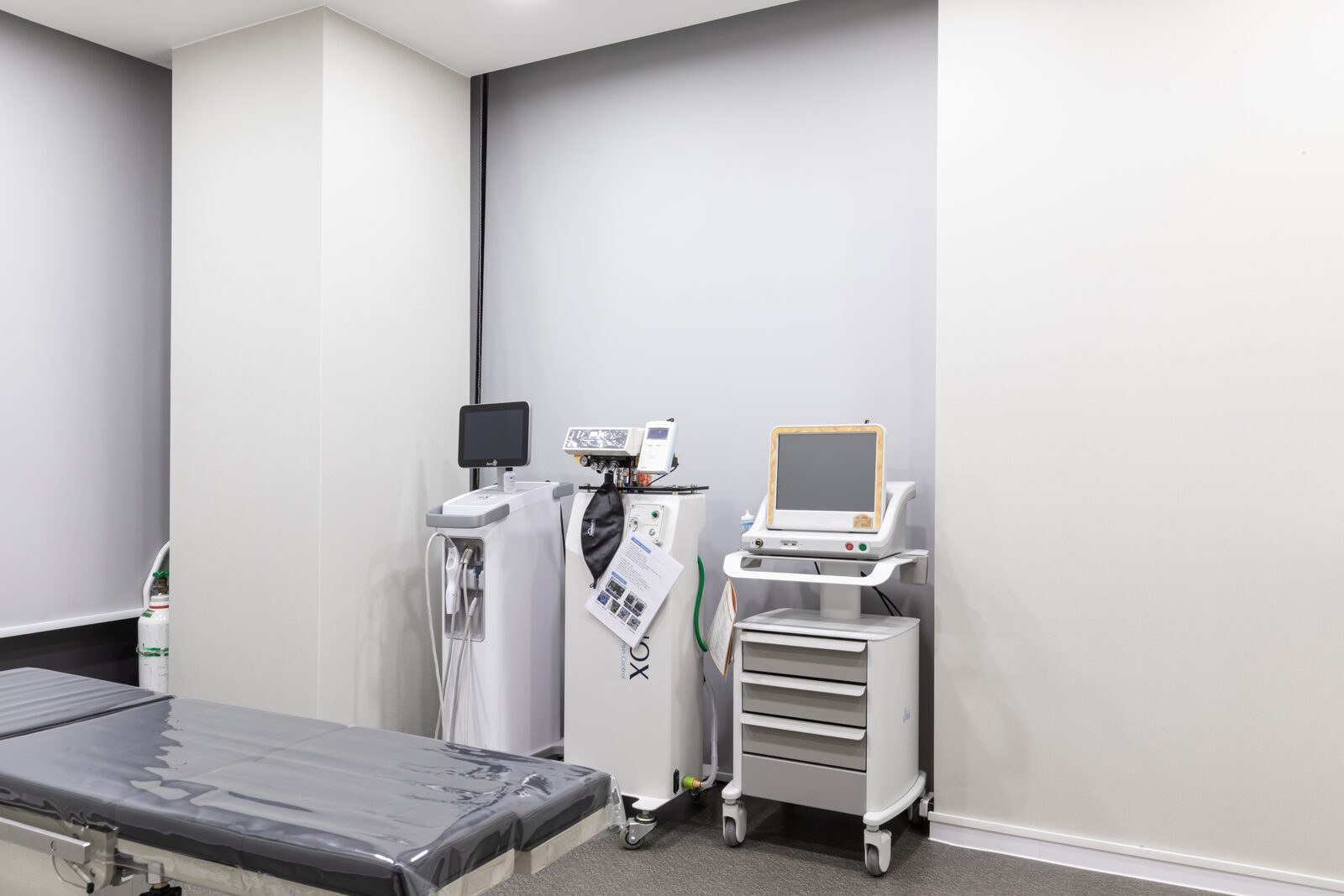
Ultherapy PRIME and Thermage FLX at Symphony
Ultherapy: seeing the layer first
At the coagulation point the tissue reaches the 60 to 70°C range, the working temperature for collagen production. The body treats those points as something to repair, so firmness keeps building after the session.
The PRIME version puts the tissue layers on screen in real time. Fat thickness and the position of the fascia differ between people, and between regions of the same face, so depth is checked on the image rather than assumed.
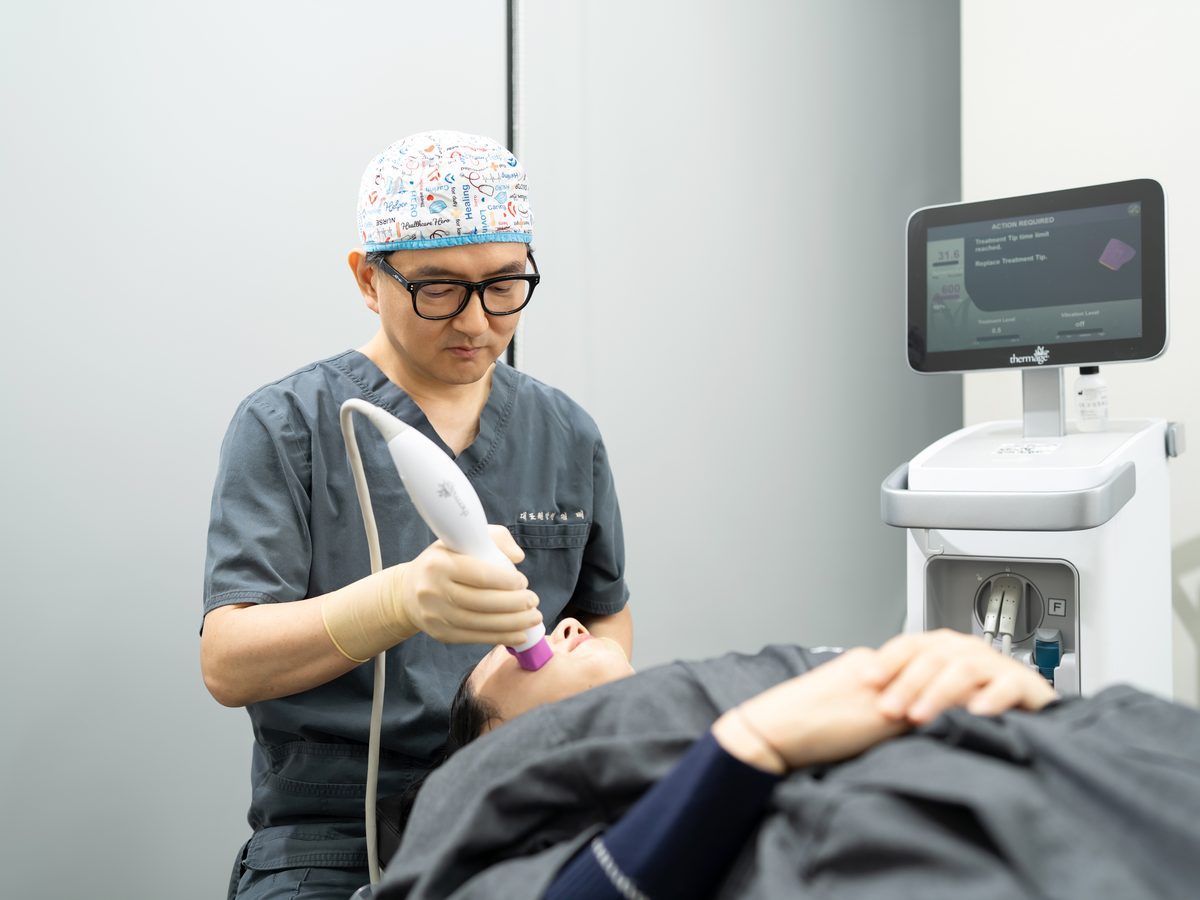
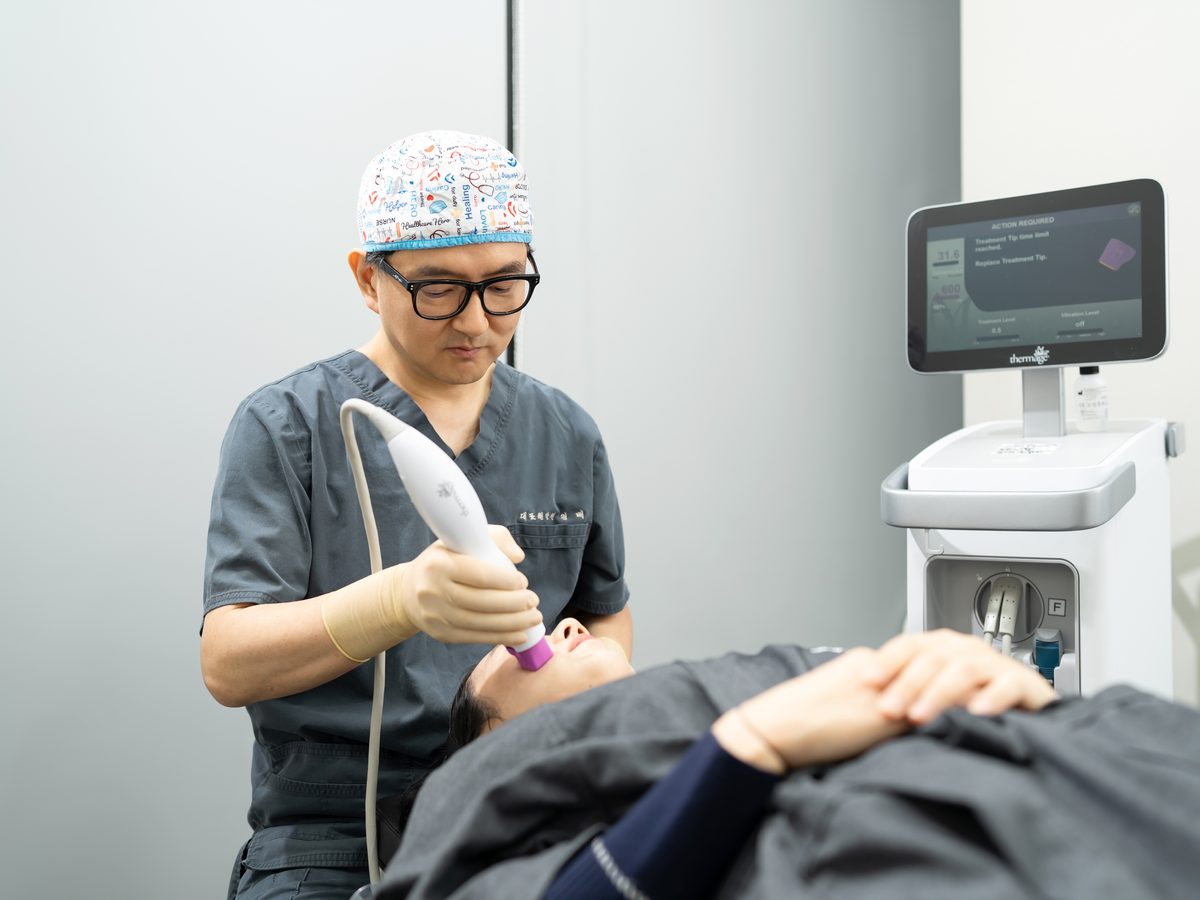
Thermage: heat held in the dermis
The heat does two separate things. Existing collagen fibers contract straight away, which is why the outline can look a little tighter the same day. Then fibroblasts lay down new collagen over the following months.
On the timeline we describe at consultation, fine lines improve from around 2 to 3 months, and tightening is usually clearest around 6 months. The fourth-generation FLX recalculates energy shot by shot and uses a larger tip, so there are fewer passes over the same area. More on the device itself is in how Thermage FLX works and its side effects.
The American Academy of Dermatology describes the same split in timing. With radiofrequency, most people feel some tightening right away and see the best results in about 6 months. With ultrasound, most see modest lifting and tightening within 2 to 6 months. Note the word modest.
Which one fits your face?
If the jawline and lower cheek have dropped while the skin itself still has some thickness, the conversation leans toward Ultherapy. If the skin has gone thin and crepey, with fine lines and looser texture while the contour mostly holds, it leans toward Thermage. Plenty of faces show both.
Signs that point each way:
- Leans Ultherapy. A softer jawline, a brow that sits lower than it did, eyelid heaviness that comes from the brow.
- Leans Thermage. Crepey cheeks, fine lines around the eyes, firmness you notice more by touch than in the mirror.
- Often both. A drop in the lower face plus thinning skin on top of it.
What separates them in an exam is concrete. How much skin can be pinched over the cheekbone. Whether the fold beside the mouth comes from tissue sliding down or from skin that has lost its spring. On the ultrasound image, how much fat sits over the fascia, which changes how deep the lines are set. If the answer is mainly skin quality and only slightly contour, what Ultherapy actually does and who it fits is the other half of this picture.
Not sure which pattern is yours? Send two daylight photos on WhatsApp, one from the front and one from the side, with your face relaxed and no filter, and say which bothers you more: the outline of your jaw or the texture of your skin.
Why not do both in one session?
That option exists. Our Ulther-ma-jet session puts Ultherapy depth, Thermage tightening and Mirajet delivery into one planned visit of about 60 to 90 minutes.
Combining is a trade, though. It means more energy on one face in one sitting, and for thin or reactive skin, two separate visits can be the gentler route. Whether your face suits the combined session is decided after the exam, along with the order of steps.
Some readers will find that neither device matches their concern. Sagging comes in several kinds, and four kinds of sagging and how far a lift can take each sorts them. For people whose concern sits mainly in the upper dermis, Sofwave and what it treats at 1.5 mm is a third device worth reading about.
What can go wrong with each, and who should wait?
Both are non-surgical: nothing is cut and there's no dressing. After Thermage, mild warmth or redness usually settles within a few hours. After Ultherapy, some tenderness or mild swelling can occur. The manufacturer lists redness, swelling, pain and transient nerve effects as the most common side effects reported in its clinical trials.
The eye area is where depth matters most. Using the standard 3.0 or 4.5 mm Ultherapy tip on thin under-eye skin can lead to hollowing, so the tip is changed to the 1.5 mm eye tip rather than the setting turned down. Thermage uses its own 0.25 cm² eye tip for the same reason.
Tips matter for safety as well as results. A non-genuine cartridge may not deliver the intended energy to the intended layer, or may not sit flush on the skin, which means a weaker result and a burn risk. At Symphony the Thermage tip is unsealed in the room in front of you, and you're told the planned shot count before treatment and the actual count after. Ultherapy runs on genuine cartridges, and the authentication mark is on the machine for you to check. A genuine-product certificate is issued for both.
It's usually wiser to wait or rethink if:
- You're pregnant or breastfeeding.
- There's an infection, cold sore or open breakout where the device would go.
- You have a pacemaker or another implanted electronic device. Radiofrequency devices are generally avoided there, so mention it before anything is planned.
- Filler or threads were placed in the same area recently. Bring the product name and date.
- The sagging is heavy. The AAD notes that people with a small amount of sagging get the best results from these treatments. When skin hangs in folds, a device won't do what surgery does, and I'd say so at the first visit.
How do these fit into a short Seoul trip?
Both list same-day return to normal activity, and both are repeated every 6 to 12 months if you continue. Because new collagen keeps forming for months, repeating sooner doesn't add to the result.
Say you're 46, flying in from Sydney with five nights, bothered by a softer jawline and crepey cheeks. You land on a Monday evening. Tuesday is the consultation and, if the plan suits you, the session the same day under topical numbing cream. Wednesday to Friday are ordinary sightseeing days, with any tenderness fading. You fly home Saturday night.
We're open weekdays 10:00 to 19:00 and Saturdays 10:00 to 17:00, closed on Sundays and Korean public holidays. The clinic is on the 2nd floor of the Sinsa Hill Building, about a 10-minute walk from Sinsa Station Exit 8 on Line 3; hours and directions has the map. An interpreter is with you from reception to the treatment room, and the doctor who plans your session performs it. You can see who that is on our doctors page.
After treatment you get a written recovery guide in your language, WhatsApp check-ins on day 1, 3 and 7, and guidance at day 30 on when maintenance would be due. If something looks off, your photo goes to the physician and the reply comes from the physician.
To start, send one photo of your face in profile with your chin level, plus the dates you'll be in Seoul, and ask whether your jawline or your skin texture is the bigger part of what you see. In the room, the first thing I'll check is how much the tissue moves when you tilt your head down, because that tells me whether the fascia needs to be part of the plan.
Questions patients ask us
Is Thermage or Ulthera more uncomfortable?
Both are felt. Ultherapy is felt along each line of focused ultrasound, and Thermage FLX delivers its heat with vibration, which takes the sharp edge off compared with earlier models. Topical numbing cream is standard for both, and inhaled sedation, a nitrous oxide and oxygen mix that keeps you awake, can be discussed.
How many shots will I need?
It depends on the size of your face, how much support has been lost and which areas you want prioritised. The planned count is set at consultation and the actual count is told to you afterwards.
Can I have filler or a skin booster on the same trip?
Often, but the order and spacing matter, because heat and injected product interact. Tell the doctor everything you're planning for the trip so the sequence can be worked out at consultation.
Is Ulther-ma-jet the same as having Ulthera and Thermage separately?
It combines Ultherapy, Thermage and Mirajet delivery in one planned session of about 60 to 90 minutes. Whether your skin suits that much in one sitting, or two separate visits, is decided after the exam.
Will I look different straight after the session?
After Thermage, the outline can look slightly tighter the same day as existing collagen contracts. Most of the change from either device builds over the following months as new collagen forms.
Sources
- Many ways to firm sagging skin (American Academy of Dermatology)
- What is Ultherapy? (manufacturer)
- Thermage FLX skin tightening treatment (manufacturer)
Treatment details: Symphony Skin Clinic treatment information, checked Nov 12, 2026.
This page is general information from Symphony Skin Clinic, not a diagnosis. Results, risks and recovery differ by person. Treatment is decided after an in-person consultation with a licensed doctor. Clinic and treatment photos on this page were taken at Symphony Skin Clinic.
Keep reading
- Lifting / FirmnessThermage in Korea: how FLX works, honest side effects, and choosing a Seoul clinicHow Thermage FLX works, who it suits, what side effects to expect and what to ask a Thermage Seoul clinic. Doctor-reviewed guide with a WhatsApp quote.8 min read
- Lifting / FirmnessUltherapy in Korea: what it actually does, how we plan it, and who it fitsWhat Ultherapy treats, how Symphony checks depth with live imaging first, and who it suits. Doctor-reviewed guide. Get a quote on WhatsApp.8 min read
- Lifting / FirmnessFour kinds of sagging, and how far a korean lift can take each oneA korean lift means a device, threads or surgery. Which sagging each reaches, the real risks, and what to send on WhatsApp before you book a trip.6 min read