Rejuran Healer Candidate Test: Who Should Wait, and How Many Days to Leave Before You Fly

Written by Dr. Hyun Kyung-bae, Chief Director · Plastic surgeon (Korea) · Reviewed by Dr. Kang Eun-joo, DirectorUpdated 8 min read
In short There is no lab test for Rejuran Healer. A few screening questions (fish allergy, active breakouts, a recent laser, isotretinoin, pregnancy) and the kind of skin problem decide it. Book it at least two days before you fly.

Is there a Rejuran healer candidate test you can take at home before you pay for flights to Seoul, or do you only find out once you're lying in the treatment chair?
There isn't a lab test. Whether Rejuran Healer suits you comes down to a few screening questions (a fish allergy, active breakouts or infection, a recent laser or peel, isotretinoin, pregnancy) and one more: whether your problem is rough, thin, tired-looking skin and not sagging. If you pass, the bumps from the injections usually settle in a day or two and a bruise takes longer, so book it early in your trip and never the day before you fly.
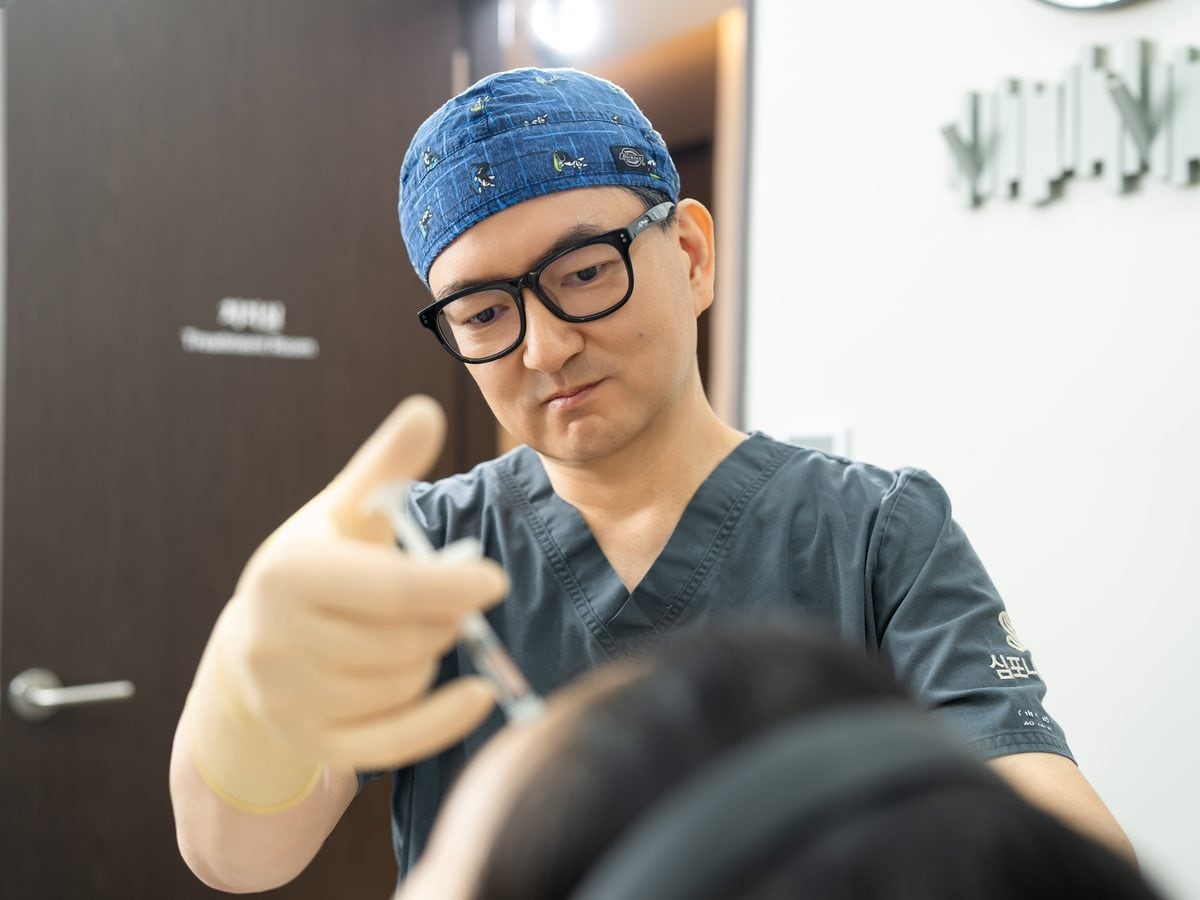
Hello, I'm Dr. Hyun Kyung-bae, Chief Director at Symphony Dermatology in Sinsa, Seoul. I'm a plastic surgeon and a Clinical Professor at Yonsei University, and I've been at Symphony for 17 years.
Three things about how we work matter for this question. The doctor who goes through your screening questions is the same doctor who does the injections, with no sales counsellor in between. We see one patient at a time, in a private treatment room. And an English interpreter stays with you from reception to the treatment room at no extra charge, so the allergy and medication questions get asked and answered properly.
Is there a real test for Rejuran Healer?
Not in the sense of a blood test or a skin scan. Rejuran is built on polynucleotides (PN), DNA fragments purified from fish, and a review comparing PN with PDRN in dermatology describes exactly that origin. It's the reason the first screening question is about fish allergy.
The rest is a conversation and a look at your skin. A Rejuran healer candidate test, in practice, is the doctor asking the right questions and then reading which layer your problem sits in.
Who should wait, and who should skip it
In short, these are the situations where most doctors would postpone or avoid the injections. They're general medicine; your own history decides which one applies.
Risks and side effects to know
- A known fish allergy, or a past reaction to a PN or PDRN injection
- Active acne, a cold sore, eczema or any infection on the area
- A laser, peel or microneedling on the same area in the past couple of weeks
- Isotretinoin now or recently (bring the month you stopped)
- Pregnancy or breastfeeding
- Aspirin, blood thinners or high-dose fish oil, which make bruising more likely (never stop a prescribed medicine on your own; tell the doctor)
A match here often means a different day, not never. A cold sore heals, and the redness from a peel fades.
Will it change what you're actually worried about?
Put simply, this question rules out more people than any allergy. Rejuran works in the dermis, on texture, fine crepey lines, dullness and thin skin. It doesn't lift a jawline or replace lost volume. If the cheek dropping toward the jaw is what bothers you, these injections won't move it, and I'll say so before you book sessions.
How Rejuran and Juvelook differ is laid out in Rejuran vs Juvelook, which answer different complaints, and what the treatment is in the first place is in Rejuran in Korea: a skin treatment that is not a filler.
If you can't tell which side of these lists you're on, send a daylight photo of the area that bothers you and your travel dates on WhatsApp, along with the thing you're unsure about, such as an old fish allergy or a peel last month. A photo gives a direction, not a final plan, and you can ask before booking anything.
What will your skin look like in the days after?
The injections leave small raised bumps at each point, a little like a grid of mosquito bites. That's the product sitting in the skin before it spreads, and it's why Rejuran is not a treatment for the evening before a photo shoot. The session itself takes about 10-20 minutes after numbing cream.
| When | What you'll likely see | What's usually fine |
|---|---|---|
| Treatment day | Raised bumps and redness at the injection points, some tenderness | Gentle cleansing at night; skip makeup, alcohol, saunas and hard workouts |
| Day 1-2 | Bumps flattening, most gone by the end of day 2 | Makeup and ordinary sightseeing for most people |
| Day 3-7 | A bruise, if you got one, turning yellow and fading | Saunas and facials once the skin has settled; sunscreen daily |
| After the first week | Skin back to its usual look; any texture change builds gradually | Planning a next session, if a course was advised |
Bruising comes from the needle meeting a small vessel. It's more likely on thin skin under the eyes and if you take aspirin or fish oil, so the medication question in the screening is about your trip as much as your safety.
Here's the part most trip plans miss. If your Seoul days include a jjimjilbang night, a hot spa or a K-beauty facial with massage, do those before the injections. Heat, steam and rubbing on freshly punctured skin are what most doctors ask you to avoid for the first couple of days, and they're easy to schedule around once you know.
How many days should you leave before flying home?
Two full days between the session and the flight is the minimum I'd plan for most people, three if you bruise easily or have photos booked at home. Flying itself isn't the issue. There's no general medical rule against flying after superficial skin injections, though cabin air is dry, so pack a plain moisturizer. What you're planning around is how you'll look, and whether you can still be seen in Seoul if a bump behaves oddly.
Say you're 27, landing on a Tuesday night for five nights and flying out on Sunday afternoon. Wednesday is your first full day, and the clinic is open 10 am to 7 pm on weekdays, so ask at booking whether your consultation and session can fall on that same day. Thursday is for the bumps to settle: cafés around Sinsa, a museum, nothing with steam. Friday and Saturday are back to makeup and full sightseeing.
If something looks unusual on Saturday, the clinic is open until 5 pm, and that's your last chance to be seen in person, because it's closed on Sundays and Korean public holidays. You fly on Sunday with two clear days behind you.
Now flip it. The same trip with Rejuran booked on Saturday means boarding on Sunday with bumps still visible and no open clinic between you and the airport. That's the version I'd talk you out of.
The clinic is on the second floor of the Sinsa Hill Building, 165 Dosan-daero in Gangnam, about a 10-minute walk from Exit 8 of Sinsa Station on Line 3. Hours and directions are on Symphony Dermatology's English site. If you're weighing one session against a course, what Rejuran costs in Korea and which part of it you're choosing explains what the total is built from: the number of sessions, the area, and how many trips the course needs.
How often do bumps, bruises or allergic reactions happen?
Bumps and redness at the injection points happen to nearly everyone; they're the expected part of the treatment. Tenderness and a little swelling for a day or two are also expected. Bruising is common enough to plan for and often takes around a week to fade. A systematic review of polynucleotide treatments in aesthetic medicine found the reported side effects were mostly mild and short-lived, and a real-life assessment of high-purification PN injections described a similar pattern.
Less common are an infection at a puncture point, a lump that doesn't flatten, and an allergic reaction, which is why fish allergy sits at the top of the screening list. How your own skin reacts is individual, which is why the screening matters more than the product name.
If you're already home, a bump that grows hotter, larger and more painful after day 2, pus, spreading redness, or any swelling of the lips, eyelids or throat is not a wait-and-see sign. Throat or breathing symptoms mean emergency care wherever you are. For the rest, see a local doctor or dermatologist and bring the product name plus the date and areas treated; ask for these before you leave Seoul, and take a photo of the treated area each day. You can send those photos on WhatsApp too.
If Rejuran isn't the answer for you
Being ruled out for Rejuran doesn't rule out treatment. It points somewhere else.
If the problem is sagging and not texture, that's a lifting question, and Ultherapy PRIME uses focused ultrasound at the deeper layer surgeons lift. The Ultherapy FAQ on side effects and what to expect is the place to start, what changes an Ultherapy quote covers the cost side, and a realistic Ultherapy timeline shows when a change tends to appear.
If a fish allergy is what keeps you off Rejuran, exosome is a different kind of booster; whether it suits your allergy history is a question for the doctor, and what decides an exosome session's price explains the cost. And if your worry is marks on the body, stretch mark treatment in Korea is a separate plan, because the phase of the mark decides it.
What to send before you book
Before you buy flights, send two things on WhatsApp: a list of the medicines and supplements you take, with the date of any laser, peel or isotretinoin course in the past year, and the dates you'll be in Seoul. Ask which day of your trip the session should fall on, and how the deposit and payment work for those dates. You hear the whole plan and the total before the first session starts.
In the room, the question I'm answering is which layer your problem sits in, the surface or the dermis underneath, and whether Rejuran reaches it.
Questions patients ask us
Can I have Rejuran if I'm allergic to fish or seafood?
Rejuran's polynucleotides are purified from fish DNA, so a fish allergy is the first thing to raise. Purified PN is not the same as eating fish, but most doctors weigh that history carefully before injecting, and with a past reaction to a PN or PDRN injection most would avoid it. A shellfish-only allergy is a different allergen; mention it anyway.
Is it okay to fly the same day as a Rejuran session?
There's no general medical rule against flying after superficial skin injections. The reasons to avoid it are practical: the bumps are still visible, cabin air dries the skin, and once you've left Seoul you can't be seen at the clinic if a bump behaves oddly. A two-day gap is what I'd plan.
I stopped isotretinoin a few months ago. Does that rule me out?
Not automatically. Guidance on how long to wait after isotretinoin before procedures that puncture the skin has loosened in recent years, and doctors differ on it. Bring the month you stopped and the dose you took; that date matters more than the fact that you took it.
Can I combine Rejuran with a laser or Ultherapy on the same trip?
Combinations are common, but the order matters. Injecting skin that's already red or raw from another procedure raises the chance of irritation, so the sequence and the gap between sessions need planning. If you're thinking about two treatments, mention both in your first message so your trip has room for the gap.
Will one session be enough if I only come to Seoul once?
One session gives a modest change in how the skin feels and looks. Studies of polynucleotides mostly use several sessions a few weeks apart, so a single trip usually means one session now and a later decision about whether a course is worth more trips.
Can I wear makeup the next day?
For most people, yes, once the puncture points have closed, which is usually by the next morning. Use clean brushes or clean fingers. If a bruise shows, a color-correcting concealer covers it better than extra layers of foundation.
Sources
- Comparison of Polynucleotide and Polydeoxyribonucleotide in Dermatology: Molecular Mechanisms and Clinical Perspectives
- The Effectiveness of Polynucleotides in Esthetic Medicine: A Systematic Review
- A Real-Life Assessment of Injectable Polynucleotides High Purification Technology in Aesthetic Medicine for Skin Rejuvenation
Treatment details: Symphony Skin Clinic treatment information, checked Nov 9, 2026.
This page is general information from Symphony Skin Clinic, not a diagnosis. Results, risks and recovery differ by person. Treatment is decided after an in-person consultation with a licensed doctor. Clinic and treatment photos on this page were taken at Symphony Skin Clinic.
Keep reading
- Skin BoosterRejuran vs Juvelook: they are not competing, they answer different complaintsRejuran vs Juvelook compared by a Seoul clinic that offers both: polynucleotide against PDLLA, what each one changes, and when the change appears.8 min read
- Skin BoosterRejuran in Korea: a skin treatment that is not a fillerRejuran korea explained by a Seoul clinic: what polynucleotide does, why it is not a filler, and how Rejuran, Rejuran i and Rejuran HB differ from each other.8 min read
- Skin BoosterWhat Rejuran costs in Korea, and which part of it you are choosingRejuran korea cost in three parts: medication, delivery route and optional comfort. In-house range 300,000 to 700,000 KRW a session, VAT 10% charged separately.7 min read