Rejuran Bumps: How Long Until They Flatten, and When a Bruise Changes Your Flight Plan

Written by Dr. Hyun Kyung-bae, Chief Director · Plastic surgeon (Korea) · Reviewed by Dr. Kang Eun-joo, DirectorUpdated 8 min read
In short Rejuran bumps usually flatten within one to three days, a little slower under the eyes. A pinpoint bruise can take about a week, so book early in your Seoul trip and leave seven days if photos matter.

Rejuran bumps: how long will they stay on your face, and will they still be there when you board the flight home?
For many people, the small raised bumps from a Rejuran Healer session flatten within one to three days, a little slower under the eyes. What usually sets your flight date is a bruise: a needle point that bruises can take about a week to fade.
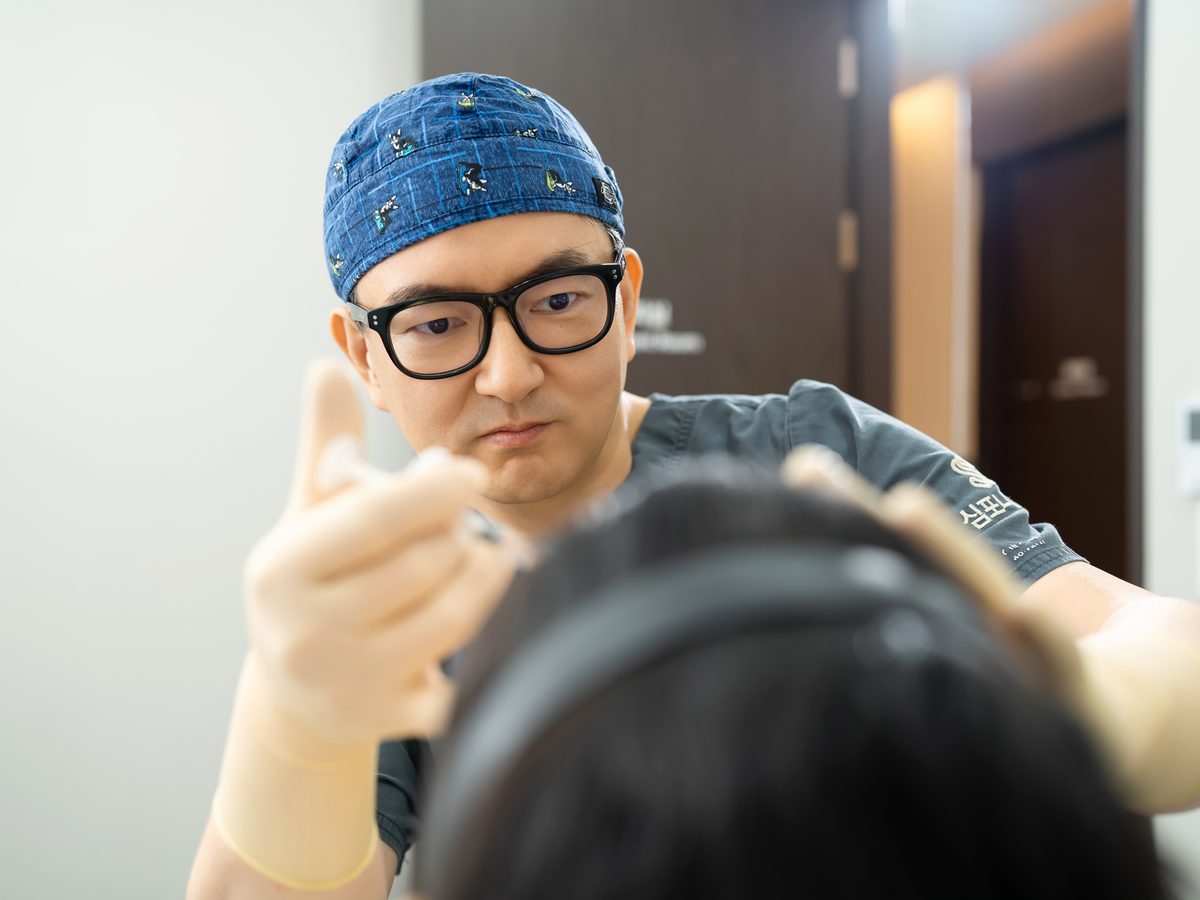
Hello, I'm Dr. Hyun Kyung-bae, Chief Director at Symphony Dermatology in Seoul, where I've practiced for 17 years.
The doctor who plans your session is the one who injects it, so the person deciding how many points go into your cheeks is the same person you can ask about them the next morning. Treatment runs one patient at a time in a private room, and a medical interpreter for your language stays with you from reception to the treatment room, at no extra charge.
Why does Rejuran leave bumps at all?
Rejuran is a polynucleotide gel, and it works where it's placed: in the upper layer of the dermis, in many small deposits a short distance apart. Each deposit lifts the skin above it into a small wheal, a bit like a mosquito bite without the itch. Over the next day or two the gel spreads out and the fluid around it is absorbed, so the bumps soften and then flatten.
So the bumps are the treatment sitting at the depth it was meant for. They're expected, and they tell you nothing yet about the result, which builds over the following weeks. If you want that background, what Rejuran is and why it isn't a filler covers it.
Rejuran bumps: how long each area takes to settle
In short, these are general patterns for the standard needle technique, not promises for your face.
| Area | Bumps usually flatten | What can linger |
|---|---|---|
| Cheeks and temples | Within 1-2 days | Faint redness at a few points for a day |
| Forehead | Within 1-2 days | Pinpoint marks at the entry points |
| Under the eyes | 2-3 days | Puffiness, worse after salty food or a flat pillow |
| Neck | 1-3 days | Small marks along the creases |
Risks and side effects to know
Bruises sit outside this table because they keep their own clock: a few days of purple, then yellow-green, and usually gone within about a week.
What makes them last longer on some faces?
Thin skin shows every deposit and holds swelling longer, which is why the under-eye area is slower. The number of points matters too: a full-face session leaves more bumps than one aimed only at the cheeks, though each still flattens on roughly the same clock. And anything that thins your blood, from prescribed aspirin to fish oil, ginkgo or vitamin E supplements, makes a bruise more likely at any single point.
Age plays in. Skin in your fifties and sixties is usually thinner and slower to clear fluid than it was at thirty, so plan around the upper end of each range in the table.
If you're not sure where your own face falls, send one daylight photo of the area you want treated and your arrival and departure dates on WhatsApp, and ask which day of the trip the session should go on. A consultant reads the photo with the physician and replies with options; I'll say plainly that a photo gives a direction, not a final plan.
How many days before your flight should you book it?
Book it early in the trip, and count backwards from the first day your face needs to look like itself at home. For bumps alone, three clear days before you fly is usually enough. If there's a dinner, a meeting or photos within a few days of landing, plan around a possible bruise instead and leave about seven.
Say you're 61, flying in from Vancouver for eight nights, and your son's engagement dinner is three days after you get home. You land on a Wednesday evening. On Thursday you come in for the consultation, and if the plan is agreed and the session happens that afternoon, your cheeks are dotted with small bumps by the time you're back at the hotel. Friday morning they look a little fuller than they did at bedtime, because fluid settles while you lie flat; by lunch they've softened.
Saturday the cheeks are smooth and a couple of points under the eyes are still raised. The clinic is open until 17:00 that day, so if anything worries you, you can still ask in person. Sunday the clinic is closed, and you spend it at a market rather than a spa. Monday to Wednesday you're sightseeing with nothing to hide. You fly home Thursday, a full week after the session, and a bruise, if one appeared, has had seven days to fade before the dinner.
With only four nights, the same plan works if the session goes on your first full day, but a bruise may fly home with you. Check the calendar before you buy the ticket: the clinic is closed on Sundays and Korean public holidays, including the days around Lunar New Year and Chuseok, and the opening hours are on Symphony Dermatology's English site. The number of injection points also shapes what one session involves, which what Rejuran costs in Korea explains.
The first 48 hours: what helps and what to leave alone
Leave the bumps alone. Pressing, rubbing or massaging them doesn't flatten them faster; the gel spreads on its own, and pressing mostly adds redness at the entry points.
Swelling and bruising: what to watch for
Keep heat away for two or three days. In Seoul that means skipping the jjimjilbang and the hotel sauna, along with hot baths and hard workouts. A drink on the first evening tends to make swelling and bruising worse, so save it for later in the week.
If you had the under-eye area treated, sleep with your head a little raised the first night and go easy on salty food, since both show up as morning puffiness. A cool pack wrapped in a cloth, a few minutes at a time, helps with puffiness; don't put ice straight on the skin. From the next morning, wear sunscreen, because you'll be walking around the city.
Bruises, lumps that stay, and signs that aren't normal
The common reactions are short-lived: redness at the injection points for hours to a day, bumps for one to three days, mild tenderness when you wash your face, and the occasional pinpoint bruise that takes about a week. A systematic review of polynucleotide studies found the reported side effects were mostly mild and temporary. How long each one lasts varies between people; the ranges here are where many faces land.
Less often, a small firm lump stays after the surface bump is gone, usually where a deposit sat slightly deeper. These generally soften over the following weeks. Firm nodules are a bigger topic with collagen stimulators than with Rejuran, which is covered in what Juvelook changes and when it shows.
Some people should wait or skip it. That includes anyone with an acne flare, a cold sore or any infection where the needles would go, a laser or peel in the past couple of weeks, isotretinoin in recent months, pregnancy or breastfeeding, and an allergy to fish, because the polynucleotides in Rejuran are derived from fish DNA. If you take a blood thinner, don't stop it on your own; tell the doctor at the consultation and ask your prescribing doctor at home before the trip.
If something comes up after you fly home, aftercare stays in the same WhatsApp chat you booked on, so a photo of the area goes there. Warmth that spreads, pain that grows instead of easing, pus or a fever are different: see a doctor at home that day, because those point to infection and need hands-on care. Keep a note of what was injected and where, which the U.S. CDC's guidance on medical travel also recommends bringing home.
Can you add another treatment on the same trip?
Sometimes, and the answer depends on what else bothers you. If a treatment wouldn't change what you came in for, I'll tell you. Rejuran works on texture, fine lines and thin, tired-looking skin; it won't lift a jawline or replace lost volume.
If hollow cheeks or temples are the real complaint, read where Rejuran and Juvelook differ and how Juvelook works and which type you need. Juvelook keeps its own recovery timeline, so on a short trip the order of the two matters, and the questions to ask about Juvelook or Juvelook Volume help with that. The amount needed changes the plan, as what decides how many Juvelook vials you need explains.
If sagging along the jaw is what bothers you, that's a question of depth for a device such as Ultherapy PRIME, and what changes an Ultherapy quote covers the factors. Whatever you combine, you hear the whole plan and the total before the first session starts.
If there's a dinner, a meeting or photos after you land, send that date on WhatsApp together with the names of any blood-thinning medicines or supplements you take, and ask whether a bruise would still show by then. Deposit and payment are settled after the consultation, so if you need to know how that works before buying flights, ask in the same message.
On the day, the first thing I check is how thin the skin is where you want treatment, because that decides how many points it can take and how slowly your bumps will settle.
Questions patients ask us
Can I wear makeup over Rejuran bumps?
The usual advice is to keep makeup off for the rest of the treatment day, because the entry points are still open. From the next morning, light foundation over the points is generally fine. Concealer won't fully hide a raised bump on day one; it hides the redness better once the bump has flattened.
Can I fly the day after Rejuran?
Flying with bumps isn't a known reason they last longer. The dry cabin air is the bigger nuisance, so carry a plain moisturiser and skip sheet masks on the plane. The reason to leave more days is so a bruise or a puffy spot can be looked at while you're still in Seoul.
My bumps were gone after one day. Did the treatment not work?
How fast the bumps flatten reflects how the gel spread and how quickly your skin cleared fluid, not the result. Changes in texture and fine lines build over the following weeks, so a quick recovery isn't a sign anything was missed.
Will a second session leave the same bumps?
Usually yes, on a similar timeline, because the technique is similar. Rejuran is commonly given as a short course spaced a few weeks apart, so if your trip allows only one session, ask how the rest of the course could fit a later visit.
Is it normal for Rejuran bumps to itch?
A mild itch as the bumps settle is common and passes within a day or two; don't scratch. Hives spreading beyond the treated area, or swelling of the lips or eyelids, suggest an allergic reaction and need prompt medical care wherever you are.
Sources
- The Effectiveness of Polynucleotides in Esthetic Medicine: A Systematic Review
- Comparison of Polynucleotide and Polydeoxyribonucleotide in Dermatology: Molecular Mechanisms and Clinical Perspectives
- A Real-Life Assessment of Injectable Polynucleotides High Purification Technology in Aesthetic Medicine for Skin Rejuvenation
- Medical Tourism
Treatment details: Symphony Skin Clinic treatment information, checked Nov 9, 2026.
This page is general information from Symphony Skin Clinic, not a diagnosis. Results, risks and recovery differ by person. Treatment is decided after an in-person consultation with a licensed doctor. Clinic and treatment photos on this page were taken at Symphony Skin Clinic.
Keep reading
- Skin BoosterRejuran in Korea: a skin treatment that is not a fillerRejuran korea explained by a Seoul clinic: what polynucleotide does, why it is not a filler, and how Rejuran, Rejuran i and Rejuran HB differ from each other.8 min read
- Skin BoosterWhat Rejuran costs in Korea, and which part of it you are choosingRejuran korea cost in three parts: medication, delivery route and optional comfort. In-house range 300,000 to 700,000 KRW a session, VAT 10% charged separately.7 min read
- Collagen / VolumeJuvelook before and after: what changes, when it shows, and what we will not promiseJuvelook before and after, described honestly by a Seoul clinic: what changes on the day, from six weeks and over a course, and why we do not post reviews.7 min read