Which Korean skin booster is right for you? Your skin decides it in the consult room

Reviewed by Dr. Kang Eun-joo, DirectorUpdated 8 min read
In short A Korean skin booster is not one product but a group of injectables (polynucleotides, PDLLA, hyaluronic acid blends) placed shallow in the skin. Which one fits is decided at the consult, after the doctor reads your skin.

The part of a Korean skin booster visit that surprises people is when the product gets chosen: in the consult room, after a doctor has looked at your skin, and at Symphony by the same doctor who will do the injections. ‘Skin booster’ in Korea is a family of injectables, not one product, so the honest answer to ‘which one?’ depends on what your skin is short of.
If you've been told at home that your skin is too reactive for injectables, or you had a booster that left you red and lumpy for a week, the stations below are where that history changes the plan. The treatment page for the Symphony Custom Booster is the short version. This is the day itself, from reception to the treatment room.
What is a Korean skin booster, exactly?
A Korean skin booster is a small-volume injectable placed in the upper layers of the skin to improve hydration, texture or thinness, not to add shape. The label covers different substances: polynucleotides (Rejuran), PDLLA collagen stimulators (Juvelook), hyaluronic acid blends, and exosome products used alongside devices.
Creams can't do the same job, for a size reason. The ‘500 Dalton rule’ described by Bos and Meinardi in Experimental Dermatology (2000) explains that compounds much larger than about 500 Daltons struggle to pass through intact skin. Hyaluronic acid chains and polynucleotides are far larger than that, which is why boosters go in through a needle, or through a device that opens fine channels first.
Type ‘skin booster Korea’ into a search bar and you'll get a dozen brand names: Rejuran, Re2O, Juvelook, NCTF, Jalupro. Several of them sit on our own menu. The brand matters less than the category, because the category decides what the injection is trying to change.
‘Glass skin’ is a common way to describe the goal. A booster can make skin look more hydrated and even over a series of sessions. It doesn't remove brown spots, and it isn't a lightening treatment. If your real goal is lighter or more even colour, that's a pigment question and usually a different treatment.
Reception and the interpreter come first
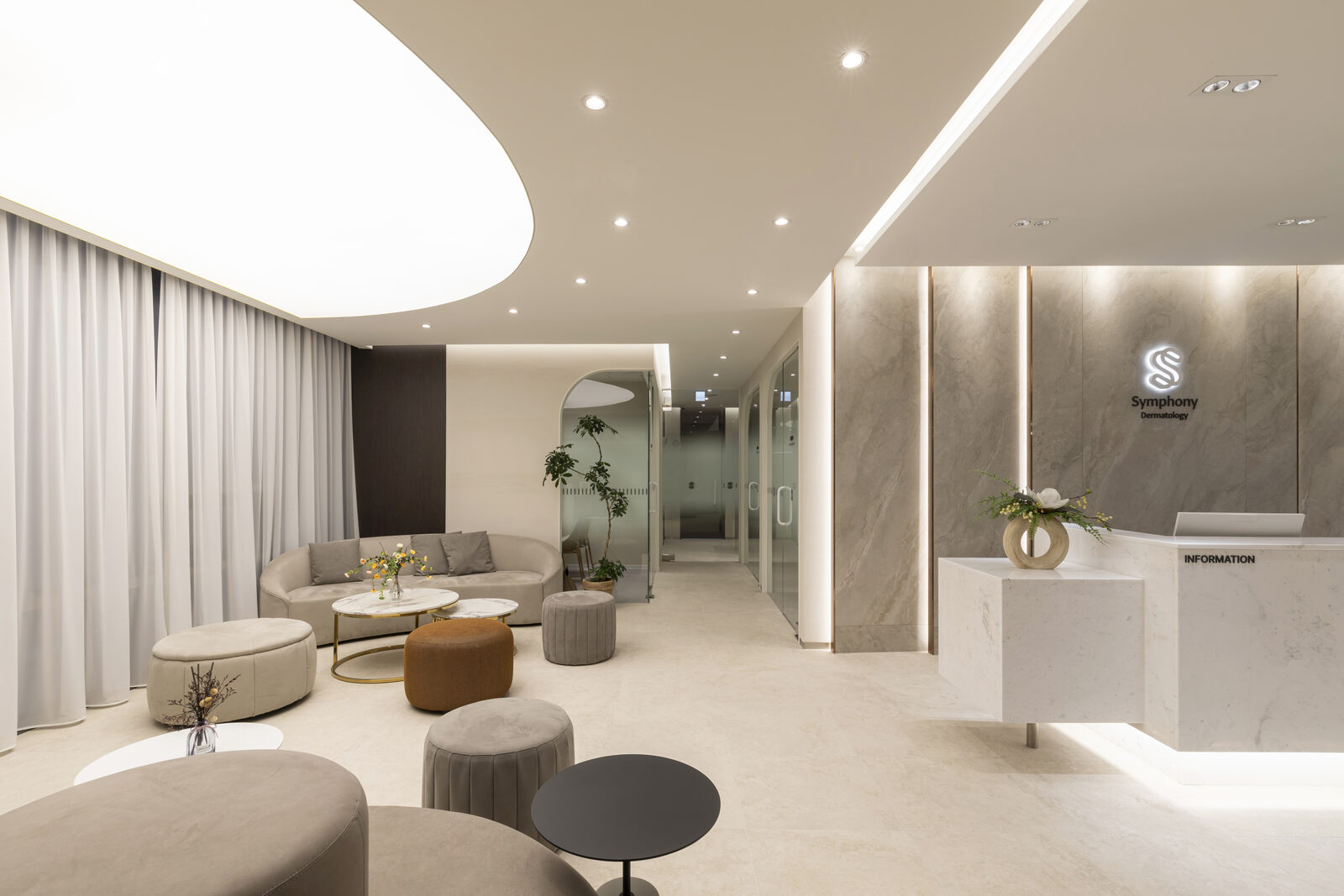
The first station is reception at 2F, 165 Dosan-daero (Sinsa Hill Building), about a 10-minute walk from Exit 8 of Sinsa Station on Line 3. An interpreter for English, Japanese or Chinese stays with you from reception through to the treatment room, so one person hears your whole history and your questions.
Symphony works by 1:1 appointment: one patient at a time, in a private treatment room. For someone with reactive skin, that has a practical meaning. There's time to say ‘this stung badly last time’ or ‘I flushed for three days’ before anything touches your face.
Bring what you can. The useful list is short:
- product names of anything injected in the past year, and roughly when
- any reaction you had (a phone photo of it helps more than a description)
- the medicines and supplements you take, including blood thinners
- any laser, peel or microneedling done at home in the past month
If you don't remember a brand, a photo of an old receipt or product sticker works.
What does the doctor look at before choosing a booster?
Four things decide the category: how thin the skin is, whether dullness comes from dehydration or pigment, how reactive the skin is, and whether the real complaint is texture or lost volume. Each one points toward a different family, and sometimes toward no booster at all.
Thickness. A light pinch or stretch under the eye and over the cheek shows crepiness, meaning thin, finely wrinkled skin. Fine crinkling that appears with very little pressure suggests thin skin, and that is where polynucleotides are often considered. A systematic review in the Journal of Cosmetic Dermatology gathers the published studies on polynucleotides in esthetic medicine, including skin quality and the under-eye area.
Dehydration or pigment. Under good light, dehydrated skin shows fine surface lines that soften when the skin is gently stretched. Brown patches don't change with stretching. Boosters are aimed at the first problem, not the second. Realistic hydration results are skin that feels less tight and looks smoother in daylight; the effect is modest and fades, so boosters are often repeated.
Reactivity. Visible redness, broken capillaries along the nose, or a history of flushing after procedures often argues for fewer injection points at the first session. During an active flare, I may calm the skin first and inject later.
Texture or volume. A hollow under the eye or a flattened cheek is a volume problem. Boosters go in shallow and in small amounts, so they don't replace volume. Collagen stimulators such as Juvelook sit between the two, and that conversation tends to run longer.
Rejuran, Juvelook, exosome and HA blends: the Korea skin booster menu side by side

The four families differ in what they're made of and how fast anything shows. The exam confirms the row that fits your skin or moves you to another one.
| Family and what it is | Usually considered for | Worth knowing |
|---|---|---|
| Polynucleotides (Rejuran): purified DNA fragments, originally from fish | Thin, tired or crepey skin, under-eye area | Small bumps for a short time; mention any fish allergy |
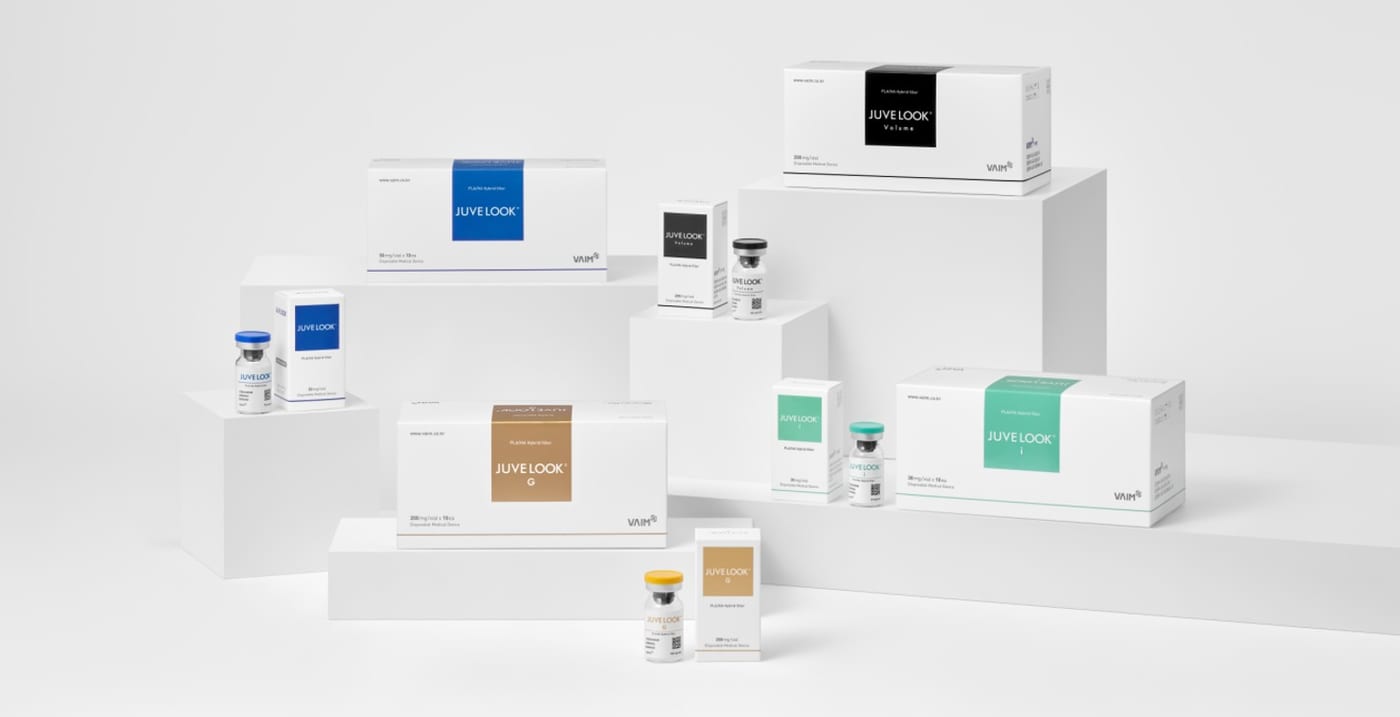
| PDLLA with HA (Juvelook): a collagen stimulator mixed with hyaluronic acid | Texture, fine scarring, mild hollowness | Builds gradually over weeks; placement matters |
| Exosome products: stem-cell culture ingredients, or your own exosomes (autologous) | Recovery and texture, often with a device | Published human data are thinner than for polynucleotides |
At Symphony, skin analysis comes first, and the Symphony Custom Booster is mixed on the day, with ingredients and concentration set by how hydrated and how reactive your skin is. Needle-free delivery with Mirajet is an option to ask about if injections worry you.
You'll also see both ‘PN’ and ‘PDRN’ on Korean menus. A 2025 review in Pharmaceutics compares polynucleotides with polydeoxyribonucleotide: related molecules that differ in chain length and in how they behave in tissue, so the two aren't simply interchangeable.
Rejuran has its own explainer on how polynucleotides work and why Rejuran isn't a filler, and so does Juvelook, on which Juvelook type fits and how many sessions to plan.
What happens in the treatment room, and what are the risks?
A skin booster session usually means numbing cream, then many small, shallow injections or a device-assisted application. Afterwards, small bumps, redness and possible bruising are expected. Most of this settles; the rare serious risk with any injectable is product entering a blood vessel.
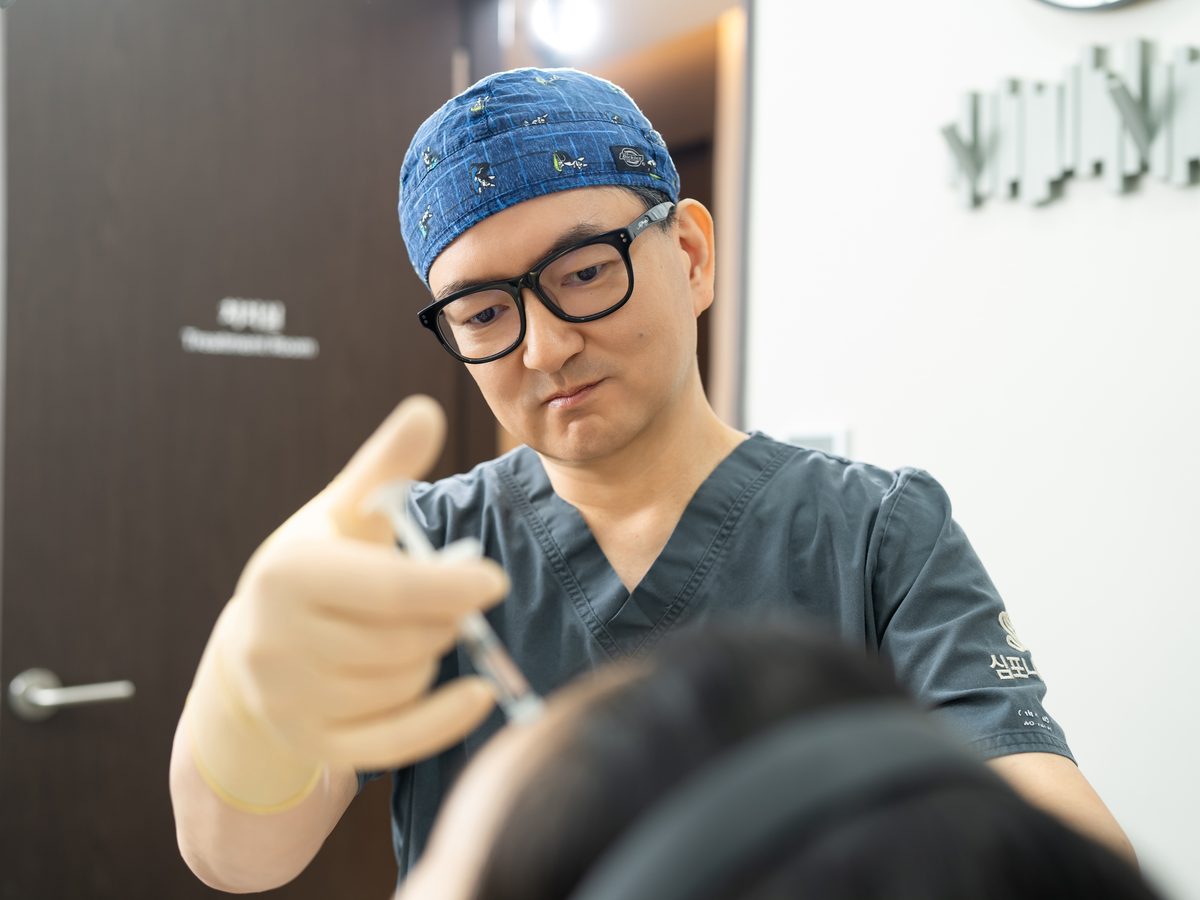
At Symphony the interpreter is still in the room at this stage, and the doctor holding the needle is the same one you spoke to in the consult. That continuity matters when you're the patient who reacted last time: nobody has to relay your history second-hand.
For hyaluronic acid fillers, the U.S. Food and Drug Administration lists common effects such as bruising, redness, swelling, pain, tenderness, itching and rash. It lists less common ones such as raised bumps, infection and allergic reactions, and rare but serious events when product is injected into a blood vessel, including skin damage and vision problems. Boosters use smaller amounts placed more superficially, but the same injection risks apply in principle.
A few signs are not ‘normal swelling’ and need urgent medical attention, wherever you are:
- pain that keeps rising instead of easing
- a patch of skin turning pale, grey or dusky blue
- any change in vision after a face injection
The small raised bumps from shallow injections usually flatten within a day or two, though skin varies. Bruises can take longer, and thin, reactive skin tends to show them more.
Who should postpone a skin booster
Wait if you have an active infection, cold sore or inflamed acne where the injections would go, if you're pregnant or breastfeeding, or if a major event is only days away. Blood-thinning medicines raise bruising risk, but never stop a prescribed one without your own doctor's advice.
A known allergy to any component is a reason to choose a different product, which is why the fish origin of polynucleotides is worth saying out loud. A laser or peel in the same area very recently is something to mention with a date, because skin that's still recovering can react more strongly.
If your skin is mid-flare, the useful outcome of a consult can be ‘not this trip’. That isn't a failed visit. It's the exam doing its job.
How do you fit skin booster sessions around a trip to Seoul?
Put the session early in the trip, never the day before you fly, and treat the first one as a test of how your skin responds. Boosters are often given as a series, and how many sessions fit into one trip is something the doctor plans after seeing your skin. In the 4-day plan I sketch for visitors, the custom booster sits on Day 3 beside Sofwave.
Check the calendar against clinic hours: weekdays 10:00-19:00 and Saturdays 10:00-17:00, closed Sundays and Korean public holidays. Landing on a Saturday evening means your first possible visit is Monday. On the treatment day, plan for visible bumps; how long they last varies, so keep that evening free of photos and events.
If you're still deciding where to go, the post on seven things to check before booking a Seoul clinic from abroad covers that. Directions are on the visit page, and the four doctors are on the doctors page.
If your skin has a history (a reaction, a flare, a booster that didn't seem to do anything), send photos on WhatsApp. I'd ask for three daylight photos without makeup, front and both sides, plus the names of anything injected in the past year.
Questions patients ask us
Is a skin booster the same as a filler?
No. A filler adds volume or changes shape, while a skin booster places small amounts shallow in the skin to improve hydration, thinness or texture. Collagen stimulators such as Juvelook sit somewhere between the two.
Is Rejuran a skin booster?
Yes. Rejuran is a polynucleotide product, one of the families grouped under the skin booster label in Korea. It is usually considered for thin or tired skin, including the under-eye area, and it is derived from fish DNA, so a fish allergy should be mentioned.
Can a Korean skin booster lighten or brighten my skin?
A Korean skin booster is not a lightening treatment. Better-hydrated skin can look more even, but brown spots and uneven pigment need a different kind of treatment, decided after an exam.
How many days do I need in Seoul for a skin booster in Korea?
It depends on the plan the doctor makes after seeing your skin. In the clinic's 4-day example, the custom booster is on Day 3 alongside Sofwave. Shallow injection bumps often settle within a day or two, but this varies and bruises can last longer, so avoid scheduling the session right before your flight.
Does a skin booster hurt?
You will feel the needle. Numbing cream is commonly used, and how uncomfortable it feels varies with the area and the person. Tell the doctor beforehand if a previous session was hard to tolerate.
What should I bring to a Korea skin booster consultation?
Bring the names and dates of anything injected in the past year, photos of any past reaction, and a list of your medications and supplements. Mention any recent laser, peel or microneedling, with the date.
Sources
- The 500 Dalton rule for the skin penetration of chemical compounds and drugs (Experimental Dermatology, 2000)
- The Effectiveness of Polynucleotides in Esthetic Medicine: A Systematic Review
- Comparison of Polynucleotide and Polydeoxyribonucleotide in Dermatology: Molecular Mechanisms and Clinical Perspectives (Pharmaceutics, 2025)
- Dermal Fillers (Soft Tissue Fillers)
Treatment details: Symphony Skin Clinic treatment information, checked Oct 16, 2026.
This page is general information from Symphony Skin Clinic, not a diagnosis. Results, risks and recovery differ by person. Treatment is decided after an in-person consultation with a licensed doctor. Clinic and treatment photos on this page were taken at Symphony Skin Clinic.
Keep reading
- Skin BoosterRejuran in Korea: a skin treatment that is not a fillerRejuran korea explained by a Seoul clinic: what polynucleotide does, why it is not a filler, and how Rejuran, Rejuran i and Rejuran HB differ from each other.8 min read
- Collagen / VolumeJuvelook in Korea: how it works, which type you need, and how many sessions to planJuvelook in Korea explained by a Seoul skin clinic: PDLLA with HA, the four types, how many sessions and when results appear. Ask questions on WhatsApp.8 min read
- Clinic & visitChoosing a Seoul aesthetic clinic from abroad: seven things to check before you bookChoosing a Seoul aesthetic clinic from abroad? Seven checks before you book: who treats you, language support, genuine products, pricing and aftercare at home.7 min read