Korean Face Filler on a Four-Day Seoul Trip: It Starts With an Exam, Sometimes Ends There

Written by Dr. Hyun Kyung-bae, Chief Director · Plastic surgeon (Korea) · Reviewed by Dr. Ko Dong-il, DirectorUpdated 6 min read
In short A Korean face filler is a hyaluronic acid gel placed in a few precise spots. It can't narrow a wide face, and overfilling is how pillow face starts; this is what the exam checks first.

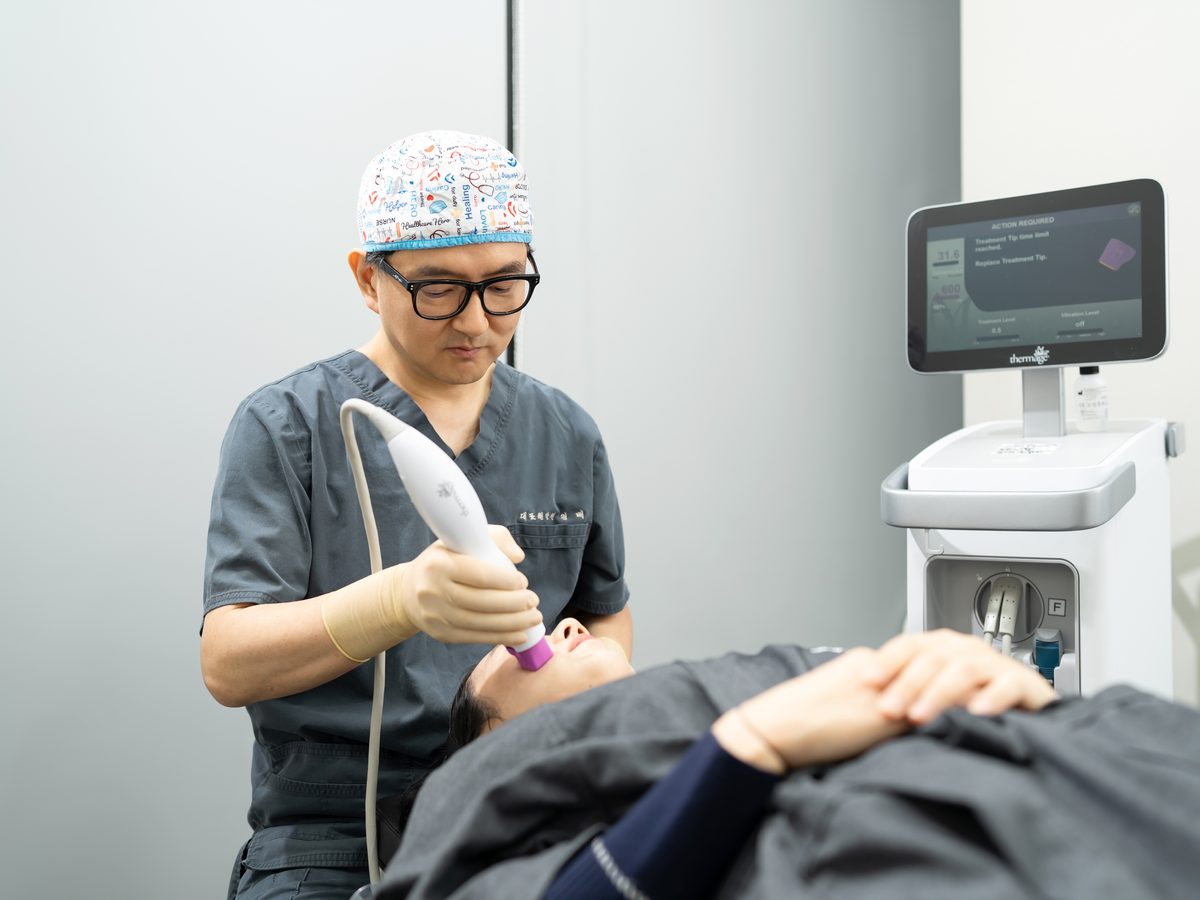
A Korean face filler is usually a hyaluronic acid gel injected to put volume back in a few precise spots, such as the temples, the cheeks, the hollow under the eye or the chin, and at our clinic it sits under Collagen Injection & Filler, a 10 to 20 minute session under numbing cream. If you have four days in Seoul, the fear that travels with it is specific: boarding the flight home with a face that looks puffier or wider than when you arrived, the overfilled look people online call pillow face. The physician who examines your face here is the physician who injects it, with no sales counsellor in between.
Most of what protects you from that look happens before the needle goes in. So I'd start with the exam, including the moments when the answer is a different treatment, or none.
What the exam looks at before any filler goes in
Before anything is proposed, I measure three things: how thick your skin is, how the face has descended, and where the laxity actually sits. Two people with the same complaint rarely leave with the same plan, because those three rarely match.
Filler is generally planned with you sitting upright and seen from the side as well as the front, since a hollow that shows when you lie back can disappear when you sit up. Then comes the question that shapes everything: what bothers you in the mirror? “My face looks tired” can mean a sunken temple, a tear trough, or skin that has loosened along the jaw, and only the first two are filler problems. If your concern is texture or acne marks, filler is the wrong tool; what a doctor reads in acne scars before choosing a treatment covers that side.
Will filler make a wide or chubby face look slimmer?
No. Filler adds volume, so it can't narrow a face, and in the wrong spot it makes a round face look rounder. Width usually comes from one of three places, each with a different answer:
- a strong jaw muscle (the masseter), which is a muscle question; how botulinum toxin is planned in Korea covers that route
- small pockets of fat you can pinch, which belong to a fat-dissolving injection conversation
Where filler can help a round face is proportion. A little definition at the chin, or a temple that has sunk, can change how the face reads without adding width.
Why does pillow face happen?
Pillow face usually builds up over time: filler added session after session, often to treat sagging instead of lost volume. Hyaluronic acid also holds water, so a heavily filled area can look fuller than the amount injected suggests. Adding weight to loose skin tends to make the lower face look heavier, and that's the look people are afraid of.
When the real problem is laxity, a device that works on the loosened layer makes more sense than more gel. What Ultherapy actually does and what changes after Thermage, and when explain those options, and if filler wouldn't change what bothers you, you'll hear that before anything is opened.
For a first filler on a short trip, I'd choose fewer areas and smaller amounts, and nothing added just because you're already in the chair. A front and a side photo in daylight without makeup, plus a note of anything injected in your face before, are the useful things to have to hand.
Is filler the answer to a face that changed after fast weight loss?
Fast weight loss, including on GLP-1 weight-loss medicines, can hollow the cheeks and temples faster than the skin adjusts. Once your weight is steady, the useful question is what the face lost: volume, skin quality, or both.
Volume can be a filler question. Skin that has thinned and crinkled tends to respond better to collagen-stimulating or skin-quality treatments; what changes after Juvelook, and when it shows and why Rejuran is a skin treatment rather than a filler cover those two. If your weight is still dropping, I'd hold off until it settles, because filler placed now is chasing a moving target.
Risks and side effects to know
Swelling, redness, tenderness and bruising at the injection points are the usual reactions, and the FDA lists them among the common side effects of dermal fillers. For most people they settle within days to a couple of weeks, and swelling under the eyes and around the lips tends to linger longest.
The rare serious risk is filler entering a blood vessel and blocking it. The FDA warns this can injure the skin and, rarely, affect vision. Warning signs are pain out of proportion to what you expected, skin near the injection that turns white, grey or mottled, or any change in your sight. Treat that as an emergency, the same day, wherever you are.
As general medicine, these are reasons to wait or skip filler:
- an infection, cold sore or inflamed acne where the needle would go
- a recent laser, peel or other injection in the same area
- pregnancy or breastfeeding
- a known allergy to hyaluronic acid fillers or to lidocaine, the numbing agent many of them contain
- blood thinners or a bleeding tendency, which make bruising more likely (keep taking prescribed medicine unless your own doctor says otherwise)
Before you travel, the CDC recommends lining up follow-up care at home and holding on to records of the procedure. For filler, ask for the product name and the areas treated in writing before you fly, so a doctor at home can act quickly if needed. If you're adding a lifting device on the same trip, the Ultherapy FAQ on side effects covers that part. Recovery varies between people, and the decision on filler is made at the exam in Seoul.
Which day of a four-day trip should the filler go on?
Put a Korean face filler appointment early in the trip. Avoid the last morning. Weekday hours run 10:00 to 19:00 and Saturdays 10:00 to 17:00; Sundays and Korean public holidays are closed.
You'll find us on the second floor of the Sinsa Hill Building, 165 Dosan-daero, roughly ten minutes on foot from Sinsa Station (Line 3), Exit 8. Hours and the address sit on the Symphony Skin Clinic home page as well. An interpreter stays with you from reception into the treatment room, in English, Japanese or Chinese, and the room is yours alone while you're in it.
If you're comparing clinics, the questions in choosing a Sofwave clinic in Korea work for filler too: who examines you, who injects, and what they advised against. Photos show me the direction; the plan itself waits until I can see your face sitting upright and moving.
When you're ready, send a front and a side photo in daylight and your travel dates on WhatsApp, with the one thing about your face you'd change if you could.
Questions patients ask us
Which kinds of filler are used in the face?
The American Society of Plastic Surgeons groups dermal fillers by material: hyaluronic acid, calcium hydroxylapatite, poly-L-lactic acid and polymethylmethacrylate. For a first face filler, hyaluronic acid is the usual choice because it's temporary and can generally be dissolved. Collagen stimulators such as Radiesse and Juvelook are on our menu as separate treatments.
How long does a Korean face filler last?
The FDA describes most dermal fillers as temporary because the body absorbs them over time. The product, the area and how much that part of the face moves all change the timeline, so there's no fixed number worth promising.
Can I fly the day after face filler?
Most people can. The downtime is short, though swelling can look more noticeable the morning after than right after the session. Drink water on the flight and skip alcohol that day.
Does face filler hurt?
Numbing cream goes on first, and many hyaluronic acid fillers also contain lidocaine. Most people feel pressure and a short sting at each point; the chin and the area around the mouth tend to be more sensitive.
Is it a problem if I've had filler somewhere else before?
Not necessarily, but tell the doctor what was injected, where and when, ideally with the product name. Old filler changes how much, if any, should be added, and layering on top of it is how pillow face often builds up.
What should I avoid in the days before the appointment?
As general advice, avoid starting new actives or having a peel on your face the week before, and mention any supplements or medicines that thin the blood. Arrive without makeup if you can.
Sources
Treatment details: Symphony Skin Clinic treatment information, checked Oct 22, 2026.
This page is general information from Symphony Skin Clinic, not a diagnosis. Results, risks and recovery differ by person. Treatment is decided after an in-person consultation with a licensed doctor. Clinic and treatment photos on this page were taken at Symphony Skin Clinic.
Keep reading
- Scar / Stretch MarkAcne scar treatment in Korea: what a doctor reads before choosing anythingHow acne scar treatment in Korea is planned: the four scar shapes a doctor reads first, and why Symphony pairs needle-free Mirajet delivery with Juvelook.8 min read
- InjectablesBotox in Korea: the vial is the same everywhere, the plan is notBotox in korea explained by a Seoul clinic: how muscle botox and skin botox differ, what jaw and calf treatment involves, and what to check before you book.8 min read
- Lifting / FirmnessUltherapy in Korea: what it actually does, how we plan it, and who it fitsWhat Ultherapy treats, how Symphony checks depth with live imaging first, and who it suits. Doctor-reviewed guide. Get a quote on WhatsApp.8 min read