How Long Does a Thread Lift Last? 6 to 12 Months, and the Days to Plan in Seoul

Written by Dr. Hyun Kyung-bae, Chief Director · Plastic surgeon (Korea)Updated 8 min read
In short The lift from dissolvable threads usually holds for about 6 to 12 months and softens as the barbs lose grip. Swelling and bruising mostly settle in two to three days, so a week in Seoul covers the hardest part.

How long does a thread lift last once you're back home, and is a lift that fades worth a long flight to Seoul?
Recovery is far shorter: the swelling and bruising from a thread lift usually settle in two to three days, though a pulling feeling when you chew or yawn can last a week or two.
Hello, I'm Dr. Hyun Kyung-bae, Chief Director at Symphony in Sinsa, Seoul.
I'm a board-certified plastic surgeon and I've practiced at Symphony for seventeen years. The doctor who consults you is the one who places them, one patient at a time in a private room, and an interpreter for your language stays with you from reception to the treatment room at no extra charge.
If you can't tell whether your jawline needs threads or something else, a front photo and a side photo in daylight on WhatsApp, with the dates you'll be in Seoul, are enough to start. You can ask before booking anything.
Why the lift fades before the threads are gone
A dissolvable thread works like the stake tied to a young tree. The stake holds the trunk while the roots form; once it's gone, what keeps the tree upright is what grew around it. Threads carry small barbs or cones that grip the fat layer under the skin and pull it up the moment they're placed. Over the following months the thread breaks down, and the body lays collagen along the track it leaves.
The barbs give you the lift you see in the mirror on day one. Depending on the material, threads take around 9 to 12 months or more to break down fully, yet the barbs lose their grip well before that. So the lift usually softens somewhere between month six and month twelve, even while fragments of thread are still in place.
How long does a thread lift last on your face?
On your face, these are the things that shorten or stretch it:
- How heavy the tissue is. Full cheeks and heavy jowls pull on the barbs every time you stand up. Lighter tissue holds longer.
- Skin thickness. Very thin skin shows a lift quickly but can also show the threads, so finer or fewer threads are used, and they hold less.
- Thread type and count. Cog-style threads grip more tissue than fine smooth ones, and more threads share the load.
- The first two weeks. Wide yawns, hard chewing and pressing on the face while the barbs settle can loosen them early.
- What else is going on. Threads lift tissue. They don't tighten loose skin or replace lost volume, so if either of those is the main problem, the lift looks shorter-lived than it is.
Recovery day by day, and what it means for your trip
The part of recovery that affects travel is short, but the first week comes with rules. This is how the days usually go after threads in the cheeks and jawline.
| Days after | What you'll likely notice | What to plan |
|---|---|---|
| Day 0 | Numbness wears off over a few hours; tightness, small dimples at entry points | A quiet evening, sleep on your back with your head raised |
| Days 1-3 | Swelling and any bruising peak, then ease; soreness when chewing | Soft food, short outings, sunglasses |
| Days 4-7 | Most visible swelling gone; a pull when you yawn or smile wide | Sightseeing is fine; skip saunas, hard workouts and facial massage |
| Weeks 2-4 | Dimples and small unevenness usually settled | No dental work, gua sha or face-down massage |
| Months 1-6 | Collagen builds; the lift sits a little lower than on day one | Judge the result here, not in the first week |
| Months 6-12 | The lift softens as the barbs lose grip | Decide whether to repeat or change approach |
Risks and side effects to know
Say you have eight nights in Seoul and land on a Thursday. With the threads placed on Friday, days one to three fall over the weekend, when staying in is easy. From Monday you're out in the city with the tightness fading, and you fly home on day seven or later with the swelling behind you. The clinic is closed on Sundays and Korean public holidays, so put the procedure early in your stay and check the holiday calendar before you book flights.
A long flight can make the face feel puffier for a day, so keep your head up when you sleep on the plane and drink water. The thing that catches people out comes later: a dental cleaning booked for the week they get home. Holding your mouth wide open for half an hour pulls hard on fresh barbs. Book the dentist before the trip, or a month after.

If your dates don't line up like this, send them on WhatsApp with a side photo, and ask which day of your stay suits the threads. On the site, our consultant reads the photo with the physician and replies with options and an estimate. A photo gives a direction, not a final plan.
When threads aren't the right lift, and what fits instead
Threads are a mechanical hold in the fat layer. They suit early jowls and a softening jawline in someone with moderate tissue and reasonable skin quality. They suit heavy, deep sagging poorly, and they do little for crepey skin or hollow cheeks.
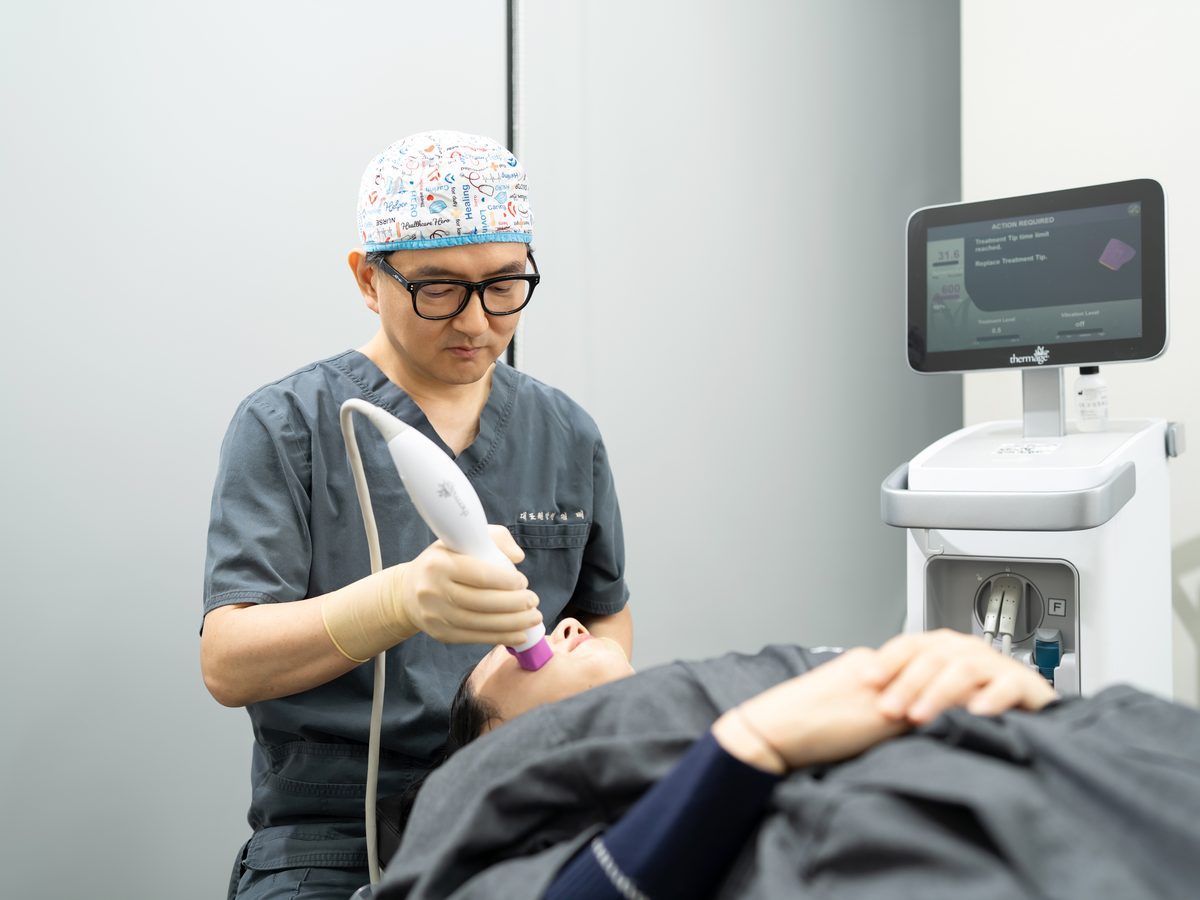
When the laxity sits in the deeper support layer, focused ultrasound reaches it without threads; what Ultherapy does and who it fits walks through that, and what changes an Ultherapy quote covers the cost side. When the skin itself has loosened, radiofrequency works on a shallower layer, as in how Thermage FLX works, and picking the right device before the clinic helps if Sofwave is on your list. When the cheeks look flat rather than low, the problem is volume, which is where Juvelook or Juvelook Volume comes in.
Some people also ask about recovery-focused add-ons alongside a lift; what decides an exosome session's total explains that one. The same layer-first thinking runs through everything we treat, from faces to stretch marks, where the phase decides the plan. The Symphony English site groups treatments by the area that bothers you, if you'd rather start there.
Bruising, puckering and threads you can feel: how often, and what to do
The common reactions are temporary: swelling, bruising, soreness and tightness for a few days, and small dimples at the entry points or along a thread that usually smooth out within one to two weeks. How long each lasts differs from face to face. Less often, a thread end can be felt or seen under thin skin, one side can sit higher than the other, or the area can become infected. Irritation of a small nerve branch is rare.
As a rule of general medicine, wait or skip threads if you have:
Infection and scars: what to watch for
- an active infection, cold sore or acne flare where the threads would go
- pregnancy or breastfeeding
- a tendency to keloid scars
- blood-thinning medication you can't safely pause (ask your own doctor first)
- heavy, deep sagging that threads won't hold
Redness and swelling: what to watch for
After you fly home, aftercare stays on the same WhatsApp chat you booked through, so a photo of a pucker that isn't settling or a thread end you can feel goes to the same thread. Redness that spreads, heat, swelling that gets worse after day three, or a fever means infection is possible: see a doctor near you the same day and send us the photos too. Don't push a poking thread back in yourself.
Six things to ask before you book a thread lift anywhere
- Is the doctor who consults me the one who places the threads?
- Which thread type, how many, and why for my face?
- What should I avoid afterwards, and for how many weeks?
- Will I see the whole plan and the total before anything starts?
- How do I reach the clinic after I fly home, and what happens if a thread end pokes?
- Will an interpreter be in the room with me?
It doesn't have to be Symphony. Wherever you go, get these answered before anyone numbs your face. If you're also comparing device lifts, the questions worth asking an Ultherapy clinic overlap with these.

Here is where I stand. Threads are a good short-term lift for the right face and a disappointing one for the wrong face, and the difference shows within months. I'd rather plan a lift that holds for the months it's meant to than promise a year it won't reach. Nothing about this has to be decided on this trip.
Symphony is on the 2nd floor of the Sinsa Hill Building, 165 Dosan-daero, Gangnam-gu, Seoul, about a 10-minute walk from Sinsa Station Exit 8. To start, send one front and one side photo in daylight with your travel dates on WhatsApp, and ask whether your sagging sits where threads can hold it. What decides that for your face is how heavy the tissue along the jaw is and how thick the skin over it is.
Dr. Hyun Kyung-bae, Chief Director
Questions patients ask us
Can I fly home the day after a thread lift?
Cabin pressure doesn't loosen threads. The reason to stay a few more days is comfort and timing: swelling and soreness peak in the first two to three days, and an early pucker or poking thread end is easier to deal with while you're still in Seoul.
Does a second thread lift last longer than the first?
Some doctors find a repeat session holds a little better because collagen from the first round is still there, but the evidence for this is thin. Most people repeat once the first lift has clearly softened, which is often somewhere in the 6 to 12 month window.
Will I be able to feel the threads under my skin?
For the first weeks you may feel a firm line when you press on the area, or a pull when you open your mouth wide. That usually fades as the swelling goes down. A thread you can see, or one that pokes through the skin, needs to be checked by a doctor rather than pressed back.
Can threads be combined with Ultherapy or Thermage on the same trip?
Order and spacing matter, because energy devices heat the same tissue the threads sit in. The sequence for your face is set after an in-person exam.
Is a thread lift done under general anesthesia?
Usually not. Threads are typically placed under local anesthesia, so you're awake, can talk with the doctor and the interpreter during the procedure, and walk out the same day.
What happens to the threads once they dissolve?
Absorbable threads break down slowly in the tissue and nothing needs to be removed. What remains is the collagen that formed along the thread tracks, which keeps some firmness after the visible lift has softened.
Sources
- Thread lift
- Thread Lift Risks and Safety Information
- The Science of Absorbable Poly(L-Lactide-Co-ε-Caprolactone) Threads for Soft Tissue Repositioning of the Face (Wong V., Clinical, Cosmetic and Investigational Dermatology, 2021)
- Invited Discussion on: A Meta-Analysis and Systematic Review of the Incidences of Complications Following Facial Threadlifting (Aesthetic Plastic Surgery, 2021)
Treatment details: Symphony Skin Clinic treatment information, checked Nov 18, 2026.
This page is general information from Symphony Skin Clinic, not a diagnosis. Results, risks and recovery differ by person. Treatment is decided after an in-person consultation with a licensed doctor. Clinic and treatment photos on this page were taken at Symphony Skin Clinic.
Keep reading
- Lifting / FirmnessUltherapy in Korea: what it actually does, how we plan it, and who it fitsWhat Ultherapy treats, how Symphony checks depth with live imaging first, and who it suits. Doctor-reviewed guide. Get a quote on WhatsApp.8 min read
- Lifting / FirmnessUltherapy price in Korea: what changes the quote, and how to get oneWhat sets the Ultherapy price in Korea: shot count, area and sedation. Symphony's range is 1,500,000-2,800,000 KRW, VAT 10% not included.7 min read

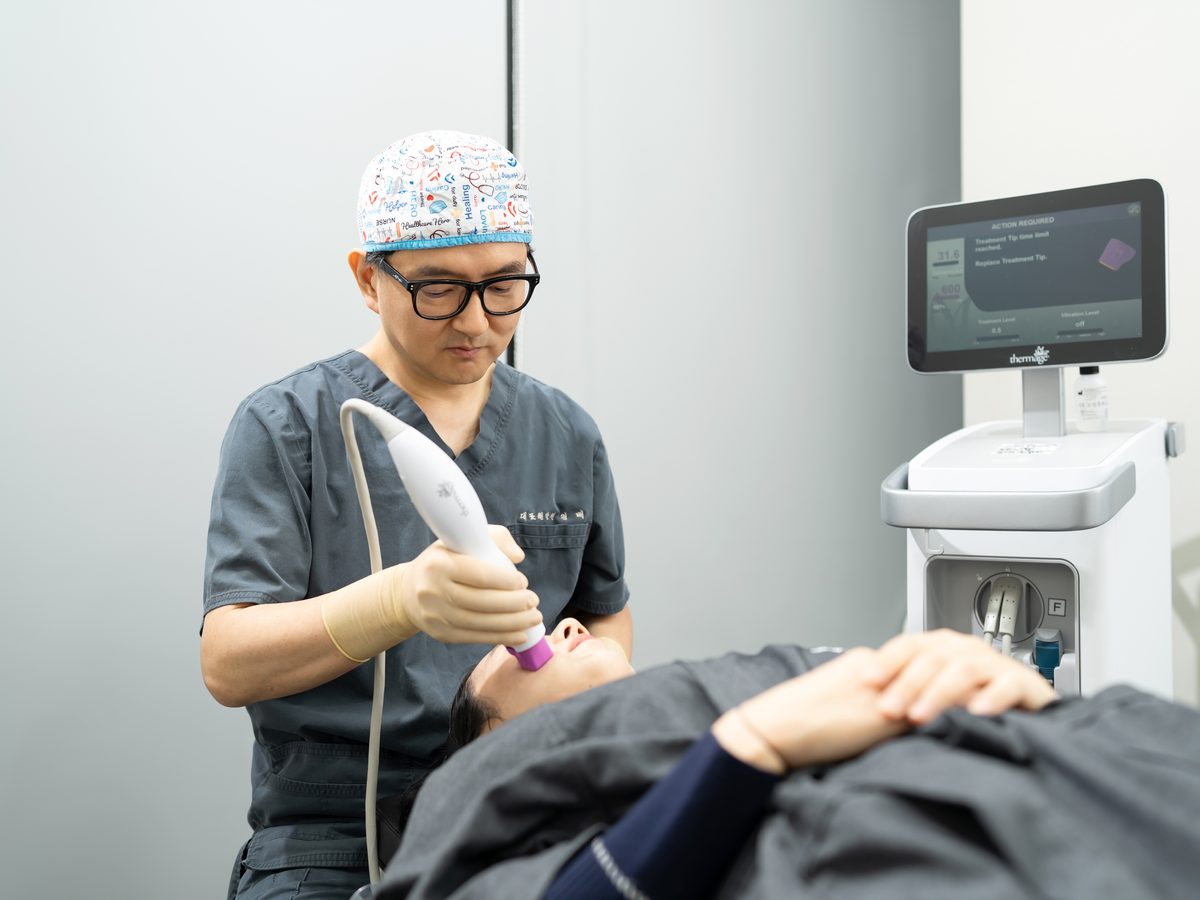
- Lifting / FirmnessThermage in Korea: how FLX works, honest side effects, and choosing a Seoul clinicHow Thermage FLX works, who it suits, what side effects to expect and what to ask a Thermage Seoul clinic. Doctor-reviewed guide with a WhatsApp quote.8 min read