2 Weeks After a Thread Lift: What Is Usually Still There, What Should Have Settled, and Why Day 14 Falls After Your Flight

Written by Dr. Hyun Kyung-bae, Chief Director · Plastic surgeon (Korea)Updated 7 min read
In short Two weeks after a thread lift, swelling and bruising have usually faded and most small dents have smoothed out, while a pull when you open wide can linger. Rising pain, spreading redness, discharge or a thread end you can see are not part of normal recovery.
Say you land in Seoul on a Thursday, have threads placed on Friday afternoon, and fly home the next Wednesday. Day 14 then lands back at your desk, a long way from the doctor who placed them. That is the day most people start asking whether what they feel two weeks after a thread lift is normal.
Usually it is. By the second week, swelling and bruising around the entry points have mostly gone, small surface dents have often smoothed, and what is left is a tug when you yawn or bite into something hard. The thread lift at Symphony is done under local anesthetic in about 30 minutes, and our treatment page lists about 2 to 3 days of visible recovery. The quieter stretch after that is what this page is about.
What does a normal day 14 feel like?
Mostly like your own face, with reminders. A slight firmness along each thread line, tenderness when you press the cheek, and a pull at the corners of the mouth when you open wide are common at two weeks. Bruises have usually faded to yellow or gone.
An invited discussion in Aesthetic Plastic Surgery (2021), written on a meta-analysis of thread lift complications, argues that swelling should not really count as a complication, because it "spontaneously resolves, usually within two weeks". The authors say much the same about dents: most "will have ironed themselves out within a week or two."
That makes day 14 a useful checkpoint. Whatever is still clearly there at two weeks deserves a daylight photo and a question.
The first two weeks, stage by stage
The American Society of Plastic Surgeons describes early healing after a thread lift as "some swelling, bruising, irritation and discomfort" managed with medication, cold compresses and ointment, with specific instructions from your own surgeon. The pattern below is typical; the written guide you leave the clinic with takes priority over it.
| When | What's common | Generally advised |
|---|---|---|
| Day 0 | Tightness, numbness wearing off | Cold compress, sleep face-up |
| Days 1–3 | Peak swelling, bruising, tender cheeks | Soft food, no face massage |
| Days 4–7 | Swelling easing, small dents | Gentle cleansing, sun protection |
| Days 8–14 | Pull on wide opening | No hard pressure on the cheeks |
A typical pattern. Individual recovery varies.
Which activities usually wait?
Anything that stretches or presses the cheeks: wide yawning, hard chewing, facial massage, and dental work that needs your mouth wide open for a long time. Sleeping face-down puts pressure where the threads anchor. The ASPS also asks for careful sun protection until healing is complete. When each of these is safe again for you depends on the threads used and the areas treated, so ask at your consultation rather than counting days from a forum post.
When is a dent, lump or pull at two weeks not normal?
A dent that has not improved by week two, a thread end you can see or feel poking at the skin, redness that spreads, warmth, discharge from an entry point, pain that is getting worse instead of better, or a fever. Any of these is a reason to contact a doctor that day.
For scale, the same 2021 discussion quotes the meta-analysis figures: swelling 32.9%, dimpling 11.7%, paresthesia 6.8%, thread extrusion 3.9%, infection 3.1% and visible or palpable threads 1.8%. The authors suggest a dent still present beyond four weeks is when it should be treated as a true complication.
Do not massage a dent hard at home to "even it out". A thread end that shows can often be trimmed or removed, and that is easier earlier than later.
If you are still planning, the risks and what PDO threads can't do are worth reading before you choose a date. And if you want your timeline checked against your own dates, send three daylight photos (front and both 45° angles) plus the days you will be in Seoul on WhatsApp. The doctor looks at whether threads fit the trip; the final decision is made at the in-person exam.
Planning the trip so day 14 isn't a guess
Book the threads early in the trip, not the day before you fly, so the 2 to 3 visible days happen in Seoul. Symphony is closed on Sundays and Korean public holidays, including the days around Lunar New Year and Chuseok, so check those before you buy a flight.
After treatment you get a written recovery guide in your language, WhatsApp check-ins on day 1, 3 and 7 where you send a photo, and guidance at day 30. If something looks off, your photo goes to the physician and the reply comes from the physician. That is recovery guidance, not remote treatment: if a symptom worries you, see a doctor where you are.
There is no scheduled check-in on day 14, which is why it helps to take your own photos on day 1, 7 and 14 in the same light and from the same angles. Side by side, they show whether a dent is fading or staying, which is hard to judge from memory.
What to keep for a doctor at home
- The date of treatment and the areas threaded
- The thread type used (our page lists the ones Symphony works with, such as Mint, Silhouette Soft, TAPS PCL, Aptos, Namica, Elasticum and Cavern)
- Any medicine you were given, with doses
- Your day 1, 7 and 14 photos
Who should leave more than two weeks of slack?
Anyone with an event where they need to look settled, such as a wedding or a photo shoot, should leave more than two weeks between treatment and that day. So should people who bruise easily or take blood thinners (only stop them on their own doctor's advice), and anyone with a history of keloid or heavy scarring, where the plan may change altogether.
Heavy, loose skin is a different conversation. Threads suit early to moderate descent; when the skin folds, the honest answer may be surgery or a different tool. Four kinds of sagging and how far each lift reaches explains the difference, and who a Korean thread lift usually suits covers candidacy in more depth.
Who places the threads, and where
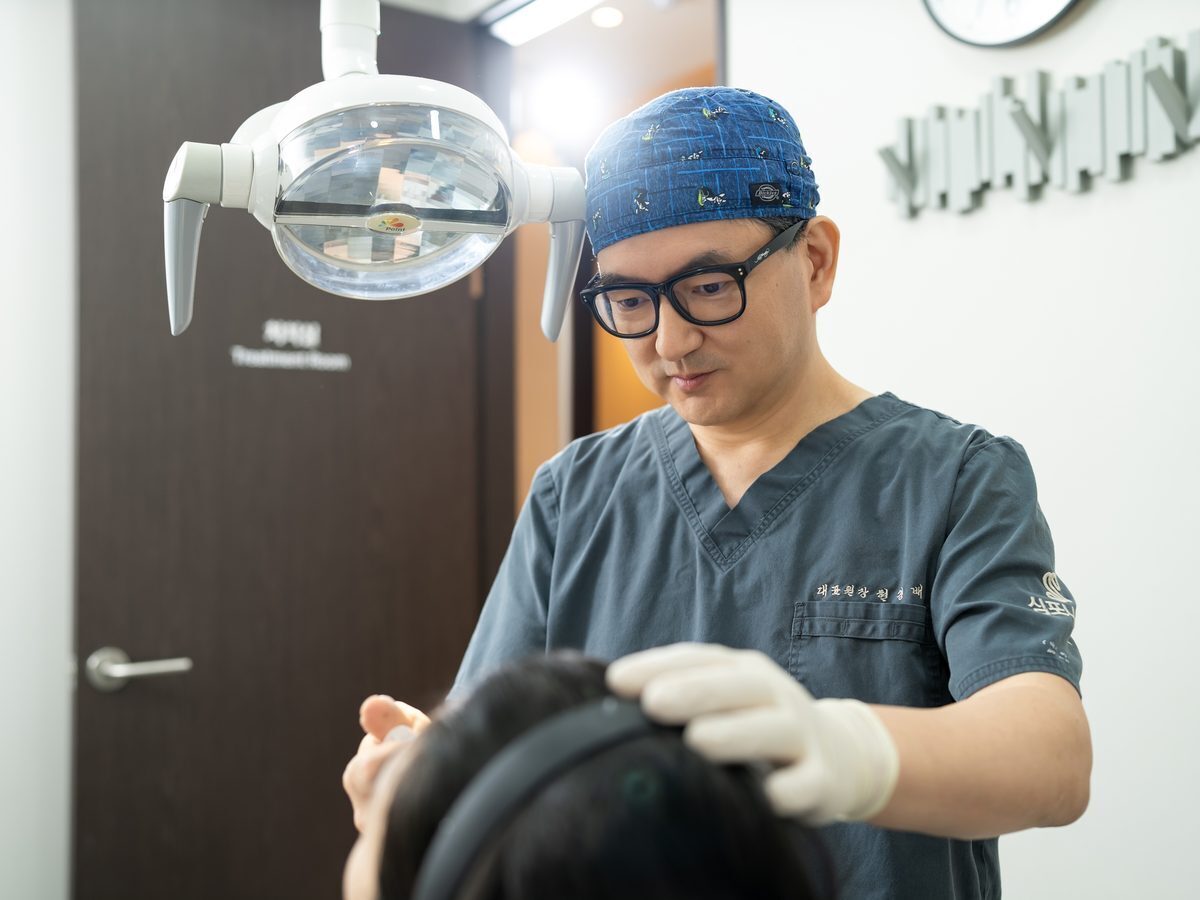
At Symphony the thread lift is performed by a plastic surgery specialist. Dr. Hyun Kyung-bae is our Chief Director, a plastic surgeon (Korea) and Clinical Professor at Yonsei University, and has practised at Symphony for 17 years; the medical team page introduces the other three physicians. The doctor who consults you carries out the treatment.
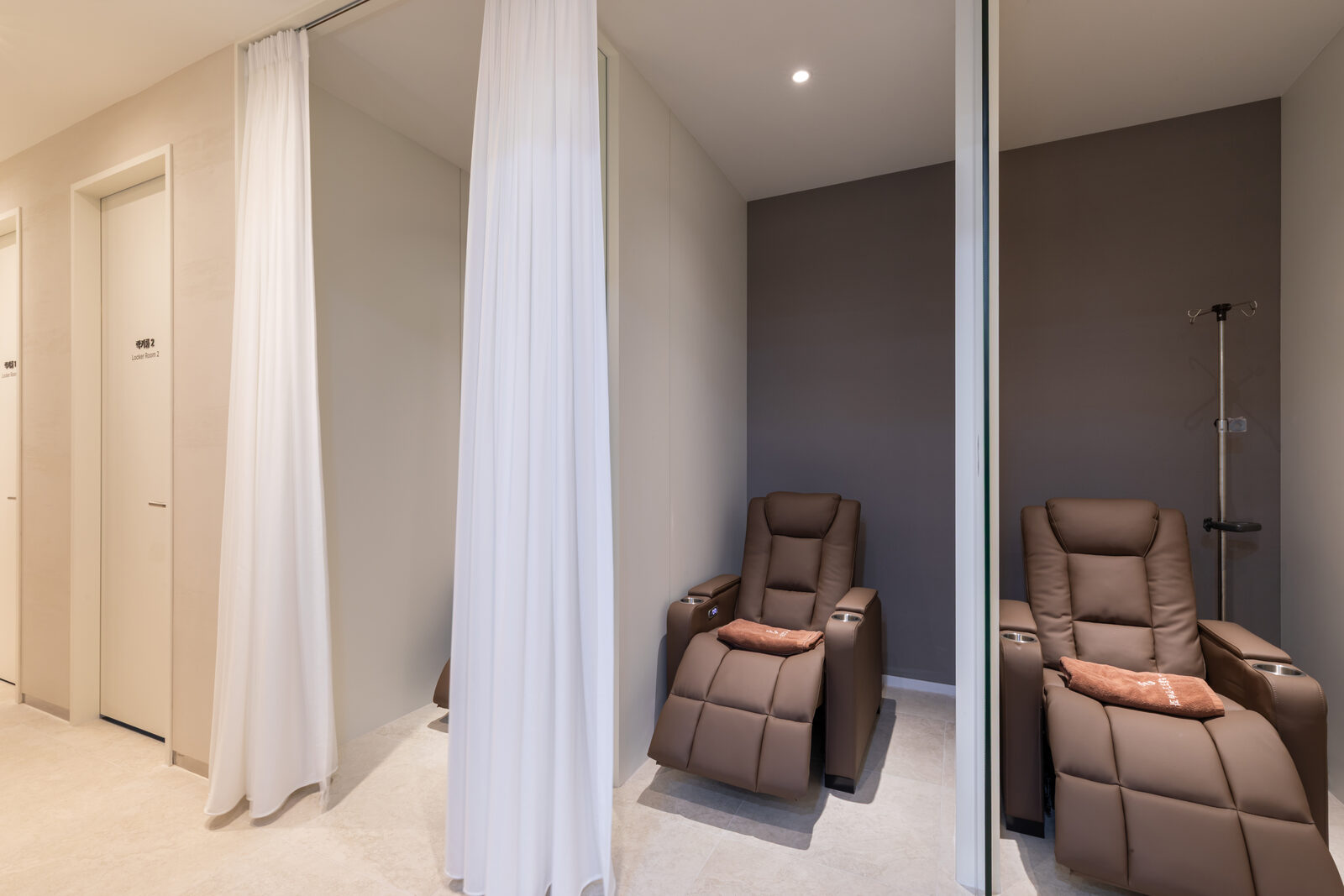
The clinic is on the 2nd floor of the Sinsa Hill Building, 165 Dosan-daero, about a 10-minute walk from Exit 8 of Sinsa Station on Line 3. Hours are 10 am to 7 pm on weekdays and 10 am to 5 pm on Saturdays; directions are on the location and hours page. An interpreter stays with you from reception to the treatment room, and there is a private recovery room to rest in before you go back out.
If you are reading this on day 14 with threads already in, start with your own photos from today. If you are still planning, send the dates you will be in Seoul and one short daylight video of you turning your head slowly, so the doctor can see where the laxity sits before you book.
Questions patients ask us
Is it normal to still feel the threads after 2 weeks?
A slight firmness along the thread lines and a pull when you open your mouth wide are common at two weeks. A thread end you can see, or one that pokes at the skin, is different and should be shown to a doctor.
Can I go to the dentist two weeks after a thread lift?
Long dental work with the mouth held wide open stretches the cheeks where the threads anchor. Ask the doctor who placed them when that is reasonable for your threads and areas, and book routine dental visits around that answer.
When can I sleep on my side again?
Sleeping face-up is generally advised in the early days to keep pressure off the anchor points. When side sleeping is fine for you depends on the areas treated, so ask at your consultation and follow your written guide.
Why do I look more lifted on day 2 than on day 14?
Early swelling adds fullness that can read as extra lift. As it settles over the first two weeks the face relaxes toward the actual result, which is a modest change rather than a dramatic one.
Will a dimple from a thread lift go away on its own?
Many small dents fade within a week or two as swelling settles. A dent that has not improved by week two, or is still there at four weeks, should be shown to a doctor rather than massaged at home.
Sources
- Invited Discussion on: A Meta-Analysis and Systematic Review of the Incidences of Complications Following Facial Threadlifting (Aesthetic Plastic Surgery, 2021)
- Thread lift recovery (American Society of Plastic Surgeons)
Treatment details: Symphony Skin Clinic treatment information, checked Nov 12, 2026.
This page is general information from Symphony Skin Clinic, not a diagnosis. Results, risks and recovery differ by person. Treatment is decided after an in-person consultation with a licensed doctor. Clinic and treatment photos on this page were taken at Symphony Skin Clinic.
Keep reading
- Lifting / FirmnessWhat is a Korean thread lift, and will it fit a short trip? Often, if the sagging is earlyA Korean thread lift lifts early sagging with absorbable threads. Who it suits, the risks, how it fits a short Seoul trip, and what to send on WhatsApp.7 min read
- Lifting / FirmnessPDO Thread Lift Korea: Who It Suits and What Threads Can't DoA PDO thread lift Korea trip suits early, mild sagging. Dr. Hyun Kyung-bae examines you in person. Send a photo on WhatsApp to ask before booking.6 min read
- Lifting / FirmnessFour kinds of sagging, and how far a korean lift can take each oneA korean lift means a device, threads or surgery. Which sagging each reaches, the real risks, and what to send on WhatsApp before you book a trip.6 min read