PDRN Injection Korea With Reactive Skin: Who Should Wait, and What's Normal Afterward

Written by Dr. Hyun Kyung-bae, Chief Director · Plastic surgeon (Korea) · Reviewed by Dr. Kang Eun-joo, DirectorUpdated 6 min read
In short A PDRN injection in Korea is usually a salmon DNA booster such as Rejuran Healer. Who should postpone it, what the first week looks like once home, and which signs need a doctor.

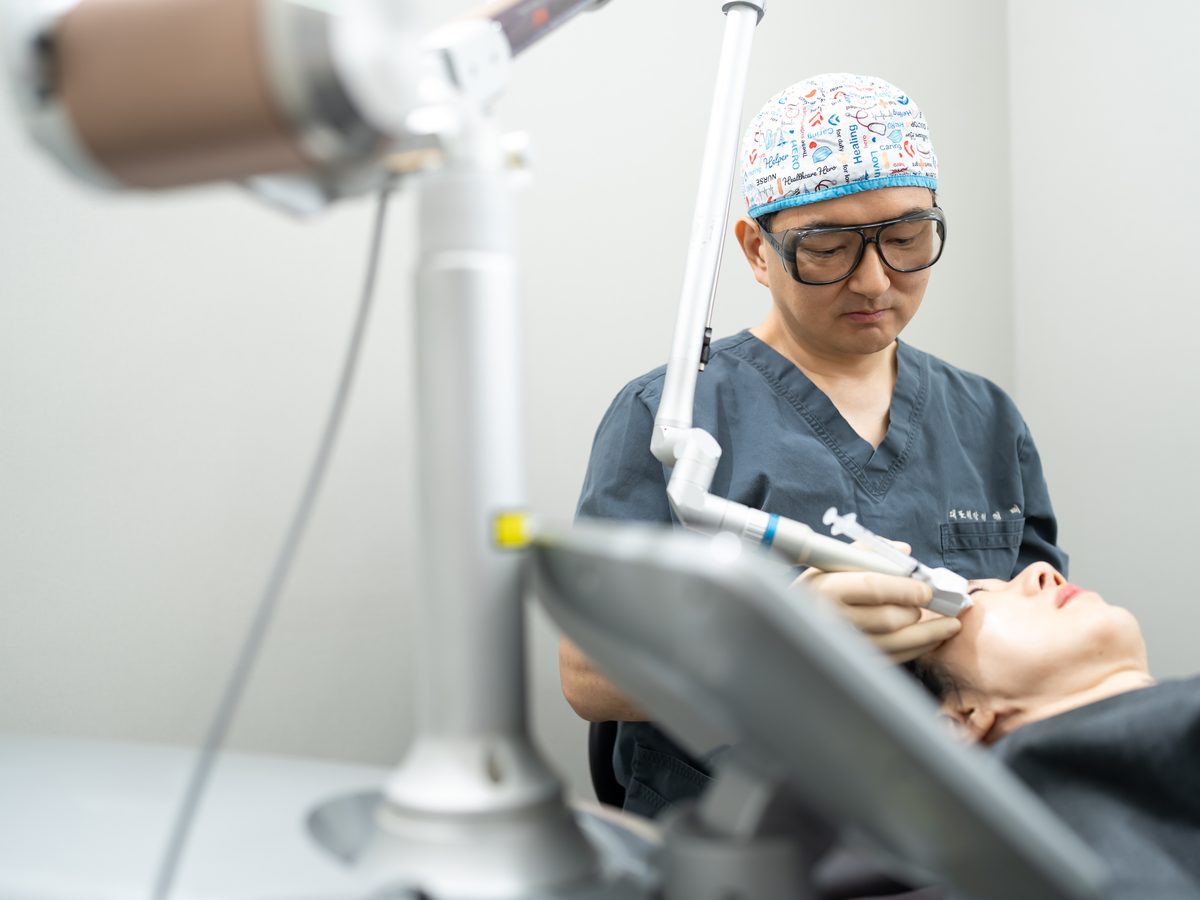
A PDRN injection in Korea is usually a booster made from purified salmon DNA, placed in the dermis to support repair, and what a Seoul menu usually means by it is a polynucleotide product such as Rejuran Healer. If your skin flushes or stings easily, what you want from “PDRN injection Korea” is probably less a product name than an answer to one fear: a reaction that starts after you've flown home, when you can't tell whether it's normal. At Symphony, the physician who talks through your plan is the physician who injects it, and an interpreter stays with you from reception into the treatment room.
Maybe your dermatologist at home shrugged when you mentioned it, or your skin has reacted to a serum or a laser before. Both are good reasons to ask more questions first. Neither, on its own, rules you out.
What is in a Korean PDRN injection?
PDRN (polydeoxyribonucleotide) and PN (polynucleotide) come from the same raw material, usually salmon DNA purified for injection. The difference is chain length. A review in Pharmaceutics comparing the two describes PDRN as shorter fragments and PN as longer chains that form a more viscous gel in the skin.
That's fine, as long as you know which one is going in. Rejuran Healer is a PN booster, and why Rejuran is a skin treatment rather than a filler explains what it does in the skin. It doesn't add volume, so it won't fill a hollow.
A PDRN cream from a Korean pharmacy does a different job
Creams, balms and ampoules labeled PDRN are cosmetics that stay near the surface. A paper in Experimental Dermatology set out the “500 Dalton rule”: compounds much heavier than about 500 daltons pass through intact skin poorly, and DNA fragments are far heavier. A PDRN moisturizer can still feel pleasant on dry skin. Just don't expect it to do what an injection into the dermis does.
Who should wait before a PDRN injection in Korea?
As general medicine, these are reasons to postpone or skip any injected booster, PDRN or PN:
- an allergy to fish or salmon, or a past reaction to a polynucleotide product
- an active flare where the needle would go: rosacea, eczema, inflamed acne, a cold sore or any infection
- a recent laser, peel or other injection on the same area
- isotretinoin now or in recent months, since it slows healing in many people
- pregnancy or breastfeeding, where there's little data
- blood thinners or a tendency to bleed, which make bruising more likely (never stop a prescribed medicine on your own)
Reactive skin by itself isn't on that list. What matters is the state of your skin in the week you fly. A daylight photo of your face without makeup, and a list of the medicines and actives you use now, are the two things worth having ready.
What's normal after you fly home, and what isn't
Risks and side effects to know
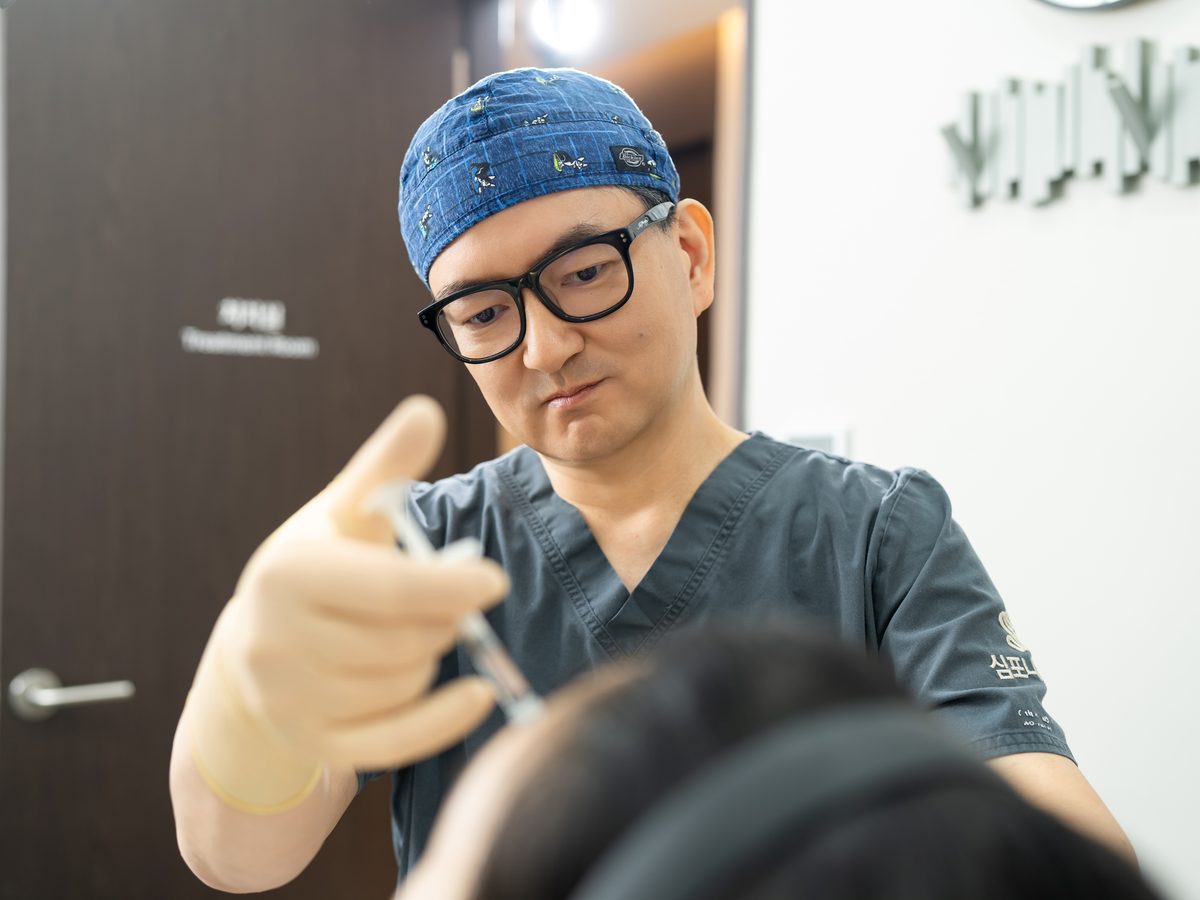
The session takes 10 to 20 minutes under numbing cream, and the downtime is short. With PN and PDRN injections, the common reactions are small raised bumps at each injection point, redness, a tight or stinging feeling, and sometimes a bruise. For most people the bumps flatten within a day or so and the redness fades over a few days; a bruise can take a week or more.
Cabin air is dry, and reactive skin notices it. On the flight, a plain moisturizer and no makeup over the injection points are sensible, and most doctors advise skipping alcohol, saunas and hard workouts for a day or two afterwards. If you're also having a lifting device on the same trip, the Ultherapy side-effects FAQ covers what's normal for that part.
These are outside the normal pattern: redness that spreads or grows hotter after the second or third day, pain that gets worse instead of better, pus, fever, or a firm lump that keeps growing. They need a doctor where you live, that week. Swelling of the lips or eyelids, hives or any trouble breathing point to an allergic reaction; go to urgent care.
The CDC's medical tourism guidance suggests arranging follow-up care at home before you travel and keeping a record of what was done. For a booster, that means asking for the product name in writing before you leave Seoul, so the doctor at home isn't guessing. How long each reaction lasts differs from person to person, and whether a booster suits your skin at all is decided at the in-person exam.
How I decide whether a booster is the right tool
Fixing only what shows on the surface rarely makes a change that lasts, so I start with the layer where your complaint sits. A PN booster works on skin quality in the dermis: texture, fine crepey lines, a dry and tired look. It does little for a deep fold, lost volume or skin that has dropped.
The question worth answering first is what you'd notice if it worked. “My skin looks tired by mid-afternoon” is a skin-quality complaint a booster can address. “My cheeks have dropped” is a different one.
So if you came about acne scars, a booster alone rarely changes them much, and the reasoning in what a doctor reads before treating acne scars applies. The same layer-first thinking is behind how the phase of a stretch mark decides its treatment. If your concern is volume or depth, choosing between Juvelook and Juvelook Volume is the more useful read; if it's laxity along the jaw, a device such as Sofwave, which works at 1.5 mm is. If a treatment wouldn't change what you came in for, I'll tell you before anything is injected.
What does the research on polynucleotides show so far?
In short, it found the studies point toward better skin quality, with side effects that were mostly mild and short-lived, and it noted that many studies were small and used different protocols.
For you, that means a modest change in how the skin looks and feels over a series of sessions is a reasonable expectation. A dramatic change after one session is beyond what the evidence supports.
How does a PDRN injection in Seoul fit a short trip?
Whatever “PDRN injection Korea” or “PDRN injection Seoul” turns up in your searches, the calendar decides the trip. We're open weekdays 10:00 to 19:00 and Saturdays 10:00 to 17:00, and closed on Sundays and Korean public holidays, so a Sunday arrival means Monday at the earliest. Put the session early in your stay, so the bumps and redness settle while you're still in Seoul.
The clinic is on the second floor of the Sinsa Hill Building at 165 Dosan-daero, about a 10 minute walk from Exit 8 of Sinsa Station on Line 3; the address and hours are also on Symphony Skin Clinic's English site. Appointments are spaced so a room belongs to one person while they're in it, and you hear the whole plan before the first session starts.
If you're pairing the booster with a lifting device, the questions in choosing an Ultherapy clinic in Korea and choosing a Sofwave clinic in Korea apply to boosters too: who decides the plan, who carries it out, and what you were advised against. A photo gives me a direction; the final plan is made with your skin in front of me.
When you're ready, send a daylight photo of your face without makeup, the medicines and actives you use now, and your travel dates on WhatsApp, with the one question about your skin you most want answered.
Questions patients ask us
Is a long-haul flight a problem the day after a Korean PDRN injection?
For most people it isn't. The downtime is short, and the small bumps usually flatten within a day or so. Bring a plain moisturizer for the cabin and keep makeup off the injection points until the next day.
Does a PDRN injection hurt?
Numbing cream is applied first. The whole session runs 10 to 20 minutes.
I have a fish allergy. Can I still have a PDRN injection in Korea?
Tell the doctor before anything is injected. PDRN and PN are usually made from salmon DNA, and as general medicine an allergy to fish, or to an earlier polynucleotide product, is a reason not to have it.
How many sessions does one trip cover?
Clinical studies of polynucleotides typically use a short series spaced a few weeks apart, and whether more sessions make sense for you is part of the whole plan you hear before the first session starts.
Can I have a PDRN booster and a lifting treatment on the same trip?
Often, yes. The combination and the order are decided at consultation, and there's no fixed menu. Boosters work on skin quality in the dermis, while devices such as Ultherapy PRIME or Thermage FLX work on other layers, so they answer different problems.
Sources
- Comparison of Polynucleotide and Polydeoxyribonucleotide in Dermatology: Molecular Mechanisms and Clinical Perspectives
- The Effectiveness of Polynucleotides in Esthetic Medicine: A Systematic Review
- The 500 Dalton rule for the skin penetration of chemical compounds and drugs
- Medical Tourism
Treatment details: Symphony Skin Clinic treatment information, checked Oct 22, 2026.
This page is general information from Symphony Skin Clinic, not a diagnosis. Results, risks and recovery differ by person. Treatment is decided after an in-person consultation with a licensed doctor. Clinic and treatment photos on this page were taken at Symphony Skin Clinic.
Keep reading
- Skin BoosterRejuran in Korea: a skin treatment that is not a fillerRejuran korea explained by a Seoul clinic: what polynucleotide does, why it is not a filler, and how Rejuran, Rejuran i and Rejuran HB differ from each other.8 min read
- Lifting / FirmnessUltherapy FAQ: side effects, safety and what to expect in KoreaCommon questions about Ultherapy in Korea: side effects, safety, and how to prepare. Doctor-reviewed answers from Symphony Skin Clinic.7 min read
- Scar / Stretch MarkAcne scar treatment in Korea: what a doctor reads before choosing anythingHow acne scar treatment in Korea is planned: the four scar shapes a doctor reads first, and why Symphony pairs needle-free Mirajet delivery with Juvelook.8 min read