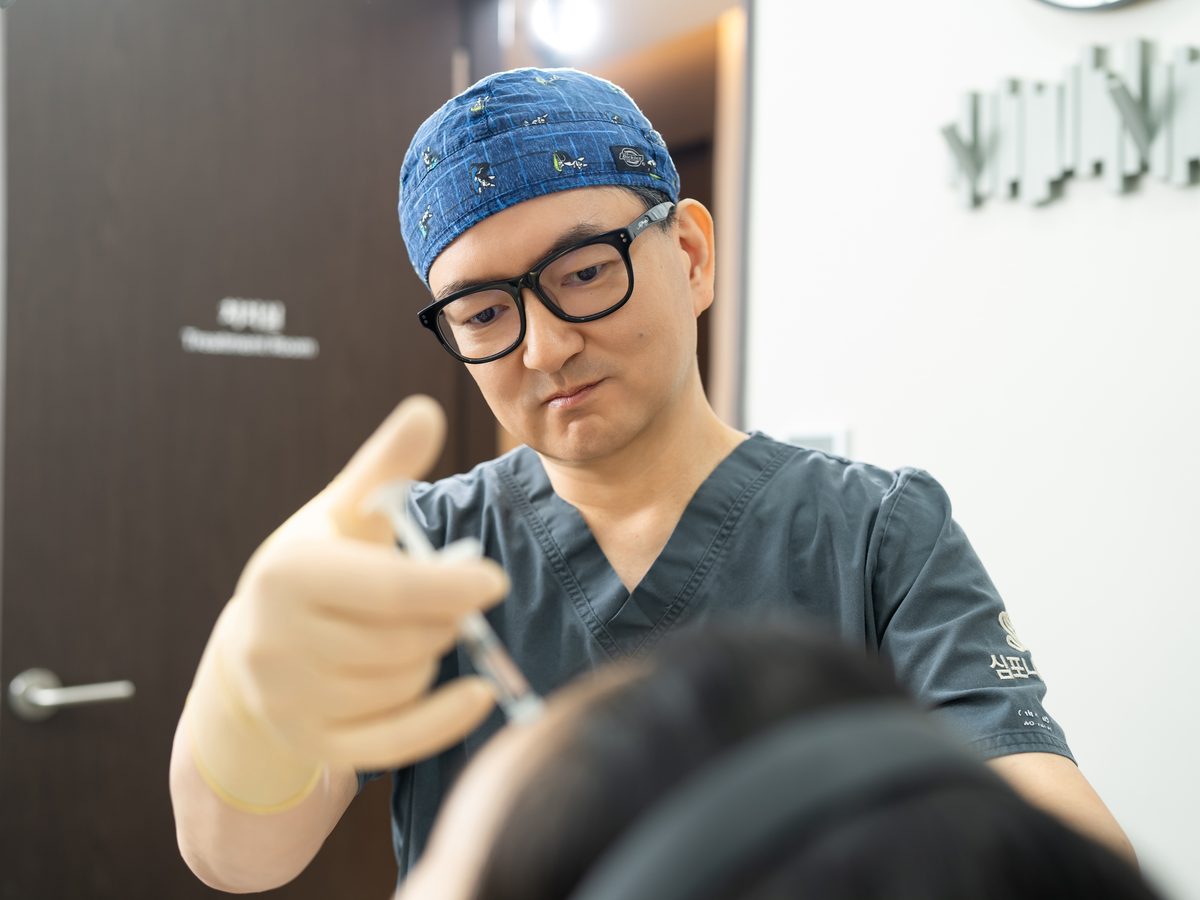
Calm the breakout first, then treat: the real risks of korean with acne care in Seoul

Reviewed by Dr. Hyun Kyung-bae, Chief Director · Plastic surgeon (Korea)Updated 6 min read
In short For korean with acne care, Korean clinics usually calm inflammation and control oil before treating pores or scars, and many of the risks (look-alike conditions, dark marks, over-exfoliation) come from skipping that order.

For anyone searching korean with acne care, the short answer is that Korean clinics usually work in an order: calm the inflammation and control oil first, then deal with pores and marks, and many of the real risks come from skipping that order. If you're flying in for it, the worry that matters is what happens when your skin flares after you're already home. At Symphony you leave with a written recovery guide in your language, with check-ins on day 1, 3 and 7 and guidance at day 30, and medical skincare is the programme the clinic's pages recommend for oily, acne-prone skin.
What Korean acne care looks like at a clinic
In short, it's mostly non-surgical skin work matched to what your skin is doing this month. On Symphony's treatment pages, oily and acne-prone skin is approached with medical skincare such as Sebum Clear and Aqua Peel Care, inflamed breakouts with calming care like hyperbaric oxygen therapy, and the depressions acne leaves with a separate scar programme.
Is it acne at all?
Sometimes it isn't, and treating a look-alike as acne is the first avoidable risk. The NHS describes rosacea as redness and flushing that can come with small red bumps, often set off by triggers such as sunlight, alcohol or hot drinks. Both tend to get worse with the scrubs and drying products sold for acne.
Common reactions that usually pass
Expect some of these after clinic skin care on acne-prone skin. They're the reactions to plan your flight around.
| Reaction | How it usually behaves | What tends to help |
|---|---|---|
| Stinging or tightness | Settles within a day or so | A short pause on acids and retinoids |
| A few new spots that week | Can appear when skin is disturbed | Hands off; send a photo if they spread |
Can't tell which of these your skin is doing? A photo helps more than a description. Send clear daylight photos without make-up or filters on WhatsApp, with a line on what bothers you and the dates you could be in Seoul. The doctor reviews them, and the reply comes in your language with the treatments that look realistic and the downtime each one carries.
Why dark marks can outlast the pimple
The spot heals in a week; the brown mark it leaves can stay for months. DermNet describes this as postinflammatory hyperpigmentation: extra pigment laid down after inflammation, common after acne, more frequent and longer-lasting in darker skin types, and made worse by sun and by picking or rubbing. For people with stubborn breakouts, the mark often bothers them longer than the acne itself.
Risks and side effects to know
Three different things get called acne scars, and they need different plans:
- Flat brown marks: pigment. Usually handled by calming the inflammation and strict sun protection, with time doing much of the work.
- Flat red or purple marks: lingering redness in healed spots, often slow to fade.
- Depressions in the skin: true scars, where tissue was lost. These are what a scar programme addresses.
For the last group, Symphony reads the scar shape first (boxcar, rolling, mixed or ice pick) and pairs Mirajet with Juvelook for acne scars; the reasoning is laid out in what a doctor reads before choosing an acne scar treatment. The same programme covers stretch marks, which follow their own logic: stretch mark treatment is planned by phase.
The risk here is timing. Resurfacing or strong peeling on skin that is still breaking out can trigger new inflammation, and new inflammation can mean new pigment. That's why scar work usually waits until breakouts are quieter. Daily sunscreen belongs in the plan for brown marks from the first day, including on a sightseeing day in Seoul.
What happens when you exfoliate inflamed skin?
Inflamed skin usually gets angrier. The American Academy of Dermatology advises choosing an exfoliation method that suits your skin type, warns that scrubbing too hard can leave skin red and raw and set off breakouts, and suggests that people who get dark spots after acne avoid aggressive forms altogether.
That matters because a lot of people looking up korean with acne routines end up stacking products: an acid toner, peeling pads, a scrub and a mask in the same week. Each may be mild on its own. Together they can strip the skin barrier, and a damaged barrier tends to look like more acne: redness, stinging, small bumps.
An exfoliator also can't lift a depressed scar, whatever the label says. If the marks are indents, they belong in the scar plan above.
A gentler week before you fly usually serves the visit: a mild cleanser, a plain moisturiser, sunscreen, and nothing new. Skin that arrives calm is easier to read in person, and fresh irritation can hide what's underneath.
When holding off is the better call
Waiting is often right. These are situations where many doctors postpone or change procedures on acne-prone skin:
- Deep, painful cysts or nodules that no doctor has assessed yet. Prescription treatment often comes first, and clinic skin care is added to it.
- Oral isotretinoin, now or recently. Procedures that wound the skin are often postponed during and after it, so tell the clinic the dates.
- Pregnancy or breastfeeding. Several topical acne ingredients are avoided in that period.
- A sunburn or a fresh tan on the area.
- Active spots where an injection or a device would go.
- A flight the morning after a first treatment. A day or two of buffer leaves room to see how your skin reacts.
If a dermatologist at home has called your skin difficult, that usually means it resisted the first few things tried. That history is useful here, so write down what you've used, for how long, and what made it worse.
Results differ from person to person, and the exact plan is set at the in-person consultation once the doctor has examined your skin.
Who do you talk to once you're home?
Bring a written list of your acne products and medicines, with doses, and copies of any prescriptions. The CDC's guidance on medical tourism makes the same point for any treatment abroad: carry your records, and arrange follow-up care at home before you leave.
After a visit at Symphony you get the written recovery guide on the day, check-ins on day 1, 3 and 7, and guidance at day 30. If something looks off, your photo and message go to the physician, and the reply comes back from the physician. That's recovery guidance, not remote treatment: if a symptom worries you, see a doctor where you are. Photos taken in the same light each day make those check-ins easier to compare.
The clinic is on the 2nd floor of 165 Dosan-daero, Gangnam-gu, about a 10-minute walk from Sinsa Station (Line 3) Exit 8, by appointment. An interpreter stays with you from reception to the treatment room in English, Japanese or Chinese.
To start, send two things on WhatsApp: daylight photos of your skin without make-up or filters, and the list of products and medicines you use now. The reply comes in your language with the options that look realistic and the downtime to plan around your flight, and the photo consultation steps show what happens after that.
Questions patients ask us
Can I have acne care in Seoul in English?
Yes. The photo consultation runs one-on-one in English on WhatsApp, and at the clinic an interpreter stays with you from reception to the treatment room. Japanese and Chinese interpretation are also available.
Is Korean skincare for acne enough for cystic or hormonal breakouts?
Often not on its own. Deep, painful cysts and breakouts that follow your cycle usually need a doctor's assessment and sometimes prescription treatment. Gentle skincare supports that treatment.
Should I stop my acne medication before flying to Seoul?
Don't stop a prescribed medicine on your own. Tell the clinic what you take and since when, especially oral isotretinoin or any retinoid, because it changes which procedures are reasonable and when. Your prescribing doctor at home can advise on pausing anything.
Can Korean acne scar treatment be done on the same trip as active acne care?
Sometimes, if the scarred area is quiet and the breakouts are mild. When acne is still active, many doctors calm it first and plan scar work for a later visit, because new inflammation during resurfacing can leave new marks.
Where is Symphony and when is it open?
2F, 165 Dosan-daero, Gangnam-gu, Seoul (Sinsa Hill Building), dermatology on the 2nd floor, about a 10-minute walk from Sinsa Station (Line 3) Exit 8. Weekdays 10:00 to 19:00, Saturday 10:00 to 17:00, closed Sundays and Korean public holidays. Visits are by appointment.
Sources
Treatment details: Symphony Skin Clinic treatment information, checked Oct 18, 2026.
This page is general information from Symphony Skin Clinic, not a diagnosis. Results, risks and recovery differ by person. Treatment is decided after an in-person consultation with a licensed doctor. Clinic and treatment photos on this page were taken at Symphony Skin Clinic.
Keep reading
- Scar / Stretch MarkAcne scar treatment in Korea: what a doctor reads before choosing anythingHow acne scar treatment in Korea is planned: the four scar shapes a doctor reads first, and why Symphony pairs needle-free Mirajet delivery with Juvelook.8 min read
- Scar / Stretch MarkStretch mark treatment in Korea: the phase decides the planStretch mark treatment in Korea starts by separating the red phase from the white: they are different events in the skin. Symphony: 300,000-500,000 KRW.8 min read
- Skin BoosterRejuran in Korea: a skin treatment that is not a fillerRejuran korea explained by a Seoul clinic: what polynucleotide does, why it is not a filler, and how Rejuran, Rejuran i and Rejuran HB differ from each other.8 min read