Korean Skin Boosters for Microneedling: Book Them Three Days Before Your Flight

Written by Dr. Hyun Kyung-bae, Chief Director · Plastic surgeon (Korea) · Reviewed by Dr. Kang Eun-joo, DirectorUpdated 8 min read
In short Korean skin boosters for microneedling: leave at least three days before your flight home, five if you bruise easily. Bumps flatten in a day or two; bruises are the slow part.

“If I add a booster to the needling, will I still be red when I board the plane?” People planning Korean skin boosters for microneedling ask this often, and there's usually a quieter question behind it: last time someone needled my skin at home it stayed angry for a week, so what if that happens in a hotel room in Seoul?
Leave at least three full days between the treatment and your flight home, and five if you bruise easily. Injected booster bumps usually flatten within a day or two, redness from needling tends to fade over one to three days, and a bruise is the slow one, often a week or more.
Hello, I'm Dr. Hyun Kyung-bae, Chief Director at Symphony in Sinsa, Seoul, and a board-certified plastic surgeon (Republic of Korea). I've practiced at Symphony for seventeen years.
With the Symphony Custom Booster, the ingredients and concentration are decided on the day for your skin, and the doctor who plans it is the one who carries it out. You're treated one patient at a time in a private room, an interpreter stays with you from reception to the treatment room at no extra charge, and aftercare stays in the same WhatsApp chat once you're home.
If your skin has reacted badly to needling before, one daylight photo of the area on WhatsApp, plus a line about what happened last time, is enough to start the conversation.
Why do boosters get paired with microneedling at all?
Most booster ingredients are large molecules, and skin is built to keep large things out. As a working rule, compounds heavier than about 500 daltons barely cross an intact surface. Hyaluronic acid and polynucleotides are far heavier than that, so a serum smoothed onto unbroken skin mostly sits on top.
Microneedling works like aerating a lawn before you feed it. The tiny channels let a product reach the dermis for a short window, and they close quickly, usually within hours. The needles are the delivery route; the booster is what gets delivered.
The catch is that whatever goes into those channels has to be suitable for them. A serum made for the skin's surface hasn't necessarily been tested inside the skin, and that matters more for reactive skin than for anyone else.
Rejuran, Juvelook and a custom mix answer different complaints
Rejuran is built on polynucleotides (PN), DNA fragments taken from salmon. It's used for skin quality: thin, tired, easily irritated skin and fine texture. The published evidence is encouraging, though most of it comes from smaller studies.
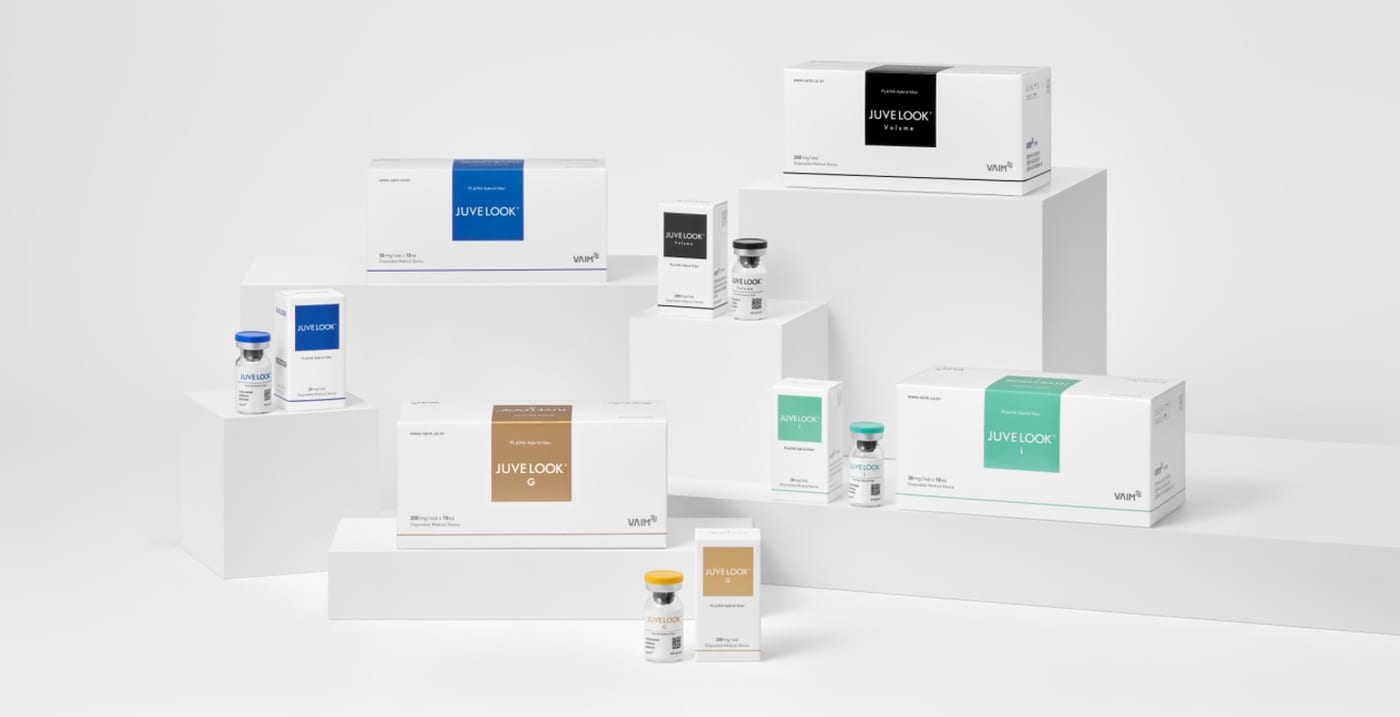
Juvelook pairs a collagen stimulator (PDLLA) with hyaluronic acid, so the change builds slowly as your own collagen forms, over weeks rather than days. If you're unsure which version suits you, I've written about which Juvelook type fits which skin.
A custom booster starts from the other end. Ingredients and concentration are decided for each patient on the day, according to hydration and skin condition, so dry and dull skin and fragile, flushing skin don't get the same mix.
How do boosters actually get into your skin at Symphony?
Two routes. Boosters such as Rejuran, Juvelook and exosome are injected into the dermis. The needle-free route is Mirajet, a jet that pushes actives into the skin; for acne scars, Mirajet is paired with Juvelook once the scar shape (boxcar, rolling, ice pick or mixed) has been read.
Risks and side effects to know
The route changes your recovery. Injection leaves small raised bumps and sometimes a bruise at the needle points, while needling leaves a more even flush across the area.
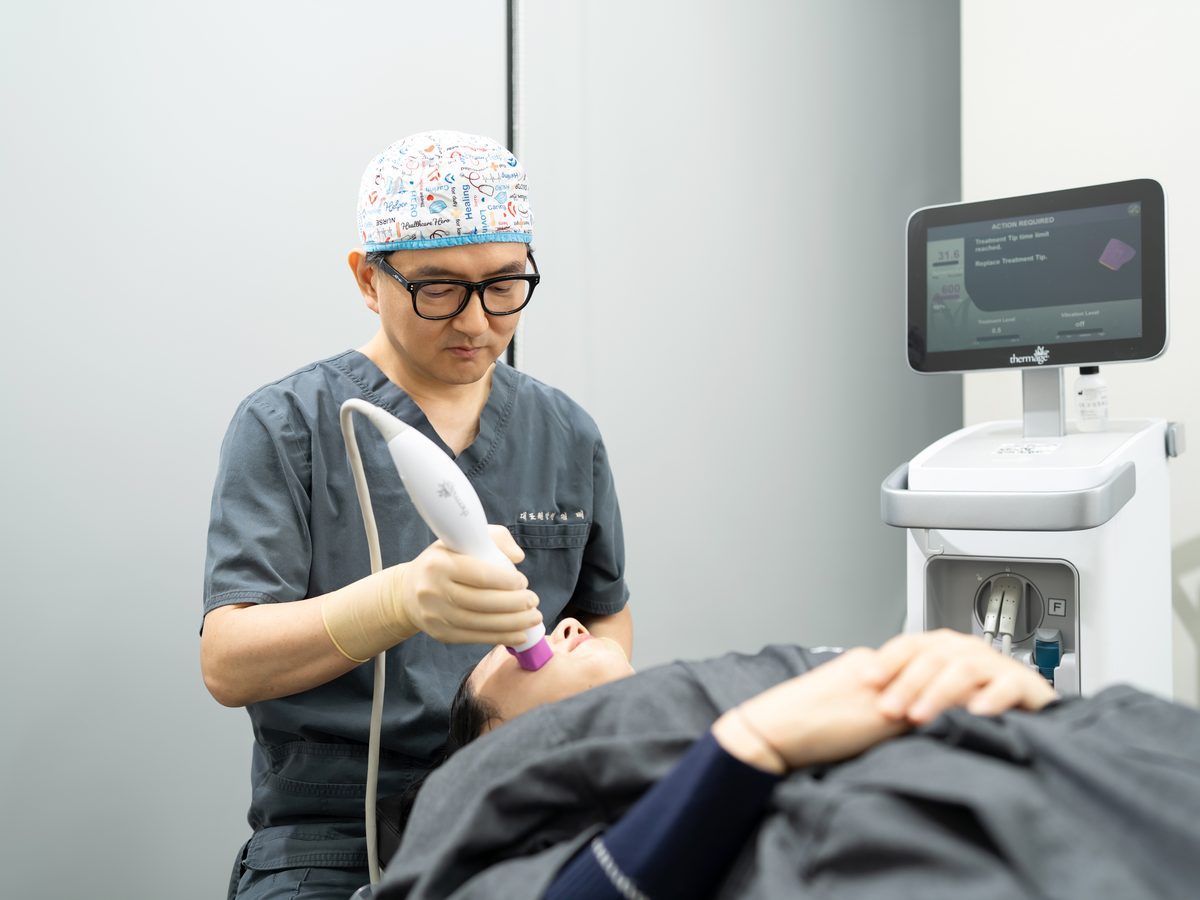
Sagging is a different problem that sits deeper, and boosters don't reach it. If it's also on your list, there's more on how Thermage FLX works across the dermis and on choosing a Sofwave clinic. The combination and the order are decided at consultation.
If you already know your dates, send them on WhatsApp with a front and side photo taken by a window, and ask which day of your stay leaves the most room before the flight. The three booking steps are laid out on Symphony's English home page.
What does recovery look like, day by day?
In short, this is the general pattern for injected boosters and needling. Where your skin lands depends on the route, the area and how easily you bruise.
| When | What you'll likely see | What it means for your plans |
|---|---|---|
| Treatment day | Raised bumps at injection points, a pink flush where needled, a tight feeling | Head back to the hotel; skip makeup and the jjimjilbang that night |
| Day 1-2 | Bumps flatten, redness fades to light pink | Walking around Seoul is fine with sunscreen and a hat |
| Day 3-4 | Dry patches or light flaking after needling; a bruise turns yellow-green | Most people are comfortable flying |
| Day 5-7 and on | A bruise may still show under the eye or near the jaw | Leave this margin before a wedding or photos |
Bruise and bruising: what to watch for
The bruise decides your trip length, not the bumps. Aspirin, fish oil, vitamin E and a few drinks the night before all make bruising more likely, and so does thin skin under the eyes.
Here's the part most trip plans miss: the shopping bag. Retinol, exfoliating acids and vitamin C serums bought in Myeongdong are hard on freshly treated skin, and so are fragranced sheet masks. Leave them sealed for the first several days and use a plain moisturizer, especially on the flight, where cabin air dries skin quickly.
How many nights in Seoul should you plan?
The clinic is open weekdays 10:00 to 19:00 and Saturday 10:00 to 17:00, and closed on Sundays and Korean public holidays, including the days around Lunar New Year and Chuseok. Check those against your flights before you book anything.
Say you're 44, flying in from Denver on a Thursday night, with shallow acne marks and skin that stayed red for a week after a salon needling session. You book Friday. Friday evening is bumps and pink skin, so it's room service. Sunday the clinic is closed, which suits a slow museum day. Monday and Tuesday are yours for the city, and on Wednesday you fly home on day five, with time for a bruise to fade to something concealer covers.
A long weekend is tighter. Treated on Saturday and flying Monday, you have two days, which works if you've had the same booster before without bruising and feels rushed if you haven't.
If you're also weighing lifting on the same trip, a realistic Ultherapy timeline and what changes an Ultherapy quote help you size the extra days.
Bumps, bruises and flare-ups: what's normal, and who should wait
The usual reactions are short. Bumps from injection, pinpoint bleeding during needling, redness and tenderness typically settle within one to three days, and bruises within a week or two. Less often, reactive skin flares (rosacea or a breakout), a cold sore reactivates around the mouth, or a spot becomes infected. Rarely, someone reacts to an ingredient itself, with lumps or swelling that don't settle.
These are general reasons doctors ask people to wait or skip a session:
Infection and scarring: what to watch for
- an active breakout, infection or cold sore in the area
- a laser treatment or peel in the last couple of weeks
- isotretinoin now or recently (bring the date of your last dose)
- pregnancy or breastfeeding
- a fish or salmon allergy, for PN products such as Rejuran
- a history of keloid scarring
- blood thinners, which you should never stop on your own; tell the doctor instead
How long each reaction lasts differs between people, so treat the day counts on this page as typical rather than promised. Once you're home, aftercare stays in the same WhatsApp chat, so a daylight photo of anything that worries you goes there. Spreading redness, heat, pus, fever or pain that gets worse after day three needs a local doctor the same day; bring a note of what was injected or used.
What should you ask any clinic before booking a booster?
Put simply, it doesn't have to be us. Wherever you book, these questions show whether you're getting a plan for your skin or a menu:
- Will the doctor who consults you be the one doing it?
- Which day of your stay would they place it, given your flight home?
- Will you hear the whole plan and the total before the first session? Here's how we price wrinkle-relaxing injections by area as an example of a total built per person.
- How do you reach them after you fly home, and will an interpreter be in the room?
The same logic, applied to lifting and collagen, is in choosing an Ultherapy clinic in Korea and choosing a Juvelook clinic.
Where I land on boosters for reactive skin
For skin that has flared after needling, I lean toward the gentler route and a wider margin before the flight, and I'd rather start with one session you recover from comfortably than plan a series that crowds your trip. The person who talks through your plan is the person who carries it out, and you hear the whole plan and the total before anything starts. There's no need to fix a date before you've seen that plan.
When you're ready, send one daylight photo of the area on WhatsApp, with when your skin last reacted, how long it lasted and your flight dates, and ask whether this trip leaves enough days. A photo gives a direction, not a final plan, and the deposit and payment method are settled after the consultation, so ask about those in the same chat. What decides your plan here is how thin the skin is where it flared, and which layer is actually short of something.
Dr. Hyun Kyung-bae, Chief Director
Questions patients ask us
Can I have a booster on the day I land in Seoul?
You can, but skin that has just spent a long flight in dry cabin air tends to be more irritable, and jet lag makes the evening of bumps harder to sit through. The clinic is closed on Sundays and Korean public holidays, so a Saturday-night arrival means Monday at the earliest.
Does a Rejuran injection hurt more than microneedling?
Rejuran is felt as sharp pricks while it's being placed, usually for about 10 to 20 minutes depending on the area. At Symphony it's eased with numbing cream, gas or sedation. Needling tends to feel like a scratchy vibration under numbing cream.
When can I wear makeup again?
Usually after about a day, once the pinpoint marks from needling have closed and the bumps have flattened. Start with a light layer, avoid pressing makeup into any spot that is still raised, and use clean brushes or sponges.
Will one session be enough on a single trip?
Boosters are often planned as a short series a few weeks apart, which is hard to fit into one visit. One session is a fair starting point for a traveler; whether a series would change more for your skin is part of the plan you hear before treatment.
I take fish oil and a daily aspirin. Should I stop before the trip?
Supplements such as fish oil and vitamin E can make bruising more likely, so ask your own doctor about pausing them in the week before. Never stop a prescribed aspirin or blood thinner on your own; tell the treating doctor you take it, and plan five or more days before your flight.
Sources
- The 500 Dalton rule for the skin penetration of chemical compounds and drugs (Experimental Dermatology, 2000)
- The Effectiveness of Polynucleotides in Esthetic Medicine: A Systematic Review
- Comparison of Polynucleotide and Polydeoxyribonucleotide in Dermatology: Molecular Mechanisms and Clinical Perspectives (Pharmaceutics, 2025)
- Medical Tourism
Treatment details: Symphony Skin Clinic treatment information, checked Nov 12, 2026.
This page is general information from Symphony Skin Clinic, not a diagnosis. Results, risks and recovery differ by person. Treatment is decided after an in-person consultation with a licensed doctor. Clinic and treatment photos on this page were taken at Symphony Skin Clinic.
Keep reading
- Collagen / VolumeJuvelook in Korea: how it works, which type you need, and how many sessions to planJuvelook in Korea explained by a Seoul skin clinic: PDLLA with HA, the four types, how many sessions and when results appear. Ask questions on WhatsApp.8 min read
- Lifting / FirmnessThermage in Korea: how FLX works, honest side effects, and choosing a Seoul clinicHow Thermage FLX works, who it suits, what side effects to expect and what to ask a Thermage Seoul clinic. Doctor-reviewed guide with a WhatsApp quote.8 min read
- Lifting / FirmnessChoosing a Sofwave clinic in Korea: the right device first, then the right questionsChoosing a Sofwave clinic in Korea starts with the right device. How Sofwave, Ultherapy and Thermage divide the work, and what to ask before you book.7 min read