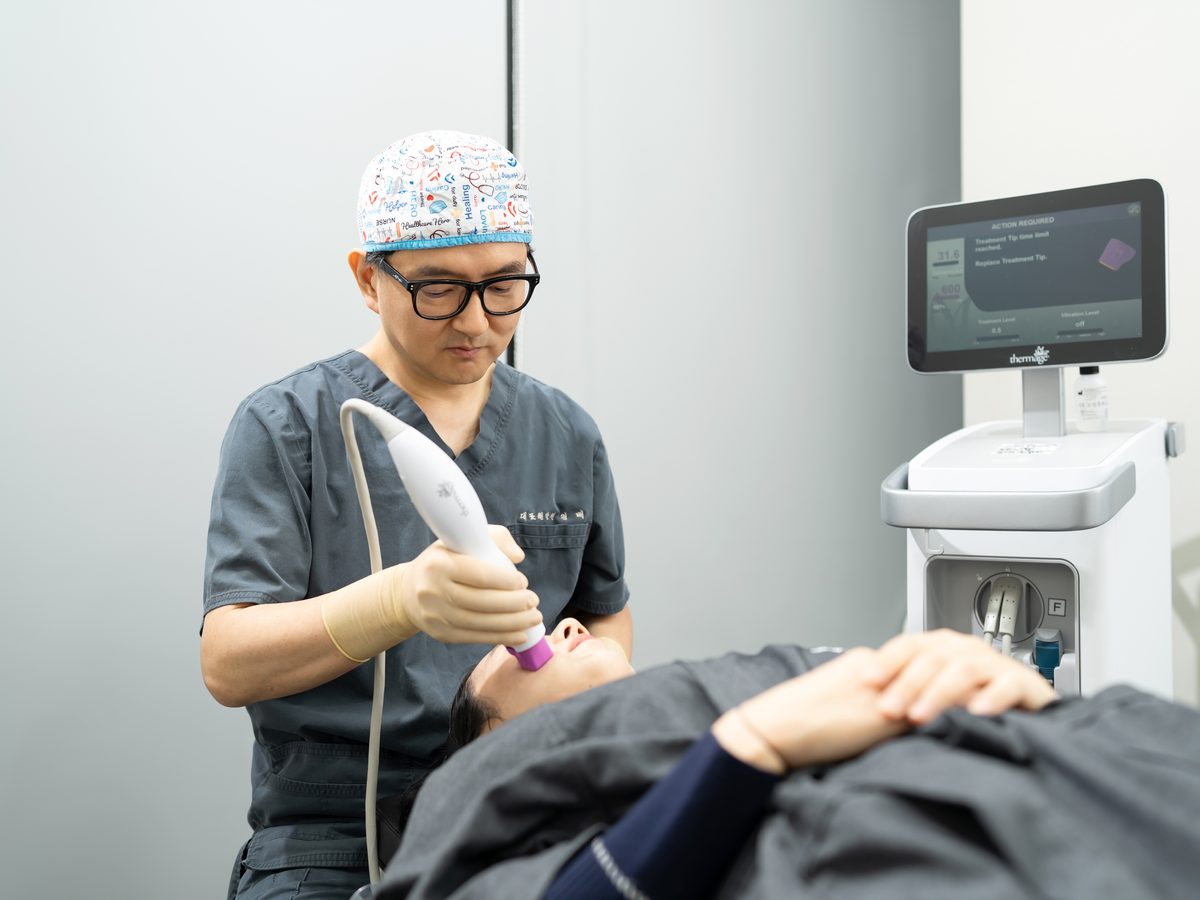
Does Chin Filler Hurt? Briefly, and When I Won't Inject

Written by Dr. Hyun Kyung-bae, Chief Director · Plastic surgeon (Korea) · Reviewed by Dr. Ko Dong-il, DirectorUpdated 8 min read
In short Chin filler usually feels like pressure and a few brief stings during a 10 to 20 minute session under numbing cream, then tenderness for two or three days. Pain that keeps building instead of fading is the part to take seriously.

Does chin filler hurt enough that you'll be wincing at dinner that night, or still sore when you board the flight home?
For many people it feels like pressure and a few brief stings during a 10 to 20 minute chin filler session under numbing cream, and the chin stays tender to the touch for two or three days. The pain worth worrying about is a different kind: pain that keeps building after you leave, with skin that turns pale, blotchy or dusky, needs a doctor the same day.
Hello, I'm Dr. Hyun Kyung-bae, Chief Director at Symphony in Sinsa, Seoul.
I'm a board-certified plastic surgeon and a member of the Korean society of craniofacial surgery, which matters for a chin because the filler sits against bone, and the real question is often about that bone. The physician who assesses your face is the one who injects, in a room that is yours for the whole visit. An interpreter stays with you from reception to the treatment room at no extra charge, so when something stings, you can say so and be understood straight away.
How much does chin filler hurt while it goes in?
The chin is easier than the lips. The skin is thicker there, with fewer nerve endings packed into it, and filler for chin projection usually goes deep, close to the bone. What you notice is a dull push and a sense of fullness moving forward.
The sharp moments are the entry points. I place filler at the layer it's meant for with a fine cannula, a blunt-tipped tube that usually needs only one or two small openings instead of a row of needle pricks, so the stings are few and over in seconds.
What takes the edge off, and what to skip the week before
Numbing cream goes on first, and it needs time on the skin to work, often around half an hour. Many hyaluronic acid fillers also carry lidocaine, a local anesthetic, mixed into the gel, so each area goes quieter within moments of the first drop of product. If you've ever reacted to a dental anesthetic, tell me before anything is opened.
Bruising and bruise: what to watch for
The step that does more for your comfort than anything in the room happens at home: for about a week beforehand, skip aspirin, ibuprofen, fish oil, vitamin E and alcohol unless a doctor prescribed them. They make bruising more likely, and a bruise is what turns a tender chin into a sore, purple one. If you take a blood thinner for a medical reason, keep taking it and tell us; stopping it on your own carries its own risk.
How sore is the chin on days one to three?
On day one the chin feels tight and full. It's tender when you press it, smile wide or bite into something firm, because the chin muscle moves every time you talk or close your lips. A cold pack wrapped in cloth, used in short spells, helps that first evening. You can wash your face and wear makeup the same day, swelling settles over two or three days, and a bruise, if you get one, can take a week or so to fade.
The timing trick is to book the injection early in your trip, never on the last day, so the tender days and any warning sign both happen while you're still in Seoul. We're open weekdays 10:00 to 19:00 and Saturdays 10:00 to 17:00, and closed Sundays and Korean public holidays, which matters if you land on a Friday night.
If your stay is short, send a side-profile photo of your chin in daylight and your arrival and departure dates on WhatsApp, and ask which day of the trip leaves room for the sore days to pass before you fly.
Pain that should send you back the same day
The rare problem that matters is filler entering or pressing on a blood vessel. The US Food and Drug Administration warns that an unintentional injection into a blood vessel can block blood flow and lead to skin damage, vision problems or stroke. The chin has arteries running toward the lower lip and the jaw. It isn't usually counted among the higher-risk areas, like the nose or the space between the brows, but the risk there isn't zero.
The signs are specific. Pain far beyond the dull ache you felt in the room, or pain that grows over the following hours instead of easing. Skin that goes white, then blotchy, purple or grey. Any change in your vision. Hyaluronic acid can be dissolved with an enzyme called hyaluronidase, and with a blocked vessel, time matters, so this is a same-day problem, never a wait-and-see one.
Infection and redness: what to watch for
Infection looks different. Redness, heat and swelling that get worse after day three instead of better, sometimes with a fever, need a doctor's visit, not more ice. A firm bump you can feel in the first week is common and usually softens as the swelling goes down; don't knead it hard on your own.
Risks and side effects to know
If any of this starts once you're home, go to an emergency department for the vessel signs and see a local doctor for the infection signs. Keep a note of the product name and the date it was injected, because a doctor who knows it's hyaluronic acid can act faster. Then message us with photos as well: the follow-up is handled by the physician who treated you.
How much swelling and tenderness you get differs from person to person, which is why the warning signs matter more than the day count.
When I won't inject your chin
Some reasons are about timing. I'd ask you to wait with an active breakout, a cold sore or any infection on or near the chin, because the cannula should not pass through inflamed skin; if breakouts there have left marks, how a doctor reads acne scars before choosing a treatment is a separate plan. I'd also wait during pregnancy and breastfeeding.
I won't inject if you've reacted to lidocaine or to a filler before, or if you have a history of severe allergic reactions, and a bleeding disorder needs a conversation first. If dental work is coming up, many doctors suggest keeping a couple of weeks between the dentist and filler around the mouth, since dental procedures can carry bacteria into the area.
The harder reason is the chin itself. Say you're 33, you live in Melbourne, and a doctor at home told you your chin was too small for filler. Look at your profile in a mirror with your teeth together. If your lower teeth sit well behind the upper ones and the chin is set back with them, the shortfall is in the jaw.
Filler can add some forward projection, but the more you ask of it, the more the tissue has to stretch over the gel, the sorer the days after feel, and the more the chin tends to look wide and heavy where you wanted it longer.
In that case I'd tell you plainly that filler won't give you what you're picturing, and that it's a jaw question for a surgeon. If your bite is normal and the chin is just short or flat, filler is usually a reasonable tool, and the session is short. If you'd rather build volume slowly than see it on the day, whether Juvelook or Juvelook Volume comes first explains the collagen-stimulating route.
Has your chin been filled before, or is it really the skin?
Old filler changes the picture. Tell me what was used, roughly when, and whether the area ever stayed sore or lumpy for longer than a couple of weeks, because leftover product changes how much, if anything, should go in.
Sometimes the chin isn't the problem. A jawline that has softened from laxity won't be lifted by filler placed in the chin; what Ultherapy actually does in the deeper layer and what Thermage changes in the months after a session cover that route. If the skin over the chin looks thin or crepey, Rejuran, a skin treatment that is not a filler, answers a different complaint.
And a pebbly, dimpled chin that puckers when you talk comes from an overactive muscle, which a muscle-relaxing injection usually addresses better than filler; four questions for choosing a clinic for wrinkle-relaxing injections in Seoul will help if that's your concern.
What should you ask any clinic before the needle?
In short, it doesn't have to be Symphony. Wherever you book, these answers tell you how your chin will be handled:
- Is the doctor who examines your chin the one who injects it?
- What product is going in, does it contain lidocaine, and can it be dissolved if needed?
- Needle or cannula for your chin, and why?
- Will you hear the whole plan and the total before the first injection?
- Who do you contact if something feels wrong after you've flown home, and how?
- Will someone who speaks your language be in the room with you?
The same habit works for devices, and the questions worth asking before booking Ultherapy follow the same logic. When a written quote arrives for a skin booster, what makes up a Rejuran quote shows how to read one line by line. Hours, the team and the address are on Symphony's English site.

Where I stand on chin pain
The session is the easy part, and the three tender days after are manageable with ice and patience. What I watch for is the pain that doesn't fit that pattern, and the chin that filler can't fix. Neither decision has to be made this month; a chin can wait for the right trip.
What decides it for you is how your chin sits over your bite and how much room the tissue gives. When you're ready, send on WhatsApp a front photo, both 45-degree angles and a profile, in daylight with the beauty filter off, plus any filler your chin has had and roughly when, and ask one thing: is my chin a filler question or a bone question? The photo consultation runs one-on-one in English, and you can ask before booking anything.
Dr. Hyun Kyung-bae, Chief Director
Questions patients ask us
Can I fly home the day after chin filler?
Cabin pressure doesn't move hyaluronic acid filler, and many people fly within a day or two. The chin may feel a little puffier on a long flight, so drink water and skip alcohol on board. The reason to leave a few days is so that any warning sign shows up while you're still near the clinic.
Which painkiller can I take afterward?
For the first days, acetaminophen (paracetamol) is generally preferred over anti-inflammatories such as ibuprofen, because those can make bruising worse. If you take any regular medication, check with the doctor treating you before adding anything.
Can I ask you to stop during the injection?
Yes, at any point. The session is 10 to 20 minutes, the room is yours alone, and the interpreter stays in the room with you, so a pause can be asked for and understood immediately.
How soon can I exercise or use a sauna?
Hard exercise, saunas and hot baths raise blood flow to the face and can increase swelling and bruising. Many doctors suggest waiting about 24 to 48 hours; a walk is fine the same day.
Will my chin feel hard for weeks?
It usually feels firm for the first few days while the swelling sits around the gel, then softens as the filler settles over roughly two weeks. A firmness that grows, turns red or warm, or hurts more over time is a reason to be seen.
Sources
- Dermal Fillers (Soft Tissue Fillers)
- Fillers
- Minimizing Bruising Following Fillers and Other Cosmetic Injectables (Hamman & Goldman, 2013)
- Dermal Fillers
Treatment details: Symphony Skin Clinic treatment information, checked Nov 22, 2026.
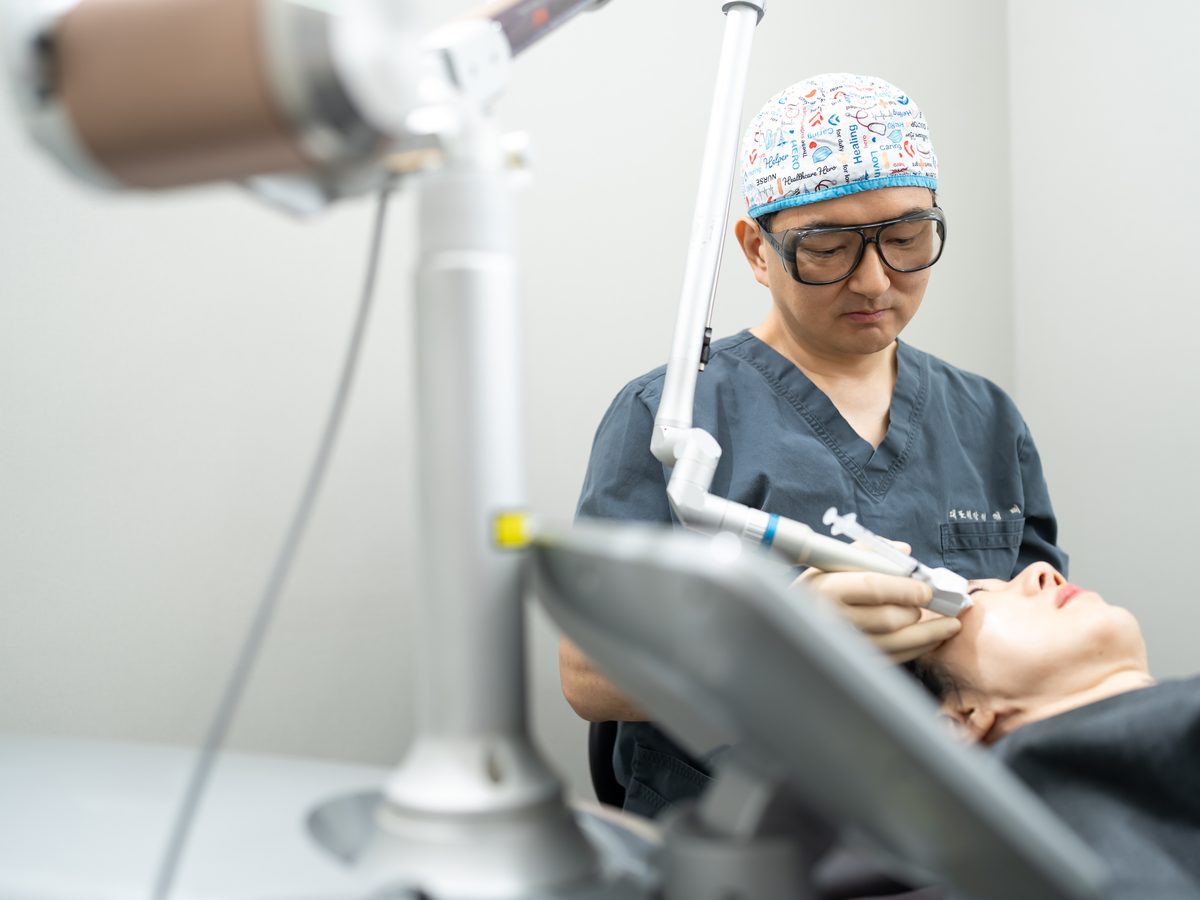
This page is general information from Symphony Skin Clinic, not a diagnosis. Results, risks and recovery differ by person. Treatment is decided after an in-person consultation with a licensed doctor. Clinic and treatment photos on this page were taken at Symphony Skin Clinic.
Keep reading
- Scar / Stretch MarkAcne scar treatment in Korea: what a doctor reads before choosing anythingHow acne scar treatment in Korea is planned: the four scar shapes a doctor reads first, and why Symphony pairs needle-free Mirajet delivery with Juvelook.8 min read
- Collagen / VolumeChoosing a Juvelook clinic in Korea: Juvelook or Volume first, then four questions to askChoosing a juvelook korea clinic? How standard Juvelook and Juvelook Volume differ (24 vs 40 μm), and four questions you can put to any clinic in Seoul.8 min read

- Lifting / FirmnessUltherapy in Korea: what it actually does, how we plan it, and who it fitsWhat Ultherapy treats, how Symphony checks depth with live imaging first, and who it suits. Doctor-reviewed guide. Get a quote on WhatsApp.8 min read