2 Weeks After Thread Lift: Tightness Is Normal, Heat Isn't

Written by Dr. Hyun Kyung-bae, Chief Director · Plastic surgeon (Korea)Updated 7 min read
In short Tightness, tenderness when you open wide and a softening dimple are common two weeks after a thread lift. Heat, spreading redness, worsening pain or a thread end at the skin need a doctor that day.

You're home 2 weeks after thread lift treatment in Seoul. The bruising has gone, yet your cheek still tugs when you yawn and there's a shallow dent in front of one ear. Is that the threads settling, or something to worry about with your clinic a long flight away?
Tightness, tenderness when you open your mouth wide and a faint dimple that keeps softening are common at this stage of a thread lift. Heat, spreading redness, pain that is growing instead of fading, or a thread end you can feel at the skin are not. Those need a doctor the same day.
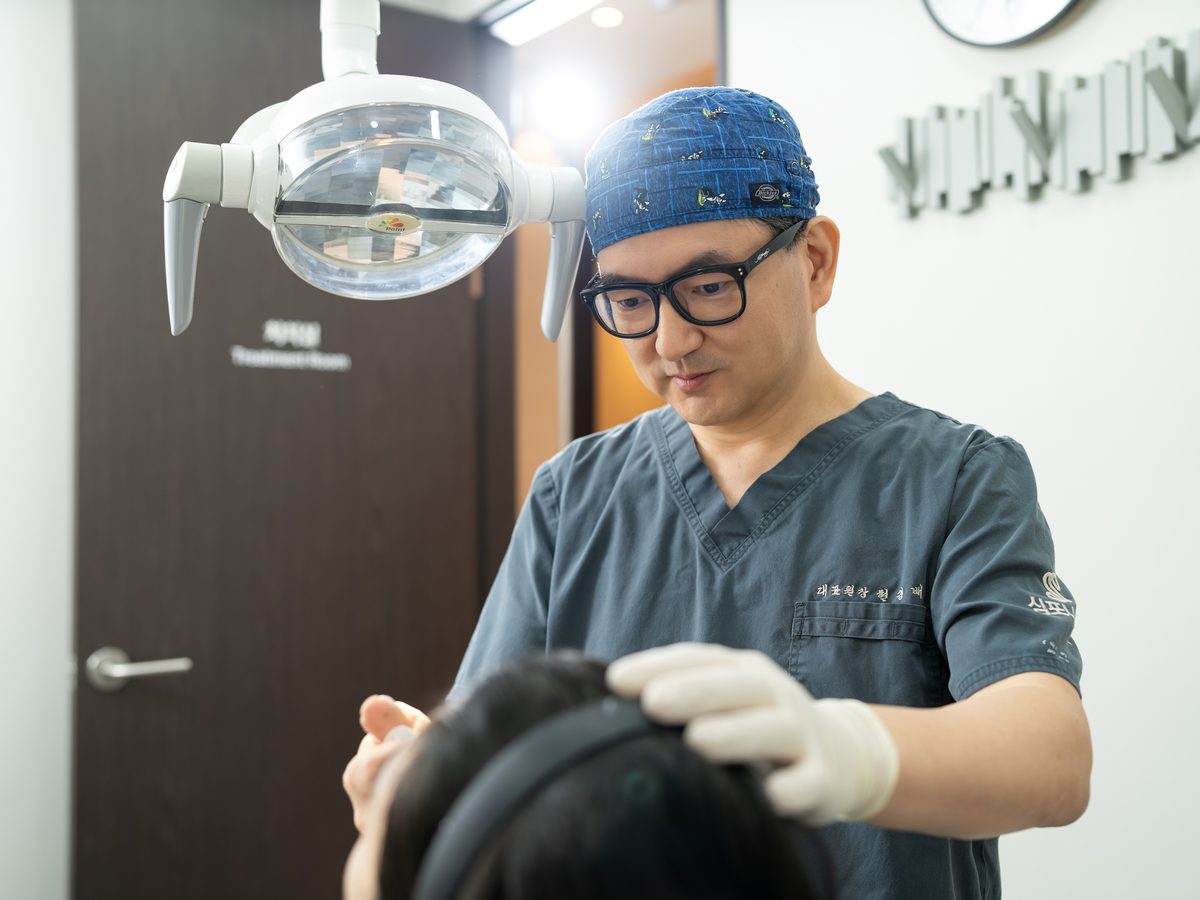
Hello, I'm Dr. Hyun Kyung-bae, Chief Director at Symphony in Seoul and a board-certified plastic surgeon (Republic of Korea).
I've practiced at Symphony for seventeen years. For someone who spends week two at home, three things matter here: the doctor who consults you is the doctor who places the threads, treatment is one patient at a time in a private room with an interpreter beside you from reception to the treatment room at no extra charge, and aftercare stays on the same WhatsApp chat you booked on.
What should still feel tight at two weeks?
Lifting threads carry small barbs or cones that grip the tissue under the skin and hold it higher. Early on, that grip is purely mechanical. Your body then lays down a thin sleeve of collagen around each thread, and the pull starts to feel like part of your face.
Bruising and swelling: what to watch for
Think of a jacket just taken in at the seams: you feel the stitching every time you reach forward, until the fabric relaxes around it. By day 14, bruising and most swelling have usually gone, while a tug near the hairline or in front of the ear when you chew or laugh often lasts a few more weeks.
Signs that are not normal at day 14
Watch for change in the wrong direction. Two weeks in, everything should be quieter than it was on day five. Act on these:
Redness and swelling: what to watch for
- heat, redness or swelling that appears or spreads on one side after it had settled
- pain that is getting worse, or a firm, tender lump
- fluid, pus or a fever
- a thread end you can see or feel pushing at the skin
- a dimple or ridge that is deepening instead of fading
Risks and side effects to know
Infection after thread lifting can appear later than people expect, and it rarely settles by itself. If you notice any of these, see a doctor where you live that day.
Why day 14 falls between check-ins
You leave Symphony with a written recovery guide in your language. On day 1, 3 and 7 there is a check-in on the same chat: you send a photograph, and it is either confirmed as tracking as expected or passed to the physician, whose reply comes back to you. Day 30 brings guidance on when maintenance would be due.
That puts day 14 between scheduled check-ins, and the chat stays open in between. It is recovery guidance, not remote treatment, so anything on the list above should also be seen by a doctor near you.
If you're still planning, the most useful first message is one front photo and one side photo in daylight, plus the dates you could be in Seoul. Ask how many nights to leave between the treatment and your flight, because that one number shapes the rest of your trip. The WhatsApp button on Symphony's English site opens the same chat.
Can you see the dentist, get a facial or work out yet?
Mostly not yet, and the reason is the barbs. Anything that stretches your face a long way or presses hard on it can drag a thread before the collagen sleeve has formed. Thread-lift aftercare sheets commonly ask you to hold off on these for the first few weeks:
- dental work, or anything that keeps your mouth wide open for a long stretch
- facial massage, gua sha and firm cleansing strokes along the cheek
- hard workouts, saunas and very hot baths while there is still swelling
- sleeping face-down or pressed into one side
The line for your own threads is on the written guide you take home. Where it differs from this list, follow the guide.
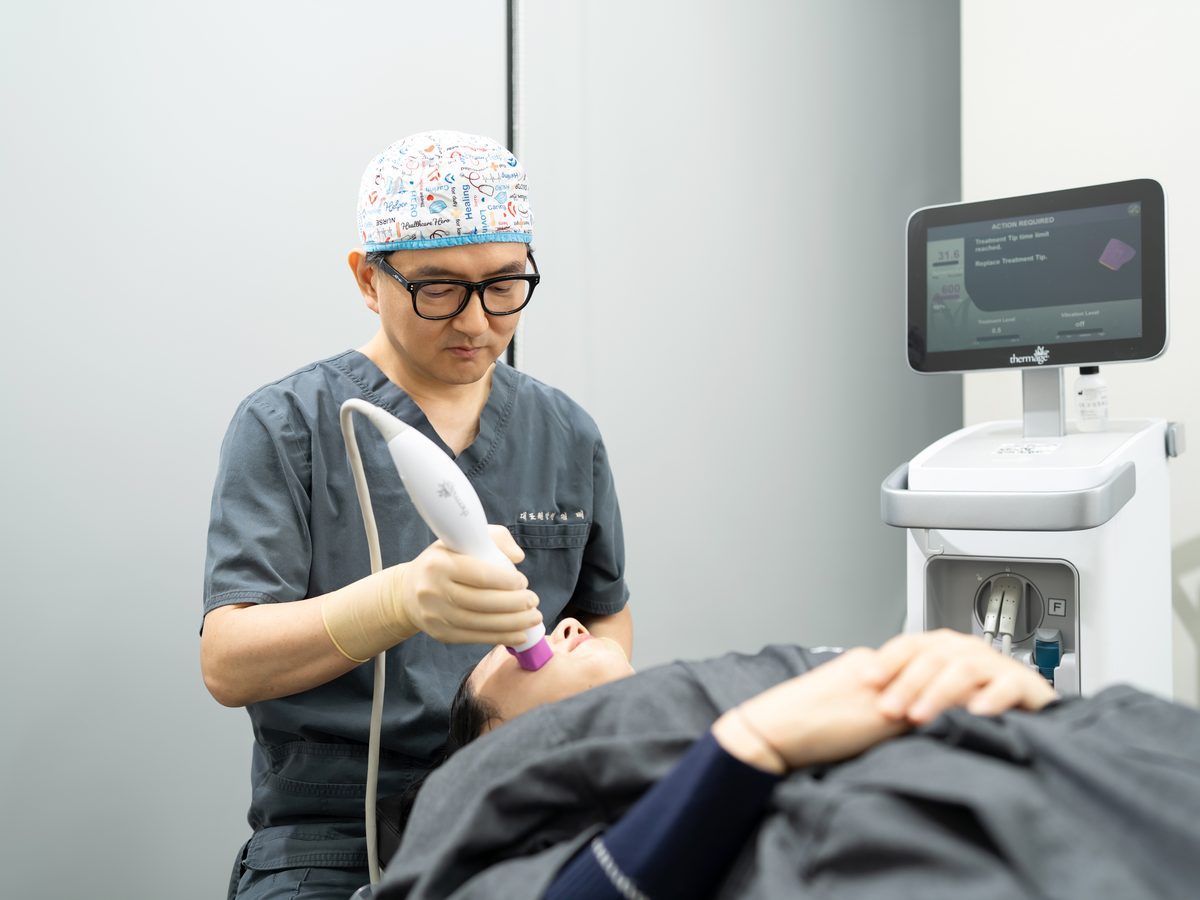
Other treatments are a separate question. I would rather you wait than add heat or more needles over threads that are still settling, and many doctors prefer to hold focused ultrasound and radiofrequency until the threads have bedded in. If you're curious about those devices for a later trip, the Ultherapy FAQ on side effects covers what that treatment involves, and how Thermage FLX works explains why it heats the deeper skin. Injections near the threads, such as a wrinkle-relaxing injection planned around your expressions or a collagen stimulator, are also worth timing with the doctor who placed your threads. Our page on what changes after Juvelook and when it shows gives a sense of how slowly collagen work unfolds.
Say you fly home on day 5
Say you're 41, you work in Toronto, and you have six nights in Seoul. You land on Monday, you're seen and treated on Tuesday, and you fly home on Sunday morning. Wednesday is day 1, with the first photo check-in. Friday is day 3, the second one. By Sunday the heaviest swelling has usually passed, though a long flight can leave your face puffier for a day.
With only five nights after treatment, I want the worst swelling days to happen in Seoul, not at your desk. Back at work on day 7, you send the third check-in photo from Toronto. A chewy lunch still pulls in front of the ear, and colleagues mostly notice nothing.
On day 14, the dent in front of your left ear is shallower than it was on day 7. That is the pattern to expect, and nothing needs to happen except leaving it alone. If instead the left cheek had turned warm and pink on day 12 after a calm week, that would be the day to see your family doctor and send a photo on the chat.
One habit makes this much easier: take your photos in the same spot, by the same window, at the same time of day. A dimple is hard to judge from memory and easy to judge from two pictures side by side.
What should you ask any clinic before booking threads?
The weeks after you fly home are decided before you ever sit in the chair. It doesn't have to be us, but wherever you book, get these answered first:
- Is the doctor who consults you the one who places the threads?
- Which thread type, how many and roughly where, and can you have that written down for a doctor at home?
- Is there a written aftercare guide in your language, and what does it say about weeks two to four?
- How do you send a photo once you're home, and who looks at it?
- What happens if a thread end surfaces or a dimple doesn't settle?
- Which other treatments should wait, and for how long?
If you're weighing threads against a device lift, the realistic timelines in Ultherapy results in Korea and what Thermage changes, and when show what each one can and can't do. And if a quote arrives as a single number, the way a scar treatment quote breaks into parts or why wrinkle-relaxing injections are priced by area shows what to ask it to spell out.
Is the lift settled at two weeks?
Not fully. What you see 2 weeks after thread lift treatment is the position with most of the swelling out of the way, which is the first clear look you get. The collagen around the threads keeps forming over the following weeks, and the tissue softens into place. Dissolvable threads are absorbed over months, so day 14 isn't the last word in either direction. How quickly each of these steps settles differs from face to face.
Infection and irritation: what to watch for
Threads also aren't for everyone. Heavy, loose skin along the jaw often needs more support than threads can hold. An active skin infection, pregnancy or blood-thinning medication are reasons to wait and talk it through first. Less common problems include uneven pull between sides, a thread visible under thin skin, and irritation of a small nerve that causes numbness for a while.
Where I stand on this: week two is for leaving the threads alone and watching only for change in the wrong direction. If threads wouldn't change what you came in for, I'd tell you so before anything is placed, and you'd hear the whole plan and the total before the first thread goes in. This isn't a decision to rush on a single trip.
If you're deciding now, one daylight photo of the area that bothers you is enough to start on WhatsApp, and you can ask before booking anything whether threads would change it at all. When you come, what decides the plan is how far the tissue along your cheek and jaw has dropped, and how thick the skin over it is.
Dr. Hyun Kyung-bae, Chief Director
Questions patients ask us
Can I sleep on my side two weeks after a thread lift?
Many doctors ask for back sleeping with the head raised for about the first week, because pressing a cheek into a pillow can shift fresh threads. By the second week, side sleeping is often allowed if it doesn't hurt, but pillow pressure matters more than position. A soft, low pillow helps, and your written guide has the line for your threads.
Why does my jaw catch or click when I open wide?
Threads placed toward the jaw and in front of the ear sit near the muscles you chew with, so a tug or catch when you yawn or bite into something large is common in the first weeks. It should ease steadily. If your jaw locks, or the catch is getting stronger instead of weaker, have it examined.
Does flying affect the threads?
Cabin pressure doesn't move the threads. Sitting still for hours in dry air can leave your face puffier for a day, so the morning after landing may look more swollen than your last day in Seoul. Drink water on board, keep your head up if you sleep, and judge the swelling a day or two after you're home.
When can I wear makeup or use retinol again?
Makeup over the cheeks is usually fine once the small entry points have closed, which tends to happen within the first few days; keep it off the entry points until then. Retinoids and exfoliating acids are worth holding until any tenderness has gone, since applying them means pressing along the thread lines. Use light fingertips, not a scrub or brush.
What should I take home from Seoul for a doctor there?
Ask for the thread type, how many were placed and roughly where, written down with the treatment date, and keep the written recovery guide you leave with. If a doctor at home ever needs to look at a lump or a thread end, that one page saves guessing about what is under the skin.
If a thread end pokes through, do I need another trip to Seoul?
Not necessarily. A thread end that surfaces near an entry point can often be trimmed or removed by a doctor in a short visit. Don't pull at it yourself, keep it clean, and get it seen. Before treatment, ask who handles this if it happens after you're home.
Sources
- Thread lift
- Thread Lift Risks and Safety Information
- Invited Discussion on: A Meta-Analysis and Systematic Review of the Incidences of Complications Following Facial Threadlifting (Aesthetic Plastic Surgery, 2021)
- Medical Tourism
Treatment details: Symphony Skin Clinic treatment information, checked Nov 13, 2026.
This page is general information from Symphony Skin Clinic, not a diagnosis. Results, risks and recovery differ by person. Treatment is decided after an in-person consultation with a licensed doctor. Clinic and treatment photos on this page were taken at Symphony Skin Clinic.
Keep reading
- Lifting / FirmnessUltherapy FAQ: side effects, safety and what to expect in KoreaCommon questions about Ultherapy in Korea: side effects, safety, and how to prepare. Doctor-reviewed answers from Symphony Skin Clinic.7 min read

- Lifting / FirmnessThermage in Korea: how FLX works, honest side effects, and choosing a Seoul clinicHow Thermage FLX works, who it suits, what side effects to expect and what to ask a Thermage Seoul clinic. Doctor-reviewed guide with a WhatsApp quote.8 min read
- InjectablesBotox in Korea: the vial is the same everywhere, the plan is notBotox in korea explained by a Seoul clinic: how muscle botox and skin botox differ, what jaw and calf treatment involves, and what to check before you book.8 min read