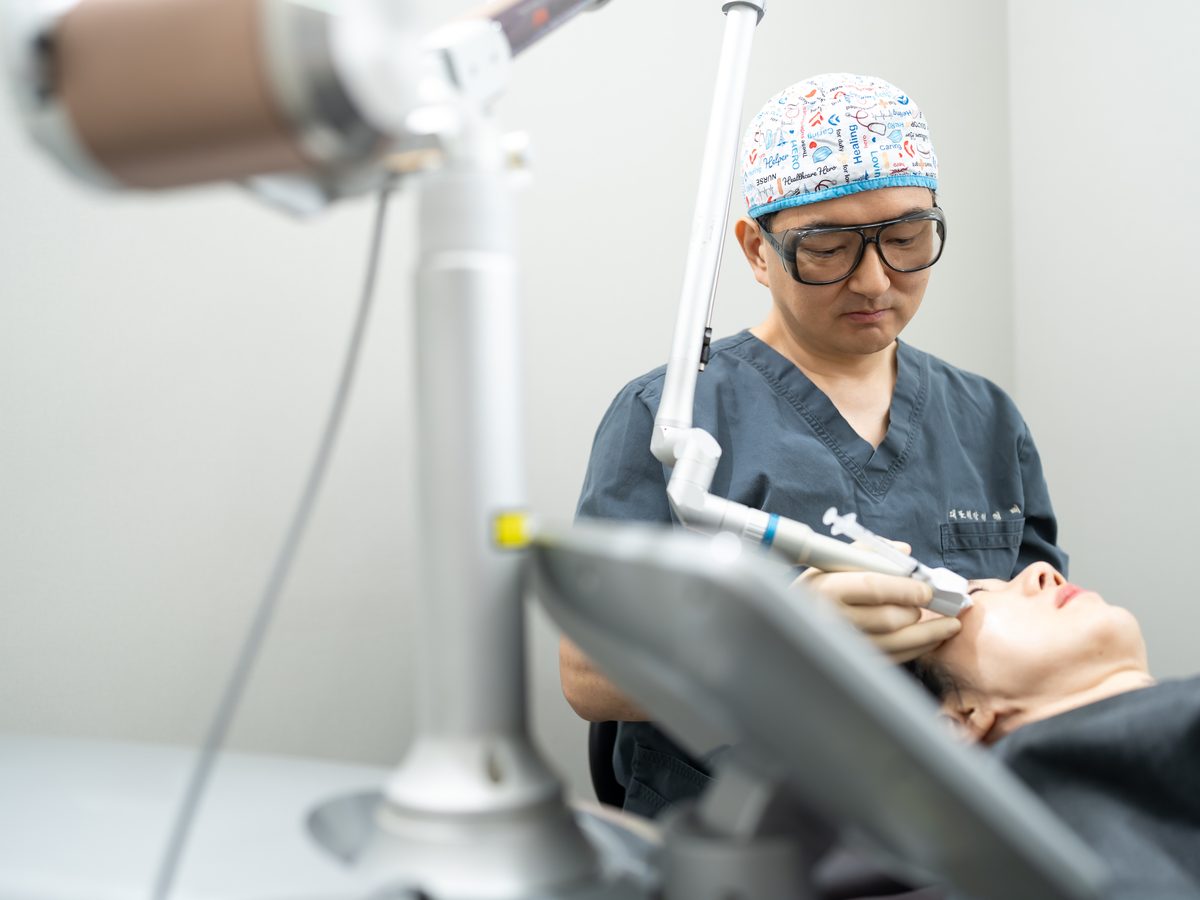
Rejuran injection in Korea on a short trip: what to watch once you're home

Reviewed by Dr. Kang Eun-joo, DirectorUpdated 7 min read
In short After a Rejuran injection in Korea, small bumps and redness usually settle within a day or a few days. Spreading redness, heat, pus or pain that worsens at home needs a local doctor that same day.

Before you leave Seoul after a Rejuran injection in Korea, save four lines on your phone: the product name exactly as printed on the box, the date, the delivery method (hand injection, multi-needle injector or needle-free Mirajet) and the areas that were treated. Add one photo of your face that evening, in daylight if you can. Those four lines and one photo are what a doctor at home will need if something looks wrong on day three, and they are easy to forget once you're packing.
The rest of the answer is shorter than people expect. Rejuran Healer is a polynucleotide skin booster, and the visible recovery is usually small bumps and pinpoint redness that settle within a day or a few days. For a traveler, the harder part is often not the session but the days after it, when the clinic is a flight away. The Rejuran Healer treatment page covers the session itself; this guide stays with the flight and your first week at home.
What does a Rejuran injection in Korea leave on your skin?
Small raised bumps where the product sits, some pinpoint redness and, now and then, a small bruise. The session runs about 10-20 minutes with numbing cream, and the clinic lists the downtime as short rather than none: you can walk out and get on the subway, but your face may not be ready for photos that evening.
What shows depends partly on how the product went in. The clinic describes three ways of delivering skin boosters, and each leaves a different trace:
| Delivery method | How the product goes in | What you usually see afterwards |
|---|---|---|
| Hand injection | individual injections placed directly by the doctor | a small bump at each point, possible pinpoint bruises |
| Injector | nine fine 34G sterile needles at one set depth | evenly sized small bumps, described by the clinic as absorbed in about a day |
| Mirajet | a needle-free micro-jet into the skin | little to show afterwards, no visible bumps by the clinic's description |
Which method suits your skin and this product is decided in the consultation, by the same doctor who then does the treatment. Ask for the method name before you leave, because it changes what "normal" looks like in your mirror at home. If you're still unsure what the product is and why it isn't a filler, our explainer on Rejuran in Korea covers that ground.
The flight and the first two days back
The practical risks on a plane are touch, pressure and dry air, and all three are in your hands.
Cabin air is dry, and skin with fresh injection points can feel tight. A gentle, unscented moisturizer you already know is a better choice than a new sheet mask bought at the airport. Keep your hands off your face, and think about what will press on it for hours: a sleep mask resting on treated under-eye skin, a neck pillow pushing into your cheek, the window you lean against.
General advice after skin injections is to skip makeup until the injection points have closed, usually by the next day, and to avoid alcohol, saunas and hard workouts for the first day or two, since flushing can make swelling and bruising look worse. These are common precautions rather than fixed rules; the doctor treating you may adjust them to your skin.
Timing matters too. The clinic is open weekdays 10:00-19:00 and Saturdays 10:00-17:00, and closed on Sundays and Korean public holidays. If you fly out on a Sunday, Saturday is the last day you could be seen before leaving.
Which signs are normal at home, and which need a doctor?
Bumps, mild redness, small bruises and tenderness that fade day by day are expected. Redness that spreads, skin that turns hot, pus, fever, pain that grows after the second day, or a firm lump that gets bigger are not; see a doctor where you live the same day.
The literature backs the reassuring half. A 2024 systematic review of polynucleotides in esthetic medicine in the Journal of Cosmetic Dermatology found that reported side effects were mostly mild, short-lived injection-site reactions. For the warning half, the U.S. Food and Drug Administration's page on dermal fillers, a different product given by a similar needle-in-skin route, lists bruising, redness, swelling, pain, tenderness and itching as common effects, and infection and lumps among the less common ones.
| What you see at home | What it usually means | What to do |
|---|---|---|
| Bumps, mild redness, faint bruise, fading each day | expected reaction to the injection points | moisturize, hands off, keep photographing in the same light |
| Tenderness or swelling that hasn't improved by day three | slower settling than usual | show your photos to a local doctor or pharmacist |
| Spreading redness, heat, pus, fever, worsening pain | possible infection | see a doctor the same day; don't wait to return to Seoul |
| Hives, swelling beyond the treated area, trouble breathing | possible allergic reaction | emergency care immediately |
The last row matters because polynucleotides used in skin boosters are typically derived from fish DNA, as a 2025 review in Pharmaceutics describes. Allergic reactions are not what the reviews mostly report, but anyone with a fish allergy should say so before the needle comes out, not after the flight home.
A one-page note for your dermatologist at home
A one-page note with the product name, the words "polynucleotide (PN) skin booster", the date, the delivery method, the treated areas, any numbing used, and your day-by-day photos. A doctor who has never handled the brand will still understand "polynucleotide injected into the dermis".
A few things make that note far more useful:
- Photos in the same light each day. The evening of the treatment, then the next morning and the morning after. Changes are easier to judge as a series than from one picture taken at the worst moment.
- Medicines and supplements. Anything that thins blood or makes bruising easier, plus any antibiotic or antihistamine you took after leaving Seoul.
- Allergies. Especially fish, and any reaction to earlier injections.
- What you did on the trip. A sauna on day one or a long night out changes how a doctor reads a bruise.
Interpreting is available in English, Japanese and Chinese.
Who should not have a Rejuran injection before flying home?
Anyone with an active skin infection, a cold sore outbreak or inflamed acne in the area should postpone, and so should anyone with a photo-critical event in the next two days. A few other situations call for a longer conversation before booking.
- Fish allergy or a past reaction to a PN product. Tell the doctor first; it may change the plan.
- Pregnancy or breastfeeding. Data on skin boosters in pregnancy are limited, and postponing is the usual choice.
- Blood thinners or easy bruising. Bruises are more likely and slower to fade. Don't stop a blood-thinning medicine on your own; ask the doctor who manages it.
- Wanting volume rather than skin quality. Rejuran does not fill a hollow. If volume is the goal, the Juvelook and Juvelook Volume comparison explains that different route.
- Textured acne scarring. A booster alone may not be the main tool; how a doctor reads acne scars covers the alternatives.
Individual skin varies, and suitability is confirmed only at the in-person exam.
How do you plan more than one session from abroad?
Most published polynucleotide protocols use a series of sessions a few weeks apart rather than a single treatment. When you live abroad, that leaves three realistic paths: one session per trip, timing trips to match the interval, or continuing the series with a doctor at home using the note from the section above.
There is no wrong choice among them; they differ in convenience, not in what the product does.
A few clinic facts help with the planning. Appointments are 1:1, one patient at a time in a private room, and the doctor who consults is the doctor who treats.

The clinic is at 2F, 165 Dosan-daero, Gangnam-gu (Sinsa Hill Building), about a 10-minute walk from Exit 8 of Sinsa Station on Line 3. The visit page has the map, and the clinic's English site lists who you may meet. If you're also thinking about a lifting device on the same trip, the Ultherapy FAQ covers its side effects so you can judge whether the trip has room for both recoveries.
If you're weighing a Korean Rejuran injection for your next trip, send two things on WhatsApp: a daylight photo of the area you want treated and the dates you'll be in Seoul.
Questions patients ask us
How soon can I fly after a Rejuran injection in Korea?
There is no published rule that says a normal flight affects a polynucleotide booster. The practical issues are dry cabin air, touching your face and pressure from sleep masks or pillows. Many travelers plan at least one night between the session and the flight so the injection points can close.
Is a Korean Rejuran injection different from one at home?
The product name is the same; what varies is the delivery method, the depth, the dose and the areas the doctor chooses for your skin. At this clinic, those decisions are made in the consultation by the doctor who also does the treatment.
Can I wear makeup on the plane after a rejuran korea injection?
General advice after skin injections is to wait until the injection points have closed, usually by the next day. A gentle moisturizer you already use is a better choice on the flight. Ask the treating doctor if your session used a method that leaves no visible bumps.
What are Rejuran HB and Rejuran i?
They are other products in the same polynucleotide family, made for different uses. The treatment menu here lists Rejuran Healer. If you've read about another variant, ask in the consultation which product is planned and why.
Will I need more than one rejuran injection in Korea?
Most published polynucleotide protocols use a series of sessions a few weeks apart. Travelers can do one session per trip, match trips to the interval, or continue with a doctor at home. The plan depends on your skin and is set at the exam.
Can my doctor at home treat a reaction if they don't know the brand?
Yes. Describe it as a polynucleotide (PN) skin booster injected into the dermis, and bring the date, the delivery method, the treated areas and your daily photos. Signs of infection or allergy are treated the same way whatever the product's brand.
Sources
- The Effectiveness of Polynucleotides in Esthetic Medicine: A Systematic Review
- Comparison of Polynucleotide and Polydeoxyribonucleotide in Dermatology: Molecular Mechanisms and Clinical Perspectives
- A Real-Life Assessment of Injectable Polynucleotides High Purification Technology in Aesthetic Medicine for Skin Rejuvenation
- Dermal Fillers (Soft Tissue Fillers)
Treatment details: Symphony Skin Clinic treatment information, checked Oct 16, 2026.
This page is general information from Symphony Skin Clinic, not a diagnosis. Results, risks and recovery differ by person. Treatment is decided after an in-person consultation with a licensed doctor. Clinic and treatment photos on this page were taken at Symphony Skin Clinic.
Keep reading
- Skin BoosterRejuran in Korea: a skin treatment that is not a fillerRejuran korea explained by a Seoul clinic: what polynucleotide does, why it is not a filler, and how Rejuran, Rejuran i and Rejuran HB differ from each other.8 min read
- Collagen / VolumeChoosing a Juvelook clinic in Korea: Juvelook or Volume first, then four questions to askChoosing a juvelook korea clinic? How standard Juvelook and Juvelook Volume differ (24 vs 40 μm), and four questions you can put to any clinic in Seoul.8 min read
- Scar / Stretch MarkAcne scar treatment in Korea: what a doctor reads before choosing anythingHow acne scar treatment in Korea is planned: the four scar shapes a doctor reads first, and why Symphony pairs needle-free Mirajet delivery with Juvelook.8 min read