Five skin complaints and the Korean skin boosters usually matched to each

Reviewed by Dr. Kang Eun-joo, DirectorUpdated 7 min read
In short Korean skin boosters are injectables placed in the dermis, each matched to a complaint: water for dryness, PN for texture, collagen builders for thin skin. Our menu has five, including Symphony Custom Booster and Rejuran Healer.

| What your skin is doing | What is usually considered | What it works on |
|---|---|---|
| Dry and tight by midday, creams don't hold | Hyaluronic acid based boosters, Jalupro, a custom blend | Water held in the dermis |
| Rough texture, visible pores | Rejuran Healer (PN), exosome | Repair signalling in the dermis |
| Thin, crepey, slightly hollow | Juvelook, Juvelook Volume, Collaum | Your own collagen, built slowly |
| Dull and reactive after irritation | Exosome, PN | Barrier and renewal |
| Sagging jawline or jowls | Usually not a booster at all | Deeper layers (SMAS, muscle) |
Korean skin boosters are a group of injectables, not one product, and the right one depends on which row above sounds like your skin. If you've used every serum your pharmacy sells and your skin still feels tight or looks rough, the honest answer is that most boosters work only once they're inside the dermis, and each one does a different job there. Our Symphony Custom Booster page covers the blend mixed for your skin on the day.
I'm Dr. Kang Eun-joo, one of four physicians at Symphony in Sinsa, Seoul. This post sorts the boosters by the complaint they're usually matched to, says where each one stops being useful, and ends with the one thing worth sending before you plan a trip.
What are Korean skin boosters, and what are skin boosters called in Korean?
In Korean clinics they're simply called "skin boosters", written phonetically as seukin buseuteo: substances delivered into the dermis to improve hydration, texture or skin quality, rather than to add shape. That last part is the line between a booster and a filler.
The category is broad. On our own menu it includes hyaluronic acid blends, polynucleotides (PN, the active in Rejuran), PLA and PLLA collagen builders (Juvelook, Collaum), type I collagen (Retigen), amino acids with hyaluronic acid (Jalupro) and exosomes. They share a delivery route and very little else.
Why inject at all? A 2000 paper in Experimental Dermatology by Bos and Meinardi proposed the "500 Dalton rule": molecules much larger than about 500 Daltons pass through intact skin poorly. Hyaluronic acid, PN and collagen are large polymers. A cream can moisturise the surface; it isn't built to place these molecules in the layer where they act.
Dry skin that creams haven't fixed
For skin that feels tight by midday no matter what you apply, the usual starting point is a water-holding booster: a hyaluronic acid base, Jalupro (amino acids with hyaluronic acid in a set ratio), or a custom blend. This is the row where most first-time booster patients sit.
Symphony Custom Booster exists for this situation. Ingredients and concentration are decided on the day according to hydration and skin condition, rather than taken from a fixed menu. In practice that means two people with "dry skin" can leave with different mixes, because one is dehydrated and the other has a barrier that keeps getting irritated.
What a hydrating booster won't do is change your skin type for good. Dry skin tends to stay dry-prone, which is why boosters are generally planned as a course with maintenance rather than a single fix. The number of sessions is set after your skin is seen, not before.
Is a Rejuran skin booster the right pick for textured skin?
Often, yes, if the texture is fine roughness or enlarged pores rather than deep scarring. Rejuran Healer uses polynucleotides (PN), DNA fragments that are thought to support repair signalling in the dermis.
A 2025 review in Pharmaceutics that compared PN with PDRN describes them as related but different: PDRN is a shorter-chain fraction studied mainly for wound healing, while PN's longer chains also form a gel-like scaffold that holds water. That's why you'll see both names in searches like "PDRN for dry skin".
A systematic review in the Journal of Cosmetic Dermatology found that studies of injectable PN reported improvements in texture, elasticity and hydration with a favourable safety profile, while noting that many studies were small. That caveat matters when you read marketing.
For pores and oily, uneven texture, boosters are chosen for that specific problem. If Rejuran is the name you keep seeing, Rejuran in Korea: a skin treatment that is not a filler goes into how it differs from volume products.
Texture that comes from deep acne scars is a different conversation. A booster can soften the surrounding skin, but scar depth is mapped and treated on its own terms.
Thin, crepey skin needs a collagen builder, not more water
When skin looks thin, crinkles like paper under the eyes or has started to hollow slightly at the temples, hydration alone tends to disappoint. The products usually considered here prompt your own collagen: Juvelook combines PLA with hyaluronic acid, and Collaum uses PLLA microspheres.
The trade-off is time. Collagen builders work slowly, so the change appears over weeks rather than on the day, and the skin needs to respond for anything to show. People expecting an instant plumping effect are better served knowing this before they fly.
These are also the boosters closest to fillers, and they carry the same type of risks. The U.S. Food and Drug Administration's page on dermal fillers lists bruising, redness, swelling, pain and itching as common, and notes that lumps and, rarely, injection into a blood vessel can occur. Whether you need Juvelook or the Volume version is covered in Juvelook or Volume first.
Needles or a micro jet: how does Mirajet change a booster session?
Mirajet delivers the booster as a micro jet instead of through needles, so there is no needle pain and no rows of small bumps afterwards. The trade is that it suits some products and depths better than others.
With needle injection, the product is placed in small deposits across the face, and those deposits can be visible as bumps for a short time. Mirajet pushes the solution into the skin evenly at a set depth, and because it delivers a fair amount quickly, several boosters that work well together can be combined in one session. Our booster page calls this the Mirajet package.
Which route you get depends on the product and the problem. A collagen builder meant for a hollow temple and a hydrating blend for dull cheeks don't belong at the same depth. That decision is made by the physician who consults you, who is also the one who performs the treatment.
What are the risks, and who shouldn't book a skin booster?
The common effects are short-lived: redness, swelling, small bumps at injection points, and bruising. Less common are lumps, particularly with collagen builders, and infection. Rare but serious is product entering a blood vessel, which the FDA lists for injectables placed in the face.
A booster is usually postponed or not the right tool if:
- you have an active skin infection, a cold sore or inflamed acne in the area
- you are pregnant or breastfeeding, since these products are generally not studied in pregnancy
- the main problem is sagging of the jawline or jowls, which sits in deeper layers
- you have a mole that has changed in size, colour or shape, or a raised spot that bleeds
That last point is outside what a booster trip is for. Moles and skin tags that worry you need a dermatology check at home first, and a booster won't change them.
For sagging, the tools are different: EMFACE works on muscle, Ultherapy PRIME at the SMAS layer, Thermage FLX across the dermis. If that's your row, the Ultherapy questions worth asking is a better next read than this one. Results and recovery vary between people, and suitability is decided only after the skin is examined in person.
Planning one visit to Sinsa from abroad
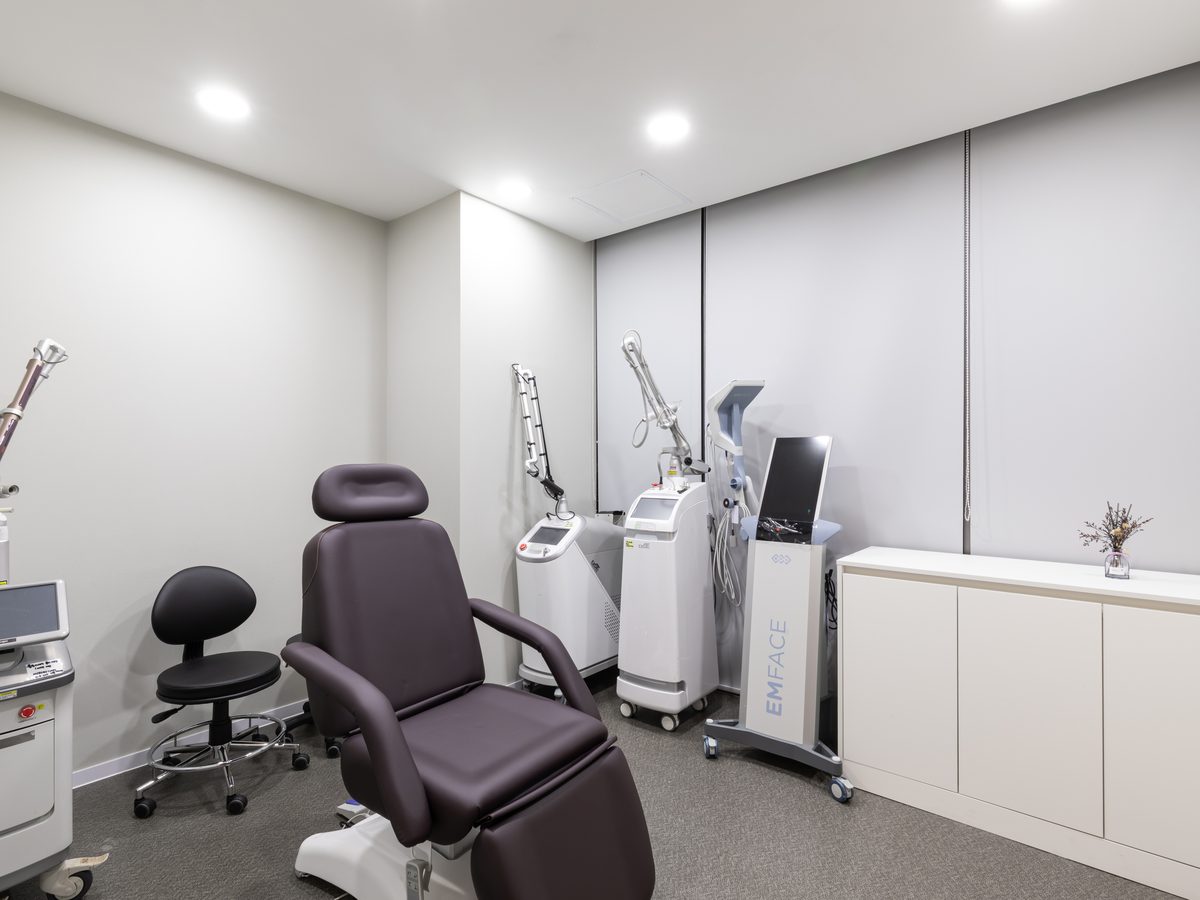
Booster sessions at Symphony are appointment-only, one patient at a time, in a private room. Skin type, thickness and condition are assessed before anything is chosen, and an interpreter is with you from reception to the treatment room in English, Japanese or Chinese.

The clinic is on the 2nd floor of the Sinsa Hill Building, 165 Dosan-daero, about a 10-minute walk from Sinsa Station (Line 3), Exit 8. It's closed on Sundays and Korean public holidays, including the days around Lunar New Year and Chuseok, so check those dates before booking flights. Directions and opening hours are on our location and hours page, and the four physicians are introduced on the medical team page. The Symphony Skin Center home page gives an overview of every treatment line.
If you're not sure which row of the table you belong to, take one photo of your face in daylight without makeup and send it on WhatsApp, along with the skincare products you use now. The physician reviews it, and if a booster isn't the right tool for what you're seeing, that's a useful answer to have before you book anything.
Questions patients ask us
Can a skin booster give me Korean glass skin?
Glass skin is a look: even, hydrated skin that reflects light. Boosters can improve hydration and fine texture, which are part of that look, but the result depends on your skin's starting point and how it responds. No booster can promise a specific finish.
Is a skin booster the same as a filler?
No. A filler is placed to add shape or volume in a specific spot. A skin booster is spread through the dermis to improve the quality of the skin itself. Collagen builders like Juvelook sit between the two, which is why their risks resemble those of fillers.
Do Korean skin boosters hurt?
Needle-injected boosters cause brief stinging at each point, and topical anesthesia is commonly used. Mirajet delivers the product as a micro jet without needles, which avoids needle pain. What you feel also depends on the product and the area treated.
How many skin booster sessions will I need?
Boosters are generally planned as a course rather than a single session, but the number depends on the product and your skin. Collagen builders and hydrating blends follow different schedules. The plan is set after your skin is examined.
Can a skin booster remove moles or a skin tag on my neck?
No. Boosters work on hydration and skin quality and do not change moles or skin tags. A mole that has changed in size, colour or shape should be checked by a dermatologist at home before any cosmetic treatment.
What is the difference between Rejuran and PDRN?
Both come from DNA fragments. PDRN is a shorter-chain fraction studied mainly in wound healing, while PN, the active in Rejuran Healer, has longer chains that also hold water in the dermis. A 2025 review in Pharmaceutics compares the two in detail.
Sources
- The 500 Dalton rule for the skin penetration of chemical compounds and drugs (Experimental Dermatology, 2000)
- Comparison of Polynucleotide and Polydeoxyribonucleotide in Dermatology: Molecular Mechanisms and Clinical Perspectives (Pharmaceutics, 2025)
- The Effectiveness of Polynucleotides in Esthetic Medicine: A Systematic Review
- Dermal Fillers (Soft Tissue Fillers)
Treatment details: Symphony Skin Clinic treatment information, checked Oct 9, 2026.
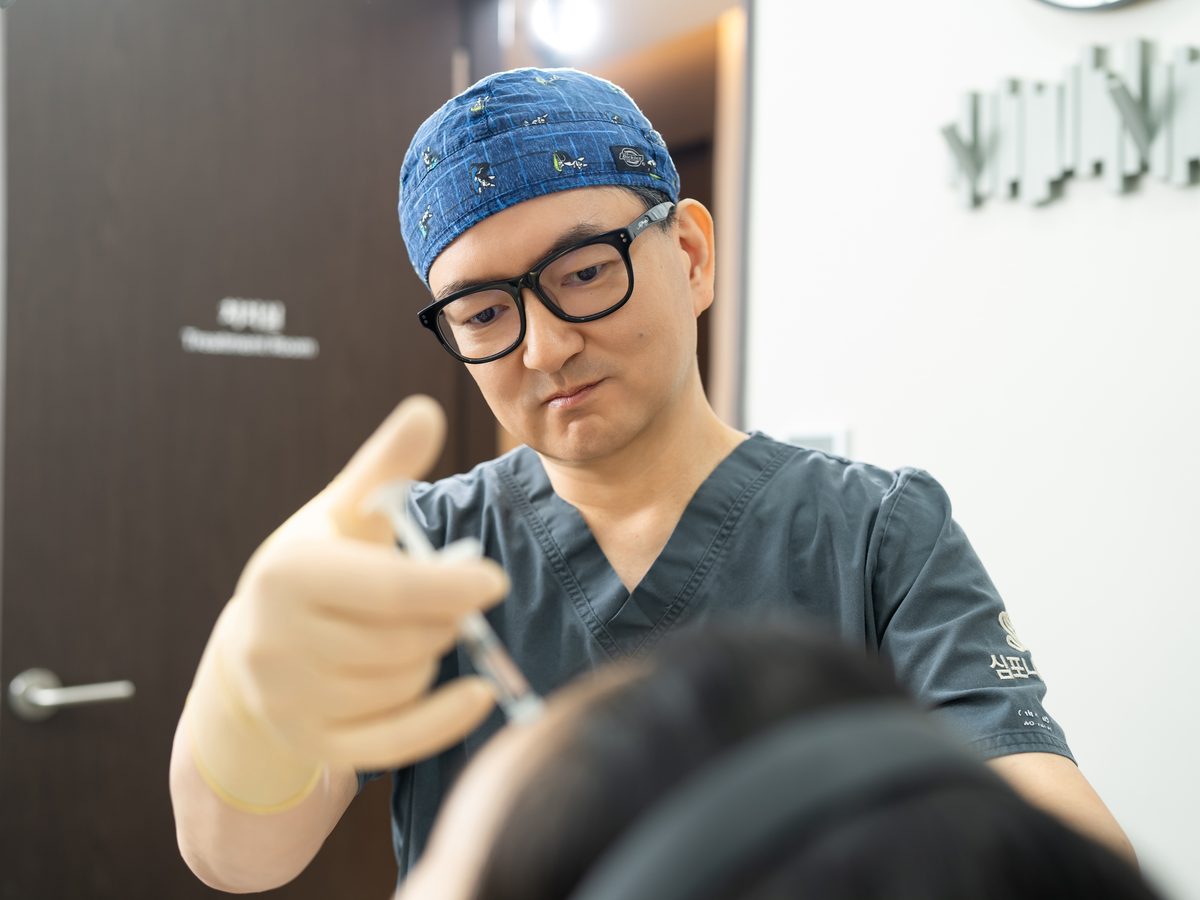
This page is general information from Symphony Skin Clinic, not a diagnosis. Results, risks and recovery differ by person. Treatment is decided after an in-person consultation with a licensed doctor. Clinic and treatment photos on this page were taken at Symphony Skin Clinic.
Keep reading
- Skin BoosterRejuran in Korea: a skin treatment that is not a fillerRejuran korea explained by a Seoul clinic: what polynucleotide does, why it is not a filler, and how Rejuran, Rejuran i and Rejuran HB differ from each other.8 min read
- Collagen / VolumeChoosing a Juvelook clinic in Korea: Juvelook or Volume first, then four questions to askChoosing a juvelook korea clinic? How standard Juvelook and Juvelook Volume differ (24 vs 40 μm), and four questions you can put to any clinic in Seoul.8 min read
- Lifting / FirmnessChoosing an Ultherapy clinic in Korea: the questions worth asking before you bookWhat actually separates a careful Ultherapy clinic in Korea from a weaker one: who performs it, imaging, and genuine-cartridge checks. Get a quote on WhatsApp.7 min read